

It’s helpful to know how backwater valve & sump pump protection works so you can reduce the risk of sewage or groundwater backing up into a basement during heavy rain. Many homeowners first notice damp corners, a musty odour, or slow drains near the floor–wall joint. This article explains what the devices do, what a typical assessment looks like, and how crews work in Toronto, the GTA and the Golden Horseshoe.
Our team offers 24/7 response, free estimates, and licensed, insured crews with warranty-backed work and careful site cleanup. If you’d like a free on-site estimate or have an urgent concern, please contact us or call (905) 601-9449.
What Backwater Valve & Sump Pump Protection Does
This section gives simple definitions and the main ways the systems help a home.
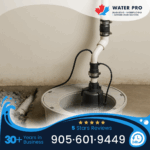
A backwater valve is a mechanical device installed on the sanitary sewer line. It stops reverse flow from city sewers into a home’s plumbing during heavy rainfall or sewer surcharging. A sump pump sits in a pit at the lowest point of a basement and moves groundwater away from the foundation when the footprint fills.
- Backwater valve: prevents sewage from flowing back through basement drains and floor drains during sewer overloads.
- Sump pump: removes groundwater collected in a sump pit and discharges it away from the foundation.
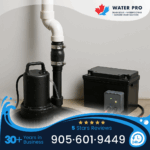
- Battery backup and alarm: keep the pump working during power outages and alert you if the pump fails or the pit is rising.
Many homeowners find that adding both a backwater valve and a battery-backed sump pump reduces clean-up and remediation costs after storms and can make a property more resilient. For installation or product options, see our backwater valve & sump pumps service page.
How Installation Works: Steps, Timeline And What To Expect
This section outlines the on-site assessment and the typical installation sequence so homeowners know what to expect.
Typical On‑Site Assessment
During the assessment, a technician checks visible signs and the home’s plumbing layout, and discusses past flooding history with the homeowner.
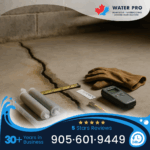
- Visual checks for damp spots, efflorescence, and musty odour, plus photographs to document conditions.
- Locate floor drains, sanitary line routing and the lowest basement point for a sump pit.
- Review grading, foundation details and any existing backwater devices so the plan fits the home and local code.
Standard Installation Steps
Work is scheduled to limit disruption; crews explain the plan before starting and leave the site tidy at the end of each day.
- Permits and scheduling: some jobs need a plumbing permit. Permit processing can take 1–2 weeks in typical cases.
- Installation day(s): a backwater valve swap or new install often takes 2–6 hours to a day. A sump pump installation typically takes one day; adding a battery backup and alarm may add a few hours.
- Testing and orientation: after installation, systems are tested under load and the crew shows basic maintenance tasks and alarm checks to the homeowner.
Before any work, we review grading, foundation details, and plumbing so the plan fits your home and local code. Every property has nuances; we talk them through so you feel informed and comfortable.
Toronto & GTA Requirements, Permits And Subsidies
This section covers regional rules and the common paperwork homeowners may need for protective work.
Municipal programs and permit requirements vary across Toronto and neighbouring municipalities in the GTA and Golden Horseshoe. Some installations require a plumbing permit and a licensed contractor to perform the work and sign off on inspections.
- Permits: allow 1–2 weeks for simple plumbing permits in many cases; larger jobs may take longer.
- Licensed contractor: cities typically require a qualified plumber for backwater valve or sump pump connections to sanitary or storm systems.
- Inspections: final inspection and testing are common steps before a permit file is closed.
Subsidy Details And How To Apply
This bridge notes typical subsidy features and what homeowners usually need to submit.
- City programs sometimes offer partial rebates for backwater valves and sump pumps. Processing times can vary; expect 8–10 weeks in many cases.
- Common application items: paid contractor invoice, permit documentation, inspection sign-off, and before/after photos.
- Programs have caps and specific eligible work; homeowners should review local program pages for current details.
For up-to-date program details and application steps, check the City of Toronto’s basement flooding protection subsidy information.
Costs, Risks, And A Typical Case Example
This section gives realistic cost ranges, routine risks to watch for, and a short numeric example to illustrate net cost after subsidy.
Typical regional cost ranges are useful for planning. Backwater valve installation or replacement in Toronto often ranges from $800 to $2,500. Sump pump installation commonly ranges from $800 to $3,000 depending on pit work and discharge routing. Battery backup systems and alarms typically add $300 to $1,000.
- Common risks and mistakes: wrong valve type for the plumbing layout, undersized pump, missing alarm or backup power, and inadequate discharge routing. These are handled during assessment and by following code and best practices.
- Maintenance: test alarms and pumps annually and after major storms, and keep the discharge point clear of debris.
Mini numeric case (illustrative): a detached Toronto home has a backwater valve cost of $1,500, a sump pump at $1,800 and a battery backup at $500, for a gross total of $3,800. If a local subsidy provides $3,000 toward eligible items under program caps, the homeowner’s net cost in this example would be $800. Actual subsidy amounts and eligibility vary by program.
If a homeowner notices repeated slow drains or wet floors, a professional assessment that includes pipe and drain condition is recommended rather than DIY repairs. Our crews follow code-based installation and leave clear maintenance steps so you feel comfortable with system operation.
For related services such as repairing lateral drains or relining pipes before protective devices are fitted, see our drain repair & services information.
Next Steps And A Short Homeowner Checklist
This final section gives clear actions and a short checklist to prepare for an assessment or estimate.
- Observe and note: record where you see damp spots, the frequency of backups, and dates of past flooding events.
- Gather details: take photos of floor drains, sump pits, the sewer cleanout, and any existing valves; note appliance locations in the basement.
- Ask contractors: confirm permit handling, warranty length, battery backup options, and recommended maintenance intervals.
- Schedule an on-site estimate: a technician will assess grading, foundation details, plumbing layout and give a scoped plan with timelines.
If you’d like to arrange an on-site visit or a free estimate, please contact us or call (905) 601-9449. Our teams are available 24/7 for urgent concerns and provide licensed, insured work with tidy site cleanup and warranty-backed service.
This article offers general information for homeowners and is not engineering, legal, or plumbing advice. Assessments and solutions are reviewed during an on-site visit by licensed professionals. If you’re considering waterproofing or drain work, feel free to contact us or call — we’ll discuss your goals and outline a plan that feels comfortable and right for your home.
🔗 Learn more: https://waterproofingdrain.com/
📞 Call us: 905 601-9449
✉️ Write us: info@waterproofingdrain.com
🕒 Open hours: Mon – Sat, 9:00am – 9:30pm