
Basement Leak Repair: Stop Water, Protect Your Home is intended to help Toronto and GTA homeowners understand common causes, typical steps in diagnosis, and realistic repair options. Some homes in the Golden Horseshoe see seepage during spring thaws or after heavy rain, and that often relates to clay soils and freeze–thaw cycles common in this region.
Many homeowners first notice moisture at the floor–wall joint, a damp corner, or a musty odour. Interior staining, warped trim or slow-draining sump pits are common signs that it’s time to get a professional assessment.
If you’ve noticed stains or recurring dampness, please contact us or call (905) 601-9449 for a free estimate. We offer 24/7 response, licensed and insured crews, warranty-backed work, and careful job execution so you feel supported through the process.
How Basement Leaks Start in Toronto Homes
Some homes may see seepage during spring thaws. This is common in older foundations and often relates to hydrostatic pressure, poor grading, blocked drainage, or cracks that allow water to enter.
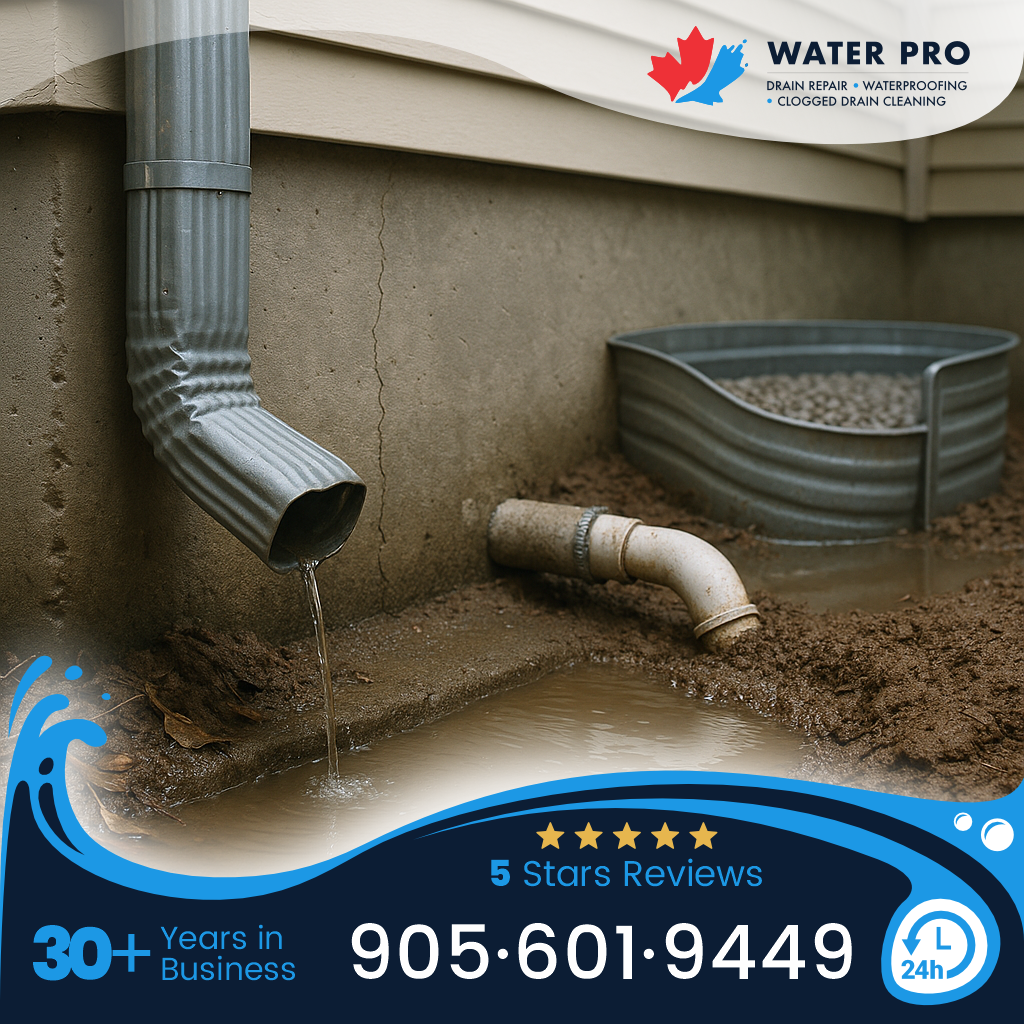
Typical causes include foundation cracks, poor grading and downspout placement, clogged weeping tiles, failing sump pumps, and occasional plumbing faults. Each cause has a slightly different feel: many homeowners notice damp at a single corner when a crack is active, while widespread salt staining can point to a buried drainage issue.
- Foundation cracks and hairline seepage that appear after freeze–thaw cycles.
- Poor grading or downspouts that discharge close to the foundation and keep soil wet.
- Blocked or collapsed weeping tiles that no longer carry groundwater away.
- Sump pump failure or missing battery backup during storms or power outages.
- Interior plumbing leaks or sewer backup that mimic foundation seepage.
What a Professional Diagnosis Looks Like
A focused on-site inspection helps separate plumbing problems from foundation or drainage issues. Technicians look for where water is entering, how groundwater is behaving, and which corrective paths are practical for your home and local code.
On-Site Assessment Steps
During a typical visit we review exterior grading, downspout routing, window wells, and interior leak locations. The technician will also check the sump basin, visible plumbing, and any backwater valve equipment already in place.
- Visual survey of floor and wall stains, window wells and exterior grade near the foundation.
- Inspection of sump pit condition, pump type, and whether a battery backup is present.
- Review of downspout outlets and whether they are routed away from the house.
- Discussion with the homeowner about when leaks occur (after heavy rain, during thaw, or after plumbing use).
Tests and What We Inspect
Technicians commonly run a few diagnostic tests to confirm the source of water. These tests typically take 1–2 hours and provide the data needed to recommend interior or exterior work, or targeted plumbing repairs.
- Camera inspection of floor drains and lateral drains to check for blockages or root intrusion.
- Dye or controlled water tests to trace whether water comes from exterior weeping tile, a plumbing pipe, or a window well.
- Check of weeping tile connections, sump discharge routing, and backwater valve operation.
- Moisture mapping and photographic documentation to track where repairs will be most effective.
Common Repair Options and Typical Timelines
We describe common repair approaches and typical timeframes so you can plan around work and disruption. Choices usually come down to interior methods, exterior excavation, or targeted plumbing repairs based on the diagnosis.
Interior Solutions
Interior options include crack injection, interior French drains tied to a sump, and membrane systems that divert water to a pump. These methods are often chosen when exterior excavation is impractical or when water enters at specific wall or floor joints.
- Crack injection: often completed in 1 day for small, stable cracks; used where movement is minimal.
- Interior French drain to sump pump: commonly 1–2 days for a standard basement; involves removing a strip of floor, installing a drain channel, and connecting to a sump.
- Sump pump installation or replacement: usually 1 day; consider adding a battery backup to manage power outages during storms.
- Interior membranes or vapour barriers: installed in 1–3 days depending on area; these direct moisture to the drainage system rather than the finished wall surface.
Cost examples for planning: small crack repairs can range from CAD 500–1,500; a full interior drain and sump system often ranges CAD 2,000–8,000 depending on basement size and pump selection. These are illustrative ranges, not bids.
Exterior Solutions
Exterior excavation and waterproofing address water before it reaches the foundation. This approach is typically recommended when water is tracking behind the wall or exterior grading keeps soil wet near the foundation.
- Excavate to footing, repair foundation cracks, apply waterproof membrane, and reinstall drainage and backfill — usually 3–7 days for most homes.
- Repair or replace weeping tile (perimeter drainage) to daylight or to a sump discharge — timelines depend on access and soil conditions.
- Exterior work is more invasive but can reduce interior moisture sources when properly executed and tied into a drainage strategy.
Exterior waterproofing projects commonly range CAD 8,000–25,000 depending on foundation length, depth, and landscaping restoration needs. Before any work, we review grading, foundation details, and plumbing so the plan fits your home and local code.
For information on system options and materials, see our basement waterproofing page or ask for a site visit to review what fits your property.
Costs, Subsidies and Toronto Requirements
Costs depend on cause, access and whether plumbing or structural permits are required. The City of Toronto offers subsidies for eligible devices such as backwater valves and certain sump installations; permit and inspection rules can affect timing and eligibility.
Typical permit processing and subsidy decisions can add weeks to project start dates; homeowners should factor in 6–10 weeks when applying for municipal programs. For current program details and eligibility, consult the City of Toronto basement flooding protection subsidy program.
Risks, Common Mistakes and What To Avoid
Every property has nuances; common mistakes can increase recurring moisture or reduce long-term performance. We explain typical missteps so homeowners can make informed choices with their contractor.
- Poor grading or downspouts that discharge close to the foundation, keeping soil saturated against the wall.
- Assuming all leaks are foundation-related when a plumbing fault or blocked floor drain is the source.
- Connecting weeping tiles directly to the sanitary sewer without appropriate sump and backwater protection.
- Skipping required permits or inspections, which can affect insurance and subsidy eligibility.
Before any work, we review grading, foundation details, and plumbing so the plan fits your home and local code. Every property has nuances; we talk them through so you feel informed and comfortable.
Homeowner Checklist And Next Steps
It’s helpful to gather a few items before an on-site assessment so the visit is efficient and focused. Most homeowners find this short checklist useful when booking a visit.
- Photos of stains, window wells, sump basin, and any visible plumbing or floor drains.
- Notes on when leaks occur (after heavy rain, during thaw, or after plumbing use).
- List of recent work or changes near the house (landscaping, downspout rerouting, nearby tree removals).
- Copies of past invoices, permits, or inspections related to basement or drainage work.
If you’d like to schedule an assessment, please contact us or call (905) 601-9449. We offer 24/7 response, free estimates, licensed and insured crews, and warranty-backed workmanship so you can move forward with a clear, practical plan.
This article offers general information for homeowners and is not engineering, legal, or plumbing advice. Assessments and solutions are reviewed during an on-site visit by licensed professionals. If you’re considering waterproofing or drain work, feel free to contact us or call — we’ll discuss your goals and outline a plan that feels comfortable and right for your home.
🔗 Learn more: https://waterproofingdrain.com/
📞 Call us: 905 601-9449
✉️ Write us: info@waterproofingdrain.com
🕒 Open hours: Mon – Sat, 9:00am – 9:30pm