
Clogged Drain? Fast Fixes And Prevention Tips is a practical guide for Toronto and GTA homeowners who face slow or recurring drains. Many homeowners first notice water pooling at a shower or a slow kitchen sink and a faint, persistent odour. These early signs often point to common causes like hair, grease, soap scum, food waste, or tree roots working into older service lines.
It’s helpful to know how problems typically feel and what a straightforward response looks like. In most cases an initial assessment takes 10–30 minutes and simple actions can restore normal flow. For recurring or complex issues, a licensed inspection and a clear repair plan are the next step.
What Causes Household Drain Clogs
Bridge: A short, calm description of what homeowners typically notice when a clog starts.
Household clogs form for a handful of predictable reasons. Hair and soap scum commonly build up in shower traps and lead to slow drainage. Grease and food waste can coat kitchen drains and cause odours or standing water. Outside, tree roots may intrude at pipe joints and create repeating blockages that resist simple cleaning.
- Hair and soap scum: slow bathtub or shower drains and occasional gurgling.
- Grease and food: foul smells from the kitchen and sinks that back up after washing dishes.
- Tree roots and pipe damage: recurring clogs affecting multiple fixtures, or problems after heavy rain.
Quick Fixes You Can Try Right Away
Bridge: Describe that these are short-term, homeowner-safe steps and when they are appropriate.
For many single‑fixture clogs, simple steps restore flow in 10–30 minutes. Start with a plunger on sinks and tubs, using steady pressure and a tight seal. For grease, a mix of hot water and dish soap can break up light build-up; for hair, a hand auger (snaking) often reaches and removes the obstruction.
- Plunging: work in 5–15 minute cycles; stop if there’s no improvement or you detect sewage odour.
- Enzyme cleaners: use per label directions for organic build-up; avoid harsh caustic chemicals that can harm older pipes and appliances.
- Hand snaking: a homeowner auger can reach shallow blockages; deeper or recurring clogs usually need professional tools.
Before any deeper work, we review grading, foundation details, and plumbing so the plan fits your home and local code. If the clog returns or multiple fixtures are slow, contact our team for a same‑day or next‑business‑day inspection. For help, contact us or call (905) 601-9449 for a free estimate or urgent response.
When To Call A Professional
Bridge: Short paragraph that clarifies signs a homeowner should stop DIY and call licensed help.
Call a licensed plumber when clogs recur, when you smell sewage, or when slow drains affect more than one fixture. These signs can point to deeper issues such as tree root intrusion, collapsed pipe sections, or problems in the municipal connection. Typical response times are same‑day for emergencies and 1–3 business days for non‑urgent inspections.
- Recurring clogs or backups after heavy rain: may require camera inspection and follow-up repairs.
- Multiple fixtures slow at once: often indicates a main sewer or lateral issue needing professional diagnosis.
- Visible root entry or collapsed pipe: usually needs trenchless options or targeted repair.
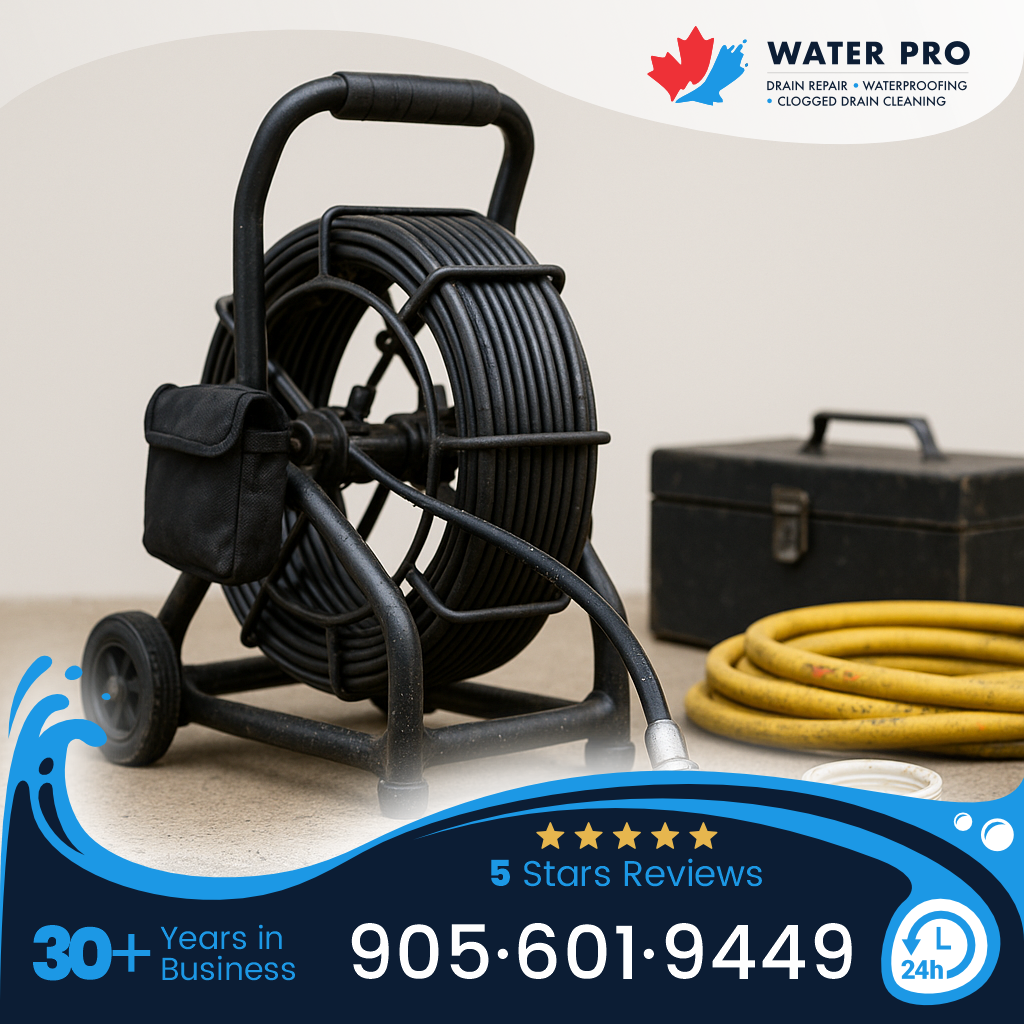
Our technicians carry camera equipment and diagnostic tools to show the issue and discuss options. For specialized services, see our drain repair & services page for common solutions and follow‑up steps. We provide licensed and insured crews, 24/7 emergency support, free estimates, and warranty‑backed work with careful site cleanup.
What Professionals Do: Inspection To Repair
Bridge: Briefly explain the typical assessment sequence and what homeowners can expect during work.
When a clog needs more than a homeowner fix, a licensed team follows a clear sequence: access the line, inspect with a camera, and present repair options with timelines and costs. Most on-site inspections take 30–90 minutes and include photos or video so you can see the issue and compare options.
Camera Inspection And Diagnosis
Bridge: Short sentence explaining the purpose of CCTV inspection.
A camera inspection is the standard next step when problems recur or affect multiple fixtures. Technicians feed a flexible camera through the cleanout to check for roots, grease build-up, pipe offsets, cracks, or sagging sections. You typically receive a short report with dated images or video and a recommendation of repairs to discuss.
- Typical time: 30–90 minutes for a residential lateral or main‑line run.
- What you get: visual evidence, an explanation of likely causes, and options such as cleaning, relining, or replacement.
- Local note: Toronto homeowners may need permits or inspections for some repairs; city guidance helps with subsidy and permit questions (City of Toronto: basement flooding).
Repair Options And Timelines
Bridge: Summarize common repairs and expected timeframes.
After diagnosis, crews review non‑invasive and invasive repair options so you can choose a path that fits your home and budget. We describe the expected timeframe and the level of disruption for each option to help you plan.
- Hydro‑jetting: high‑pressure water cleaning for grease and scale. Typical service time: 1–3 hours for a standard run.
- Pipe relining (trenchless): installs a cured‑in‑place liner inside the existing pipe to repair cracks and joints. Typical workflow: diagnostic day, then 1–2 days for relining depending on length and access needs.
- Open repair or replacement: used for collapsed or severely damaged sections. Timeline: several days on site; permitting can add time depending on municipal rules.
- Backwater valves and sump pump work: commonly recommended where backflow risks exist; installation is often 1–2 days and may require local inspection in Toronto.
Risks, Common Mistakes, And Cost Ranges
Bridge: Calmly present what can go wrong and typical cost ranges so homeowners can plan.
It helps to understand common mistakes and realistic cost ranges so you can make informed choices. We present these points plainly and then recommend a diagnostic visit to set an exact scope and price.
- Common mistakes: repeated use of caustic chemical cleaners, frequent DIY snaking without diagnosis, and ignoring multi‑fixture slow drains.
- Calmly stated risks if problems persist: recurring backups, pipe corrosion over time, and increased chance of mould or property damage; every property has nuances and we discuss them before work begins.
- Typical ballpark costs: plunging/snaking $50–$200; camera inspection $200–$500; hydro‑jetting $300–$900; pipe relining $1,500–$6,000+; full replacement varies widely—get an on‑site estimate for a reliable number.
Soft next step: schedule a camera inspection if clogs keep returning so you can compare targeted options rather than repeated short‑term fixes.
Practical Checklist For Homeowners And Next Steps In The GTA
Bridge: Short paragraph telling homeowners what to check and what to prepare for a professional visit.
Before a service visit, gathering a few details speeds diagnosis and keeps costs clear. Many homeowners find this checklist helpful when they call for a free estimate or emergency response.
- Immediate checks: note which fixtures are affected, any odours, when the problem started, and where the property cleanout is located.
- Maintenance steps: clean eavestroughs twice a year, keep downspouts discharging about 1.8–2 metres from the foundation, avoid pouring fats or oils down the kitchen sink, and use hair catchers in showers.
- If issues recur: request a camera inspection and ask about hydro‑jetting or trenchless relining as longer‑term options.
- Local considerations: check Toronto permit and subsidy information if you’re planning backwater valve or sump pump work; the city page lists program details and requirements.
When you’re ready, call (905) 601-9449 to discuss the situation or book a visit. We offer 24/7 assistance, licensed and insured crews, free estimates, and warranty‑backed work with tidy site cleanup so you know what to expect.
This article offers general information for homeowners and is not engineering, legal, or plumbing advice. Assessments and solutions are reviewed during an on-site visit by licensed professionals. If you’re considering waterproofing or drain work, feel free to contact us or call — we’ll discuss your goals and outline a plan that feels comfortable and right for your home.
🔗 Learn more: https://waterproofingdrain.com/
📞 Call us: 905 601-9449
✉️ Write us: info@waterproofingdrain.com
🕒 Open hours: Mon – Sat, 9:00am – 9:30pm