
Foundation Waterproofing: Protect Your Home From Water Damage is a practical step many Toronto and GTA homeowners take when they notice damp corners, a musty odour, or water tracking along the floor–wall joint. Many homes may see seepage during spring thaws or after heavy rain; this often relates to hydrostatic pressure, poor lot grading, or an ageing drainage system. A clear, measured assessment shows which combination of fixes fits the house and budget.
It’s helpful to know Water Pro Master Corp offers 24/7 response, free estimates, licensed and insured crews, and warranty-backed workmanship. If you’d like to schedule an on-site review, contact us or call (905) 601-9449; we’ll describe what to expect at your visit and outline next steps.
Foundation Waterproofing: What Homeowners Should Know
Before any work, we review grading, foundation details, and plumbing so the plan fits your home and local code. Many homeowners first notice moisture at the floor–wall joint, rising damp on concrete, or efflorescence (white mineral streaking).
Foundation waterproofing covers several approaches: interior perimeter drains and sump systems, exterior membranes and drainage, crack injection, and engineered underpinning for severe settlement. Each approach addresses water at a different path—through the wall, through cracks, or by groundwater pressure.
Expect a clear explanation of pros and cons during the estimate. Most small interior fixes take 1–3 days; larger exterior work requires more planning and excavation and may take 5–10 days or longer depending on scope and permitting.
How Professionals Assess Water Entry
Assessments focus on symptoms, water paths, and the home’s site conditions so recommended work is appropriate and code-compatible.
Visual Inspection And Diagnostics
Technicians start with a visual inspection both inside and outside. We look for damp corners, water stains, rusted sill plates, efflorescence, and high-water marks on walls or floors.
- Exterior checks include lot grading, downspouts, eavestrough condition, and window wells.
- Interior checks include moisture measurements, locating active seepage points, and checking sump or drain condition.
Small Tests And Moisture Mapping
Diagnostic tests help decide whether interior or exterior solutions are best. Tests are non-invasive in most cases and give a clearer picture of where water is travelling.
- Moisture meters and thermal checks map damp areas and relative severity.
- Camera inspections of existing drains and targeted dye tests can reveal blockages or improper flow paths.
Common Fixes: What Work Might Look Like
There are several commonly used solutions that professionals match to observed entry points and site constraints. The right mix depends on how water reaches the basement and whether exterior access is practical.
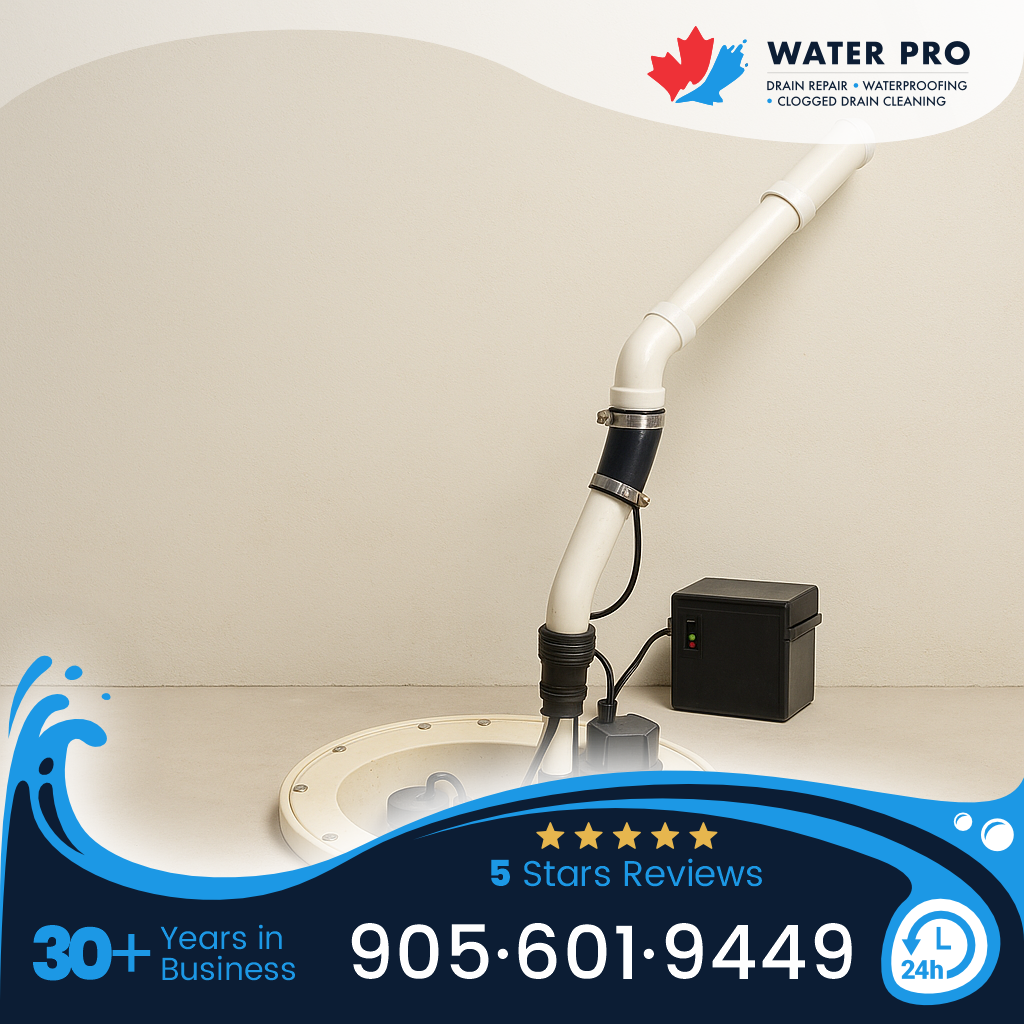
- Interior perimeter drain and sump pump installation to collect and discharge groundwater inside the foundation line.
- Exterior membrane and foundation drainage to stop through-wall moisture and redirect groundwater away from the foundation.
- Crack injection for limited through-crack seepage without large excavation.
- Engineered underpinning when foundation depth or settlement requires structural intervention.
- Backwater valve and sump upgrades to reduce sewer backup risk and manage stormwater; see backwater valve & sump pumps for details on devices and options.
Interior Versus Exterior Approaches
Interior work is often faster and less disruptive to landscaping: many interior perimeter installations finish in 1–3 days for an average basement. Exterior excavation and membrane work typically takes 5–10 days and involves soil removal, shoring if needed, and restore landscaping.
Every property has nuances; we talk them through so you feel informed and comfortable about timing, maintenance needs (such as sump alarm testing and battery backup), and permit steps before work begins.
Timelines, Costs, And Toronto-Specific Considerations
This section outlines typical timeframes, cost ranges, and local steps that matter in Toronto, the GTA, and the Golden Horseshoe. A clear view of timelines helps homeowners plan for permits, work, and follow-up.
Small repairs such as crack injection often take a single day and commonly range from $500 to $1,500. Interior perimeter drain and sump installations for an average detached basement usually take 1–3 days and often fall in the $3,000–$10,000 range, depending on basement size and discharge requirements. Exterior membrane and drainage projects generally require excavation, so plan for 5–10 days on-site and costs that typically start near $8,000 and can exceed $30,000 for larger homes or complex access issues. Engineered underpinning is a structural project and may span weeks to months with engineering, permits, and staged work; costs are project-specific.
Before work begins, contractors commonly confirm permitting needs and inspections. In Toronto, some homeowners may qualify for the City of Toronto basement flooding subsidy program; note that subsidy review and permit processing can take several weeks. For details visit the City of Toronto program page: City of Toronto basement flooding subsidy.
Budget planning should include contingency for related work such as downspout extension, grading adjustments, or plumbing repairs. We provide itemized estimates, projected timelines, and a description of required inspections so you know who arranges permits and what to expect during municipal reviews. Our crews are licensed and insured, and we offer warranty-backed workmanship with clean, careful job execution.
What To Expect Next — A Homeowner Checklist And Example
This section gives a simple numeric example and a short checklist so you can prepare for an assessment and the likely next steps.
Mini-case example: A semi-detached home in the GTA with damp in one corner. Inspection: 1 hour on-site with moisture mapping and drain camera. Recommended work: interior perimeter drain and sump with a battery backup. Work duration: 2 days. Typical cost: about $4,200 (includes labor, sump pump, basic discharge). Follow-up: test alarm and battery at 6 months, and annual visual checks of discharge and downspouts. After work, most homeowners report relief and a clear maintenance plan.
Homeowner checklist before the site visit:
- Take clear photos of damp areas, stains, and any high-water marks.
- Note when symptoms occur (heavy rain, spring thaw, appliance use, or sewer events).
- List recent changes to the lot—new patios, landscaping, or grading work.
- Ask for an itemized written quote, licence numbers, and the projected timeline for permits and work.
- Confirm maintenance expectations: sump alarm testing intervals, battery replacement, and recommended inspections.
Risks and common mistakes, described calmly: partial fixes that do not address downspouts or lot grading can leave the home vulnerable to repeat seepage. Skipping municipal permits or using products not suited to the site can cause delays or additional costs. Before any work, we review grading, foundation details, and plumbing so the plan fits your home and local code. Every property has nuances; we talk them through so you feel informed and comfortable.
If you’d like a clear estimate and plan, please contact us or call (905) 601-9449. For more on service options and examples, see our basement waterproofing page.
This article offers general information for homeowners and is not engineering, legal, or plumbing advice. Assessments and solutions are reviewed during an on-site visit by licensed professionals. If you’re considering waterproofing or drain work, feel free to contact us or call — we’ll discuss your goals and outline a plan that feels comfortable and right for your home.
🔗 Learn more: https://waterproofingdrain.com/
📞 Call us: 905 601-9449
✉️ Write us: info@waterproofingdrain.com
🕒 Open hours: Mon – Sat, 9:00am – 9:30pm