


Keep Water Out With Professional Window Well Installation is a practical step for Toronto and GTA homeowners who notice water near below‑grade windows. Many homeowners first notice moisture at the floor–wall joint, damp corners, or a musty odour after heavy rain or a spring thaw. This article explains what a licensed assessment looks like, common installation elements, and the homeowner experience before and after work.
It’s helpful to know the typical signs and what to expect from a professional crew. We describe the process in plain language, with timeframes such as 1–2 days for a basic well replacement and 2–5 days for a larger egress well that needs permits or a sump tie‑in. For immediate concerns, contact us or call (905) 601-9449 for 24/7 assistance and a free estimate.
Why Window Wells Matter In Toronto And The GTA
Many homes in the Golden Horseshoe see more groundwater pressure during spring thaws and after intense storms.
Some problems are obvious: standing water in the well, rusted window frames, or water tracking into finished basement space. Other signs are subtler, such as recurring dampness on a finished wall or a persistent musty smell. In urban and older neighbourhoods, combined factors—grading, disconnected downspouts, and aging weeping tile—can increase the likelihood of water reaching below‑grade windows.
Local guidance and programs also encourage practical steps to reduce basement flooding risk. For region‑specific tips, see toronto.ca — how to prevent basement flooding.
What Proper Window Well Installation Includes
Before we begin, we check grading, foundation details, and plumbing so the plan fits your home and local code.
- Correctly sized well that provides the required clearance for emergency egress when applicable.
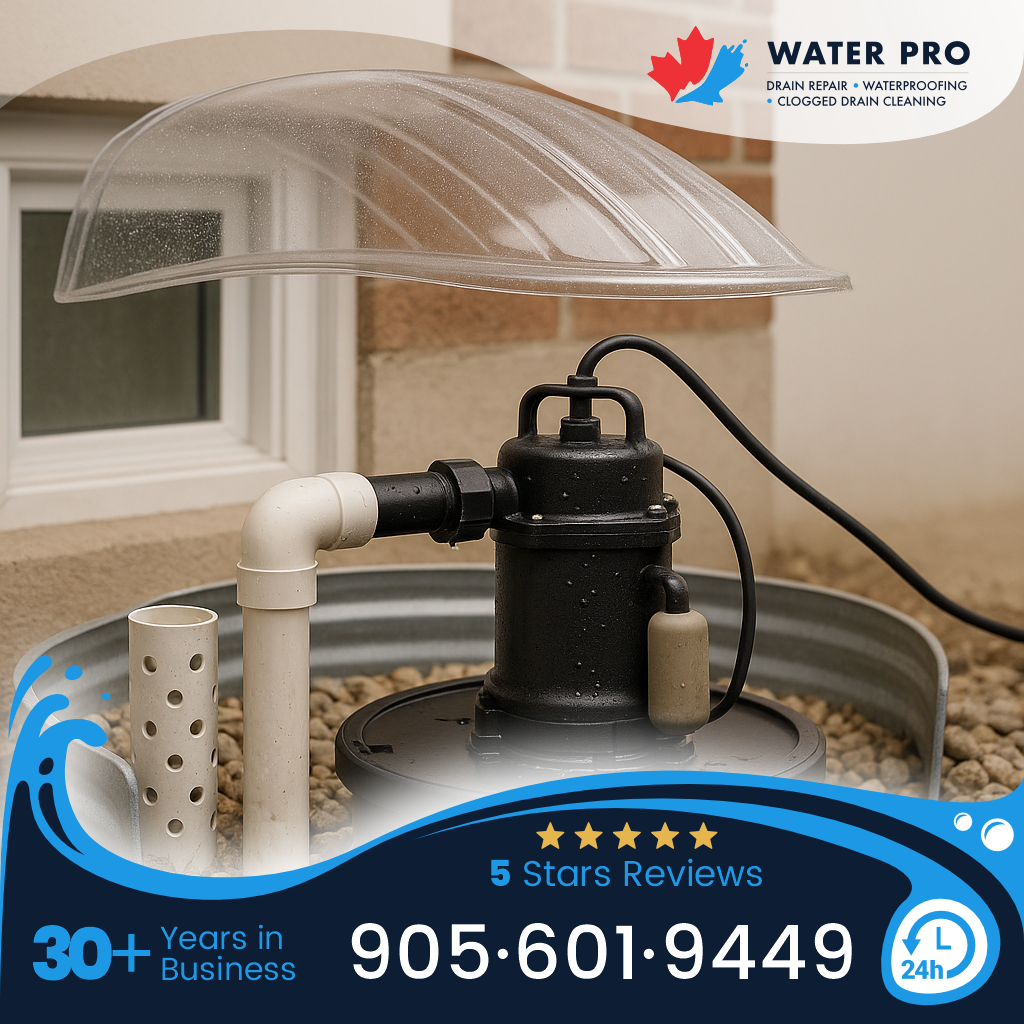
- A gravel base and perforated drain pipe routed to a weeping tile or to a sump pit.
- Durable, weather‑resistant covers that shed debris and permit safe access for egress wells.
- Sealing and flashing where the well meets the foundation, and a tidy finish to the surrounding grade.
Many homeowners combine well work with basement waterproofing when there is chronic moisture. For combined solutions and follow‑up options, see our basement waterproofing page. For a free on‑site estimate, contact us or call (905) 601-9449. Our crews are licensed, insured, and offer warranty‑backed work with careful jobsite cleanup.
How A Window Well Keeps Water Out — Simple Steps
Here’s a neutral, stepwise view of what typically happens during an assessment and installation so you know what to expect.
Site Assessment And Drainage Check
During an initial visit we look for visible signs and measure what’s needed to match code and safe egress requirements.
- Inspect grading, downspouts, and nearby landscaping that can channel water toward the foundation.
- Check weeping tile access, sump condition, window sill flashing, and the well’s current drain path.
- Provide a scoped plan with estimated on‑site time (for many wells, 1–2 days) and any permit steps if the well is an egress opening.
Gravel Base, Drain Tie‑In And Cover
Work typically proceeds from excavation to finishing, with attention to drainage and safe access.
- Excavate the well area and form a stable cavity sized for the window and code clearance where needed.
- Install a gravel bed and connect a perforated drain to the weeping tile or to a sump pump system; test flow before backfilling.
- Set the well shell, seal where it meets the foundation, add a cover, and install a ladder or steps when required by egress rules. Crews tidy the area and discuss routine maintenance steps.
Regional Requirements, Permits And Egress Rules
Before work begins, confirm local code and any permit requirements for egress openings or changes to foundation openings.
In Toronto and many GTA municipalities, an egress window or a well that alters the foundation may need a permit and an inspection. Permit processing and inspection timing vary by municipality and can add 1–4 weeks to the schedule. Every property has nuances; we talk them through so you feel informed and comfortable.
Typical Permits And Code Dimensions
Here are common points we check during planning so the well meets local safety and access standards.
- Minimum egress dimensions and required clearances for an escape opening are set out in provincial code and local rules; a licensed installer will reference the specific standards for your home. For reference, see Ontario regulation r.17139.
- Ladders or steps are required for deeper wells; covers must allow quick access and not block escape routes.
- When a well connects to foundation drains or a sump, plumbing or electrical work for the sump requires licensed professionals and may need inspection.
Costs, Timelines And A Mini Case Example
It’s helpful to know typical cost ranges and how time is typically scheduled for window well work in the Toronto area.
- Simple well repair or cleanout: CAD 200–600, usually completed in 1 day.
- Standard replacement (non‑egress) with drain tie‑in: CAD 1,000–3,000, commonly 1–2 days on site.
- Egress well with new window, ladder, and sump tie‑in: CAD 2,500–7,000+, with 2–5 days on site plus permit time.
Mini case example: A semi‑detached Toronto home had a corroded well and degraded weeping tile. The crew installed a 3‑ft egress well, tied a gravel drain to a new sump, set a polycarbonate cover, and completed on‑site work in 2 days. The total cost was about CAD 3,600 and a follow‑up check took place the following week.
When quotes include multiple scope items—well shell, drain tie‑in, new window or sump—the breakdown helps you compare bids and expected timelines. Ask potential contractors for a clear scope, a start date, and the expected number of on‑site days.
Risks, Common Mistakes, And What To Ask A Contractor
A few considerations we review together help avoid common issues and lead to a durable result.
- Poor grading or nearby downspouts that keep water against the foundation can undermine a new well if not addressed first.
- Drains that are not connected to weeping tile or sump pumps—or that are blocked—will divert water back toward the wall instead of away from it.
- Non‑removable or heavy covers can impede emergency escape; covers should balance debris protection with egress access per code.
Suggested questions for a contractor: “Will you tie the well to existing foundation drains or a sump?”, “Do you handle permits and inspections?”, and “What warranty and cleanup are included?” These questions help you compare bids on equal terms without asking for technical engineering advice in writing.
Homeowner Checklist And Next Steps
Before any work, we review grading, foundation details, and plumbing so the plan fits your home and local code.
- Signs to watch for: pooling water in the well, water stains at the floor–wall joint, damp corners, or a persistent musty odour in the basement.
- Short maintenance steps: keep the well free of leaves and debris, keep downspouts directed away from the foundation, and test the drain after a heavy rain to confirm flow.
- What to expect during work: crews arrive with tools and materials, typical on‑site time is 1–2 days for a standard well, and larger egress projects usually take 2–5 days; crews leave the area tidy and discuss care and follow‑up inspections.
If your project includes a sump or pump connection, ask about coordinated work with backwater valve and sump pump systems to manage both surface runoff and sewer risk; see options for backwater valve & sump pumps. For a free on‑site assessment, contact us or call (905) 601-9449. We offer licensed, insured crews, 24/7 response for urgent issues, and warranty‑backed work with clean, careful jobsite practices.
This article offers general information for homeowners and is not engineering, legal, or plumbing advice. Assessments and solutions are reviewed during an on-site visit by licensed professionals. If you’re considering waterproofing or drain work, feel free to contact us or call — we’ll discuss your goals and outline a plan that feels comfortable and right for your home.
🔗 Learn more: https://waterproofingdrain.com/
📞 Call us: 905 601-9449
✉️ Write us: info@waterproofingdrain.com
🕒 Open hours: Mon – Sat, 9:00am – 9:30pm