

Know Your Water Valves: Protect Your Home From Leaks is a practical guide for Toronto and GTA homeowners about the valves that stop water when leaks happen. Many homeowners first notice moisture at the floor–wall joint, a musty odour, or small damp patches near plumbing stacks. These signs often point to valves that are stiff, corroded, or not fully isolating a supply line.
It’s helpful to know what to expect during an inspection and repair. A licensed plumber will check valve operation, look for corrosion, and test isolation at the meter and fixtures. Customers commonly feel relief after a clear assessment and a short written estimate. We offer fast 24/7 assistance, free estimates, licensed and insured service, warranty-backed work, and careful job execution in the Golden Horseshoe area.
Why Valves Matter For Toronto Homes
Many homes in the Toronto area have older plumbing and buried service valves that can seize or corrode over time. When a main shutoff or a fixture valve doesn’t work, a small leak can become a larger basement issue before it’s noticed.
Regular inspection and replacing worn parts reduces the risk of hidden basement flooding and complications with insurance or municipal programs. If you want a professional check, contact us or call (905) 601-9449 for a free estimate and an on-site assessment.
- Brief fact: valves let you isolate supply lines quickly during leaks or for repairs.
- Relatable note: many homeowners first test a valve during a visible drip or when winterizing irrigation.
- What clients feel after service: clearer maintenance steps and reduced emergency repair costs.
Key Valve Types And Where To Find Them
Knowing common valve types helps you describe the problem to a technician and speeds diagnosis. Below are the usual valves a plumber will check on site in Toronto and the GTA.
Main Shutoff And Service Valve
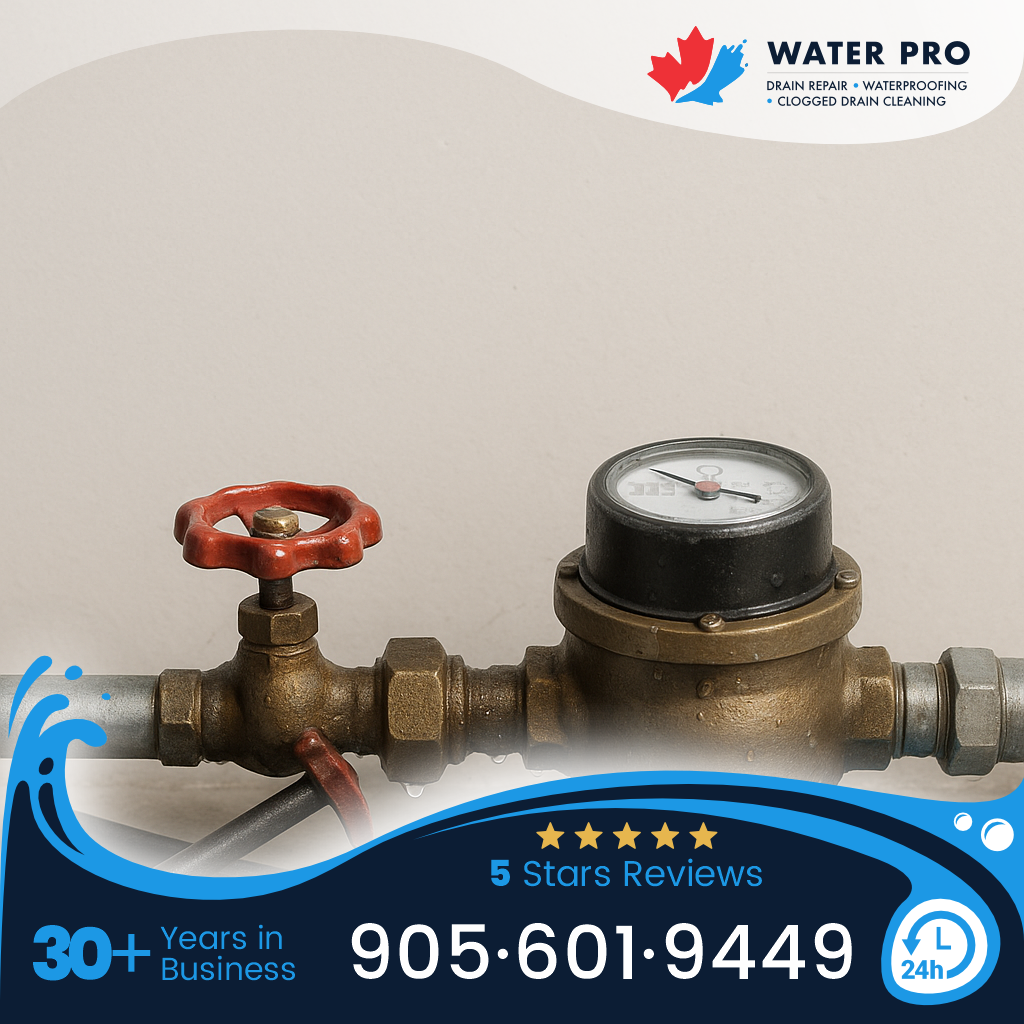
The main shutoff is usually at the water meter, the basement wall where the service enters, or outside in a curb box. In older homes it may be a gate valve; newer upgrades usually use a ball valve.
- Location: water meter box, basement utility wall, or buried curb stop.
- Common issue: buried or seized service valves may require excavation or meter-room access and can add to cost and time.
- Function: cutting water at the service reduces damage during a major leak and speeds repairs.
Fixture Shut-Off And Isolation Valves
Fixture or branch isolation valves sit under sinks, behind toilets, and on appliance feeds. These are the first line of defense for localized leaks and maintenance work.
- Typical failures: seized handles, internal corrosion, or slow leaks at the valve body.
- Repair note: replacing a worn ball or gate valve at a fixture commonly takes 1–3 hours on site.
- When work is needed, a licensed plumber from our plumbing services team can replace valves and document the repair.
Inspection, Maintenance, And When To Replace
Regular checks help catch problems before they lead to basement seepage or insurance claims. Annual visual checks and occasional operation tests are a practical routine for most properties in the Golden Horseshoe.
Simple Home Inspection Steps
These steps are for observation only; do not attempt major repairs yourself. If anything looks wrong, call a licensed plumber.
- Locate your main shutoff and note where it is. Try turning it off and back on slowly to confirm operation.
- Check visible fixture valves for leaks, stiffness, or white/green corrosion at joints.
- Inspect the floor–wall joint, utility room walls, and around drains for damp or salt staining.
What to expect from a licensed plumber: a 30–90 minute assessment for most homes, a written estimate, and a recommended scope. Typical small valve swaps take 1–3 hours; replacing a buried main or adding trenching can take a full day and may need a permit. Every property has nuances; before any work, we review grading, foundation details, and plumbing so the plan fits your home and local code.
Backwater, Backflow And Regional Requirements
This section explains the difference between backwater valves and backflow devices and what Toronto homeowners should consider. Local rules and subsidy programs can affect timing and permits for installation.
Backwater valves protect against sewer backup into a basement. Backflow devices protect the drinking water supply from reverse flow. Both can be relevant for older homes and multi‑unit properties in the Golden Horseshoe.
- Permit and subsidy notes: some backwater installations require a building permit and may be eligible for municipal subsidy programs. Check the City of Toronto program for current details: Basement Flooding Protection Subsidy Program.
- Testing and maintenance: many backflow prevention devices require annual testing by a licensed tester. A plumber will document testing and provide records if your insurer or municipality requests them.
- Service link: if you’re exploring installation or testing, our team can evaluate backwater valve and sump pump options and provide a written estimate. See our backwater valve & sump pumps services for details.
Costs, Timelines, A Mini Case, And A Homeowner Checklist
This section gives realistic cost ranges and typical timelines so you can plan. Local access and site conditions influence the final price and schedule.
- Cost ranges: fixture valve replacement $150–$400; main shutoff replacement $350–$1,000+ depending on burial and access; backwater valve installation $800–$3,000 depending on location and alarm components.
- Timelines: simple on-site swaps usually take 1 day; backwater installs that need permits can take 1–3 weeks for scheduling and approvals; major excavation or underpinning work takes longer.
Mini-case example: a corroded main shutoff replaced for $650 plus a backwater valve installed for $1,500. If a homeowner applies for a municipal subsidy, it may cover a portion of the backwater cost depending on eligibility. In this example the combined work and permit processing could be completed in about 2–3 weeks from inspection to finish.
Homeowner checklist before a visit:
- Take photos of the meter area and valve locations where possible.
- Clear access to the basement, utility room, or meter box for technicians.
- Gather any previous permit or subsidy paperwork if you have it.
- Have your insurance contact ready if you want documentation for a claim.
If you’d like a written quote based on a site visit, our licensed team will provide an itemized estimate and timing during the assessment.
Next Steps: How We Can Help And What To Expect
Before any work, we review grading, foundation details, and plumbing so the plan fits your home and local code. Every property has nuances; we talk them through so you feel informed and comfortable.
- Typical visit: 30–90 minutes for inspection, valve operation tests, and a short written estimate.
- Documentation: we provide photos, a scope of work, and permit guidance if needed. If testing is required, we can arrange annual testing for backflow devices.
- Service promise: we offer 24/7 response for urgent leaks, free estimates, licensed and insured crews, warranty-backed work, and careful job site management.
If you want an on-site assessment or a written estimate, please contact us or call (905) 601-9449.
This article offers general information for homeowners and is not engineering, legal, or plumbing advice. Assessments and solutions are reviewed during an on-site visit by licensed professionals. If you’re considering waterproofing or drain work, feel free to contact us or call — we’ll discuss your goals and outline a plan that feels comfortable and right for your home.
🔗 Learn more: https://waterproofingdrain.com/
📞 Call us: 905 601-9449
✉️ Write us: info@waterproofingdrain.com
🕒 Open hours: Mon – Sat, 9:00am – 9:30pm