

Know Your Home’s Water Shut-Off Valve is a small step that can make a big difference after a leak. Many homeowners first notice damp corners, a musty odour, or slow drains before seeing obvious water on floors. Stopping the water quickly reduces interior damage, mould growth, and the cost and disruption of repairs in Toronto & GTA homes.
Why Knowing Your Main Shut-Off Matters
It’s helpful to know where the main shut-off is and how the valve operates so you can act fast in an emergency. A quick shut-off often limits interior damage and shortens the time tradespeople need on site.
Common practical benefits include faster emergency response, lower immediate repair bills, less tenant disruption in multi‑unit properties, and clearer next steps for professionals. If you’d rather have a licensed team check and label the valve, contact us or Call (905) 601-9449 for a free estimate and on-site assessment; our crew is licensed, insured, and available 24/7.
- Acting in minutes can reduce water exposure from hours to minutes, which helps with drying and restoration.
- Labeling the shut-off helps caregivers, tenants, and contractors find it quickly.
- Professionals can add isolation valves to appliances so you don’t need to shut the whole house off for localized repairs.
Common Shut-Off Locations And Valve Types
Many homeowners first notice moisture at the floor–wall joint, and locating the valve is usually the first step in diagnosis. The main shut-off is commonly either inside near the water meter or outside at a curb stop.
Indoor Main And Water Meter
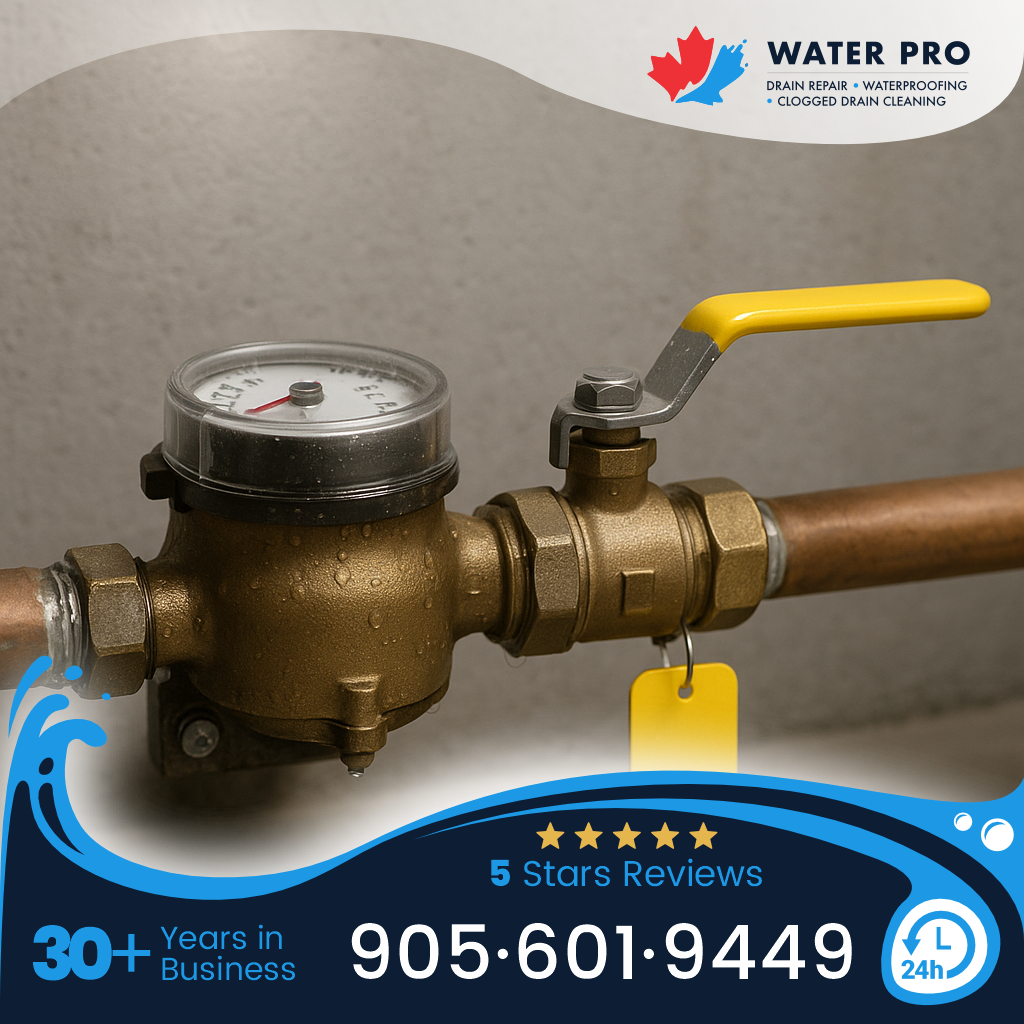
The indoor customer shut-off is often on the foundation wall just before or after the water meter. It may be a quarter-turn ball valve with a lever or an older gate valve with a round wheel.
- Ball valve: usually brass with a lever; one quarter turn stops flow quickly and is easier to operate after years of use.
- Gate valve: has a wheel that may be stiff if not used regularly; turning slowly is the typical approach, but a seized valve is best handled by a plumber.
- If the valve is hard to reach or leaks when operated, a licensed plumber from our plumbing services team can replace it and add accessible isolation points.
Curb Stop And Street Valves
The curb stop is a municipal valve near the property line that gives access to the service line before the meter. It’s usually in a small box or under a cover on the lawn, driveway edge, or sidewalk.
- Municipal curb stops are typically handled by the city; in Toronto you can request a turn-on or turn-off through the municipal service page and 311 if needed (Request water turn on or turn off).
- Homeowners should avoid untrained tampering with curb-stop boxes; a licensed plumber will coordinate with municipal crews when curb-stop access or service-line work is needed.
- Before any work, we review grading, foundation details, and plumbing so the plan fits your home and local code and to keep disruptions minimal.
How To Test, Label, And Upgrade Your Shut-Off
A few considerations we review together: simple checks you can do safely, how to label the valve, and when a plumber should handle upgrades. Testing and clear labelling make emergency actions faster for homeowners, tenants, and contractors.
Simple test steps: close the indoor main or isolation valve, open a tap on the highest floor to relieve pressure, then check a lowest drain or basement tap for flow. If water stops within a few seconds and the meter stops moving, the valve is functioning. Repeat this test every 6–12 months or after seasonal freezes.
- Labeling: attach a weatherproof tag or durable tape to the valve and add a short note in your home paperwork with the valve location and any access tips.
- Accessibility: keep the area around the indoor valve clear and photograph the location for tenants or caregivers.
- Upgrades: replacing an old gate valve with a brass ball valve improves reliability and often reduces future callouts; adding isolation valves to appliances reduces disruption during small repairs.
When To Call A Licensed Plumber
Before any invasive work, a licensed plumber will inspect valve access, pipe materials, and the connection to the water meter or curb stop so the repair follows local code. If the valve is seized, leaking, or located where cutting or trenching is needed, professional service is the right next step.
- What a plumber typically does on-site: visual inspection, operational test, valve replacement if needed, and coordination with municipal crews for curb-stop access. Expect 1–2 hours for an inspection and small valve replacement.
- When curb-stop or service-line work is required, the plumber will request municipal turn-offs and permits; larger service-line jobs may take 1–3 days on site depending on trenching or trenchless methods.
- Our crews are licensed and insured, offer free estimates, and work with municipal timelines and inspections to keep projects compliant and tidy.
Costs, Timelines, And Toronto Rules To Know
Before any work, we review grading, foundation details, and plumbing so the plan fits your home and local code. Costs and timelines vary with access, pipe material, and whether municipal coordination is needed.
- Typical cost ranges (illustrative): small shut-off replacement $250–$750; spot service-line repair $800–$3,000; full service-line replacement $2,000–$8,000 depending on length and method.
- Permits and inspections: some upgrades require permits; allow 1–7 days for permit processing and 1–3 days for inspection scheduling, though busy seasons can add time.
- Municipal work: in Toronto, municipal curb-stop turn-offs or turn-ons are requested through 311; a licensed plumber will coordinate with city crews if the curb stop needs attention.
When planning flood-prevention upgrades, we often coordinate shut-off work with backwater valve or sump installations to reduce repeat disruptions. For details on combined solutions, see backwater valve & sump pumps.
Next Steps For Confident Water Control
It’s helpful to have a short, practical checklist and a clear contact plan for emergencies. Many clients report relief after a simple on-site check and clear labeling; they also appreciate written maintenance steps to share with tenants.
- Homeowner checklist: locate and label the indoor main; test the valve every 6–12 months; keep a small wrench or lever accessible; photograph and note curb-stop location; keep contractor contact details handy.
- Emergency steps: if you can’t close the valve or the valve leaks when operated, call a licensed plumber and, in Toronto, contact 311 for municipal shut-offs if needed. Keep the number (905) 601-9449 ready for fast assistance from our licensed crew.
- Mini-case example: a seized indoor valve replaced in 1–2 hours may cost about CAD 400. By contrast, an unmanaged curb-stop service issue that requires municipal coordination and service-line repair can range CAD 3,000–5,000—showing how quick action can reduce scope and disruption.
If you’d like a licensed team to test, label, or upgrade your shut-off, contact us or Call (905) 601-9449. Our technicians are available 24/7, provide free estimates, and carry warranty-backed workmanship and insurance to keep the job clean and code-compliant.
This article offers general information for homeowners and is not engineering, legal, or plumbing advice. Assessments and solutions are reviewed during an on-site visit by licensed professionals. If you’re considering waterproofing or drain work, feel free to contact us or call — we’ll discuss your goals and outline a plan that feels comfortable and right for your home.
🔗 Learn more: https://waterproofingdrain.com/
📞 Call us: 905 601-9449
✉️ Write us: info@waterproofingdrain.com
🕒 Open hours: Mon – Sat, 9:00am – 9:30pm