


Repair foundation cracks to prevent leaks and settlement is an important consideration for many homeowners in Toronto, the GTA and the Golden Horseshoe. Some homes may show damp corners or a musty odour first, and it often prompts a closer look. We offer 24/7 response, free estimates, licensed and insured crews, and warranty-backed work with careful, clean job setup and documentation.
It’s helpful to know what typical signs mean, what a professional inspection involves, and what repair paths are commonly available. We use plain language in our reports and give realistic timeframes so you can plan next steps comfortably.
What Homeowners Notice First
Many homeowners first notice moisture at the floor–wall joint, a salt-like white stain (efflorescence), or a small wet spot after heavy rain or spring thaw. These early signs are often intermittent, which makes them easy to miss until they become regular.
- Damp corner or wet patch at the base of a wall that comes and goes after storms.
- Musty odour in finished basements or staining along a crack.
- Hairline cracks with occasional seepage, or visible gaps where pests could enter.
If you see any of these, avoid major DIY excavation or invasive plumbing work. A professional visual check can usually tell whether a simple interior injection or a larger drainage fix is needed.
Why Foundation Cracks Happen And What They Can Lead To
A few considerations we review together: cracks form from concrete shrinkage, seasonal movement, soil pressure, poor grading, or unseen plumbing leaks. In Toronto and surrounding areas, freeze–thaw cycles and older foundation details often play a role.
- Common causes: settling, hydrostatic pressure from saturated soil, freeze–thaw cycles, and old or clogged weeping tiles.
- Possible outcomes if movement continues: wider separation at joints, inward bowing, plumbing leaks near footings, and soil washout that can affect drainage.
- Secondary effects: recurring dampness that can support mould growth or attract pests, and reduced property value if left untreated over time.
Addressing the underlying drainage or pressure issue is as important as sealing the crack. For many homes, interior or exterior membrane work and correct grading tie into long-term performance; see our basement waterproofing page for typical approaches.
How A Professional Inspection Works
Before any work, we review grading, foundation details, and plumbing so the plan fits your home and local code. Every property has nuances; we talk them through so you feel informed and comfortable.
Visual And Moisture Assessment
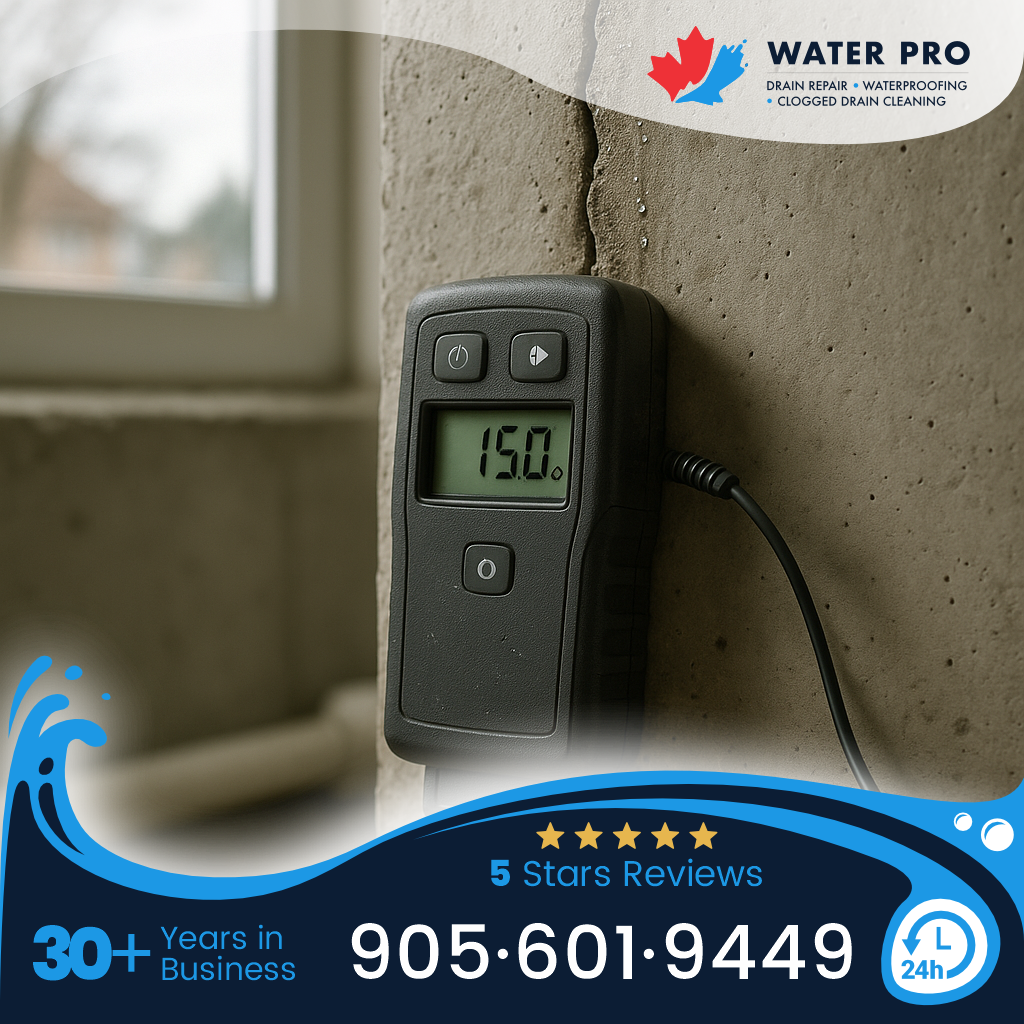
The inspector checks crack width, traces likely water paths, and uses a moisture meter or infrared when helpful. This step typically takes 30–90 minutes for a standard single‑family home and is done with minimal disturbance to your space.
- Look for staining, efflorescence, paint blisters, and previous patchwork.
- Simple moisture mapping and photos are included in the basic report.
Diagnostic Steps And Reporting
When needed, we monitor movement over 1–8 weeks, perform non-invasive dye or water tests, and recommend an engineer if diagonal or horizontal cracks or inward movement appear. The deliverable is a short report with photos, recommended repair options, and rough timelines.
- When an engineer is advised: visible inward bowing, active settlement, or evidence of structural movement.
- Permit note for Toronto/GTA: underpinning, major exterior excavation, and some plumbing changes usually require permits and may need engineered drawings.
If you’d like to schedule an on-site review or talk through options, please contact us or call (905) 601-9449. We offer free estimates and can outline likely next steps after the inspection.
Common Repair Options And What To Expect
It’s helpful to know the repair spectrum so you can match scope to the problem found during inspection. Options range from interior crack injection to structural reinforcement and exterior excavation, each with different timelines and site needs.
Injection Sealing (Epoxy and Polyurethane)
Injection sealing uses ports and resin to fill cracks from the interior or exterior. This method addresses water entry through static cracks rather than movement-driven separation.
- When used: vertical or hairline cracks that leak but show no ongoing movement.
- Process and time: routing small ports, injecting epoxy or flexible polyurethane, and a light patch finish; typically 1–2 days on site for accessible cracks.
- Typical cost range (Toronto/GTA): about $500–$3,000 per crack, depending on access, resin choice, and finish work.
Mini-case example: a single leaking vertical seam in a finished basement was injected and patched in one day with a total cost near $1,500 and a short written report documenting the work.
Reinforcement, Exterior Excavation, And Underpinning
More extensive repairs address structural stress or continuous exterior water pressure. The approach depends on whether the wall is bowed, the footing is failing, or exterior drainage is compromised.
- Carbon-fiber straps or steel anchors: used for mild inward bowing; typically installed over 1–3 days and often avoids exterior digging; budgets commonly run into the mid‑thousands.
- Exterior excavation and membrane waterproofing: used when exterior membrane or drainage is the root cause; work includes digging, repairing footings where needed, and installing a drainage membrane; projects commonly start near $15,000 and scale with access and wall length.
- Underpinning: used when settlement is active or footings need new support; this requires engineering, specialty equipment, and strict safety controls; costs commonly begin in the mid‑five figures and increase with scope.
Permits and engineering: underpinning and major excavations usually require engineered drawings and local permits. For regulatory context, homeowners can consult provincial guidance on underpinning hazards at ontario.ca — underpinning hazards and compliance.
Costs, Permits, Timelines, And Next Steps
A few considerations we review together: cost and schedule depend on access, method, and whether an engineer or permit is required. We provide written scopes so you can compare options.
- Inspection and reporting: many companies offer a free visual inspection; a detailed diagnostic report may cost $100–$300 if moisture mapping or monitoring is needed.
- Work cost ranges summary: injection work $500–$3,000 per crack; reinforcement and anchors several thousand dollars; exterior excavation from ≈ $15,000; underpinning commonly mid‑five figures and up.
- Timelines: simple injections are usually completed in 1–2 days; reinforcement or anchor work can take 1–2 weeks including preparatory steps; exterior excavation or underpinning often requires 2–6 weeks for permits and scheduling, plus the working days on site.
- Permit guidance for Toronto/GTA: structural repairs, underpinning, and some plumbing changes commonly require permits and may need engineered drawings before work begins.
- Savings and subsidy note: programs like Toronto’s Basement Flooding Protection Subsidy Program can affect timing if you apply for partial funding for backwater valves or sump systems; subsidy decisions and inspection steps can add 4–8 weeks to scheduling in some cases.
Common mistakes to avoid: choosing a seal-only fix when drainage or soil pressure is not addressed, delaying an engineered assessment when movement is visible, or attempting complex excavation or underpinning as DIY. Before any work, we review grading, foundation details, and plumbing so the plan fits your home and local code.
Next steps: get a written scope and quote, ask about warranties and post-work maintenance, and schedule an on-site review if movement or active leaks are present. For plumbing-related items like backwater valves or sump pumps, ask about connections to local codes and available subsidies; our plumbing services team can help with those questions.
Moving Forward With Repairs
Many clients feel relief after timely repairs and a clear maintenance plan. We provide documentation, a warranty where applicable, and follow-up guidance so you know what to watch for seasonally.
Our teams are licensed and insured, available 24/7 for urgent concerns, and we offer free estimates and careful, clean work practices. If you’d like to arrange an on-site review or discuss options, please contact us or call (905) 601-9449.
This article offers general information for homeowners and is not engineering, legal, or plumbing advice. Assessments and solutions are reviewed during an on-site visit by licensed professionals. If you’re considering waterproofing or drain work, feel free to contact us or call — we’ll discuss your goals and outline a plan that feels comfortable and right for your home.
🔗 Learn more: https://waterproofingdrain.com/
📞 Call us: 905 601-9449
✉️ Write us: info@waterproofingdrain.com
🕒 Open hours: Mon – Sat, 9:00am – 9:30pm