

Protect Your Basement With Professional Sump Pump Installation is a practical step for many Toronto and GTA homeowners who notice damp corners, a musty odour, or water at the floor–wall joint after heavy rain or spring thaws. Many homeowners first notice moisture at the floor–wall joint or soggy carpet edges; these signs often point to high groundwater or blocked drains rather than a single visible leak. If this sounds familiar, please contact us or call (905) 601-9449 for a free estimate and a quick discussion of options. We offer 24/7 assistance, licensed and insured crews, and warranty-backed work.
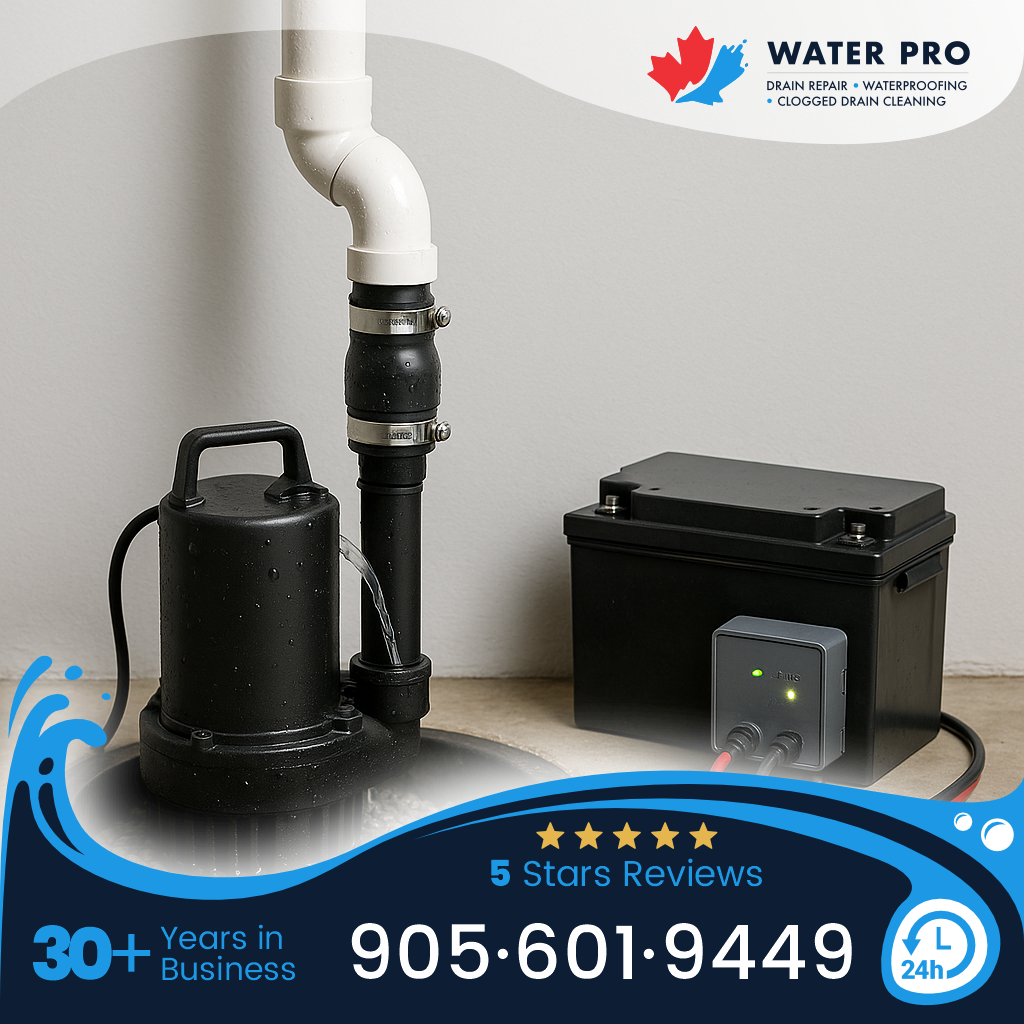
It’s helpful to know what a professionally installed system typically delivers: reliable removal of collected water, options for battery or water-powered backup, and a proper discharge connection that keeps out sewer backflow when paired with a backwater valve. Before any work, we review grading, foundation details, and plumbing so the plan fits your home and local code. After installation, most homeowners report relief and clearer next steps for maintenance and monitoring.
Protect Your Basement With Professional Sump Pump Installation
This section describes common outcomes, what to expect during an assessment, and typical timeframes for Toronto-area work.
Sump pump systems reduce the chance of standing water in finished basements by collecting groundwater and moving it away from the foundation. Typical outcomes include lower long-term repair costs, improved indoor air quality, and reduced mould risk when the system is paired with good drainage and ventilation. We explain likely costs and timelines below so you can make an informed decision.
During an assessment, expect 1–2 site visits in most cases. The initial visit usually takes 30–60 minutes and covers grading, foundation walls, the condition of weeping tile (foundation drains), electrical access, and possible discharge routes. Installation for a standard system is commonly completed in 1–3 days, depending on site access and whether new concrete must be poured or replaced.
What A Sump Pump System Is And How It Works
This section breaks down the assessment and the common installation steps so homeowners know what happens on site.
Professional Assessment Steps
The first step is a measured, on-site review so the team can recommend the right pump size, pit location, and backup approach for your house and budget.
- Inspect the basement interior for signs of seepage, mould, and dampness; note where water typically collects.
- Check foundation drains (weeping tile) and any existing sump pit or basin for condition and flow.
- Assess grading and exterior drainage so the interior system complements outside repairs where needed.
- Confirm electrical access and discuss backup options: battery backup for power outages or water-powered backup where municipal supply permits.
- Review permit needs and local subsidy eligibility for Toronto-area homeowners; we can outline timelines for permits and inspections.
Typical Installation Steps
Work is scheduled to limit disruption and to protect finished spaces; crews follow a clear sequence from excavation to testing.
- Prepare the area and remove a small section of slab if a new sump pit is required; for replacements, service the existing basin.
- Install the sump pit, set the pump, connect the check valve, and run discharge piping to an approved outlet, generally aimed at least 2 m from the foundation where practical.
- Add backup systems and alarms as chosen, and make electrical connections to a dedicated circuit if required by local code.
- Test the system for correct cycling, check valve performance, and alarm response; finish with site cleanup and a short homeowner orientation.
After these steps, we typically schedule any required municipal inspections and provide documentation for warranty and subsidy claims. For more on paired devices, see our backwater valve & sump pumps services page.
Toronto And GTA Requirements, Permits, And Subsidies
This section summarizes the local steps and resources homeowners commonly encounter when adding a sump pump or related devices in Toronto and the surrounding GTA.
Municipal requirements vary by municipality, but many Toronto-area projects need basic permits and an inspection when new plumbing or electrical connections are involved. The City of Toronto also offers a Basement Flooding Protection Subsidy Program that may cover part of the cost for eligible single-family or duplex properties; processing times can vary and sometimes take 8–10 weeks for decisions.
- Building and plumbing permits: required when creating a new sump pit, changing fixed plumbing, or adding a backflow prevention device; inspectors typically verify discharge routing and electrical safety.
- Subsidy eligibility: homeowners should review program criteria and keep receipts and documentation; subsidies usually require pre-approval or receipt submission within program timelines.
- Coordination with exterior work: drainage grading or exterior drain repairs may be recommended alongside an interior sump solution to reduce future issues.
If you’d like help with local paperwork or an estimate that accounts for permits and possible subsidies, we can review the steps with you and include documentation for claims. For broader waterproofing needs, see our basement waterproofing services page for complementary measures.
For details on the municipal subsidy and program rules, refer to the City of Toronto resource: Basement Flooding Protection Subsidy Program (City of Toronto).
Costs, Timelines, And A Small Example
This section outlines typical price ranges, factors that affect cost, and a brief numeric example to make budgeting easier for Toronto-area homeowners.
Costs vary by site conditions, pump type, backup selection, and whether new concrete or exterior discharge work is required. Below are common regional ranges to guide planning.
- Basic replacement of an existing sump pump: approximately $600–$1,500.
- Standard new sump pump installation with pit work: approximately $1,200–$2,800.
- Complex installs (difficult access, interior drain tie-in, high-capacity pumps): $2,800–$4,500+.
- Battery backup systems: commonly add $300–$900 depending on runtime and battery type; water-powered backups can be an alternative where permitted.
- Permit fees and inspection costs vary by municipality and should be factored into the final estimate.
Typical timelines for a standard installation: assessment 1 day, scheduled installation 1–3 days, and municipal inspections within 1–2 weeks depending on local scheduling. If a subsidy application is involved, allow additional processing time as noted above.
Mini-case example: a mid-range new installation with a battery backup and short concrete repair might be quoted at $2,000. After a 1-hour assessment and a 2-day install, the homeowner receives documentation for a subsidy claim and a 1-year labour warranty plus manufacturer warranty on equipment.
Prices and timelines are representative and depend on site-specific factors. For a tailored estimate that reflects your basement layout and local permit needs, call (905) 601-9449 or contact us.
Practical Risks, Maintenance Checklist, And Next Steps
This final section presents common mistakes to avoid, a short maintenance checklist, and clear next steps so you feel comfortable moving forward.
Before any work, we review grading, foundation details, and plumbing so the plan fits your home and local code. Every property has nuances; we talk them through so you feel informed and comfortable.
- Common mistakes: undersized pumps, incorrect discharge placement, missing or faulty check valves, and no backup plan for power outages.
- Typical outcomes if issues go unaddressed (stated calmly): persistent dampness, higher repair costs over time, and possible complications with insurance or resale if documentation is lacking.
- Professional support: licensed installers follow code, provide documentation for permits and subsidies, and offer manufacturer and labour warranties for covered work.
Maintenance checklist (practical items you can schedule or confirm with a service provider):
- Inspect and test the pump every 6 months; listen for unusual noises and check cycling under test conditions.
- Test battery backup monthly and replace batteries according to the manufacturer’s recommended schedule.
- Keep the discharge point clear and unobstructed; aim for at least 2 m from the foundation where local code allows.
- Service the check valve and backwater valve annually or as the product manual advises; schedule a licensed plumber for cleaning or repairs.
Next steps: arrange an on-site review so we can measure, quote, and show how a sump pump will work with your existing drainage and any needed exterior repairs. We provide clear timelines, a written quote, and documentation for permits or subsidy applications when applicable.
If you’d like to book a free estimate, please contact us or call (905) 601-9449. We offer 24/7 assistance, licensed and insured crews, and warranty-backed work with careful cleanup after the job.
This article offers general information for homeowners and is not engineering, legal, or plumbing advice. Assessments and solutions are reviewed during an on-site visit by licensed professionals. If you’re considering waterproofing or drain work, feel free to contact us or call — we’ll discuss your goals and outline a plan that feels comfortable and right for your home.
🔗 Learn more: https://waterproofingdrain.com/
📞 Call us: 905 601-9449
✉️ Write us: info@waterproofingdrain.com
🕒 Open hours: Mon – Sat, 9:00am – 9:30pm