
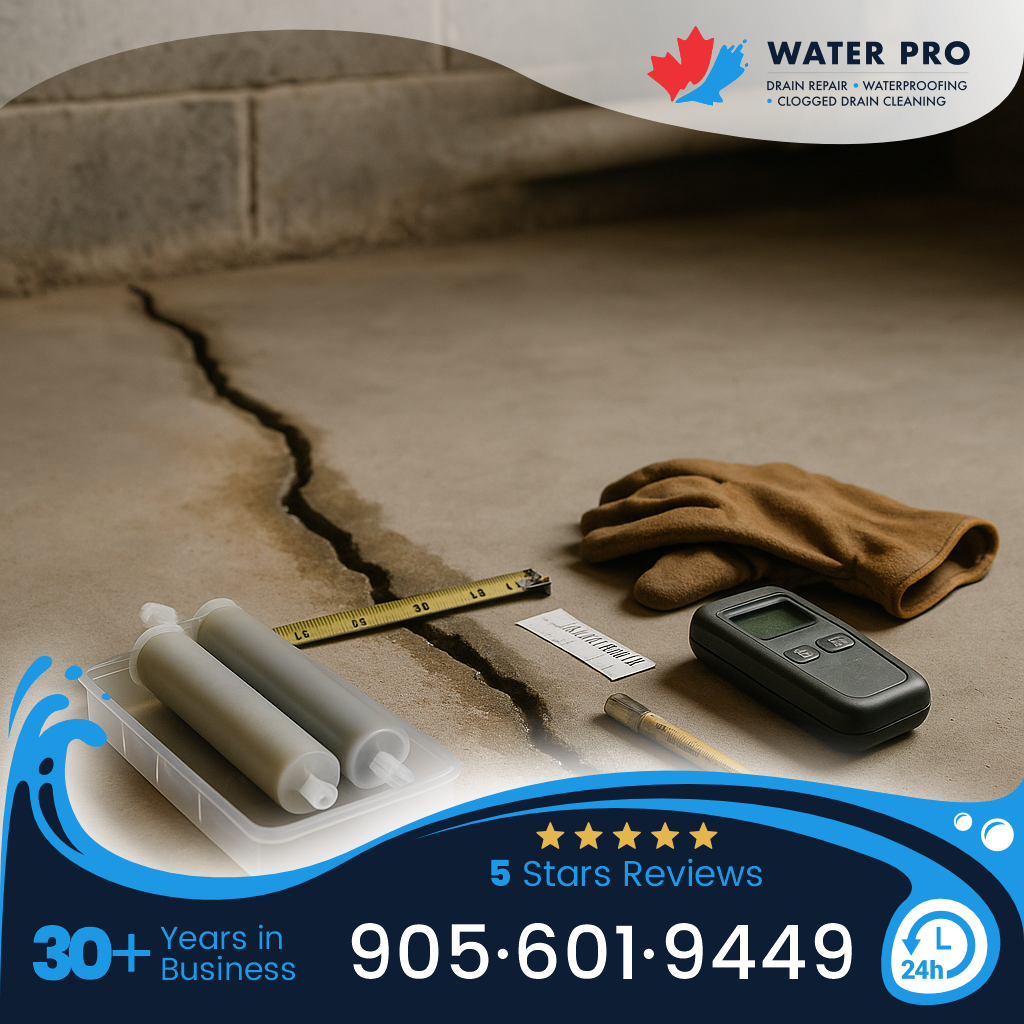


It’s helpful to know how visible floor problems usually relate to the structure beneath your home. Many homeowners first notice damp corners, a musty odour, hairline or widening cracks at the floor–wall joint, or slight slope underfoot. Early on we focus on practical steps to repair concrete floors and protect your foundation while keeping disruption low and work compliant with Toronto and GTA building practices. We offer fast 24/7 assistance, free estimates, licensed and insured crews, warranty-backed work, and careful clean-up so you feel supported through the process.
What Cracks, Slope And Sinking Floors Likely Mean
It’s helpful to know what different patterns typically indicate about the slab and foundation.
Not all cracks are the same. Hairline shrinkage cracks commonly appear soon after pouring, while diagonal or stepped cracks and noticeable floor slope point toward foundation settlement or slab movement. You may also see doors or windows that stick or small gaps where the floor meets the wall.
- Signs to watch: diagonal cracks wider than a few millimetres, new or growing gaps, uneven floors, and recurring damp patches in spring thaws.
- How it often feels inside: slight tilt when you walk, cold or damp feeling near the perimeter, and occasional musty odour from moisture buildup.
- How moisture fits in: water entering at cracks or joints often links to exterior grading or failing interior drains; a full waterproofing approach can include membranes, interior drainage and sump systems like those we install for basement waterproofing.
If you’d like an on-site assessment, contact us or call (905) 601-9449 for a free estimate and to discuss next steps.
A Few Considerations We Review Together During Inspection
Before any work, we perform a focused inspection so the repair plan fits your home and local code.
Visual And Non‑Destructive Checks
We begin with simple observations and measurements that show how the slab is behaving.
- What we look for: crack pattern, crack width, floor slope measurements, interior moisture readings, and evidence of past repairs.
- Tools and time: level or digital inclinometer readings, moisture meter checks, and photos; a standard single‑family inspection commonly takes 30–90 minutes.
- Typical outcome: a clear recommendation for monitoring, targeted slab/crack repair, or referral to an engineer where structural underpinning may be required.
Soil, Drainage And Plumbing Review
Ground and plumbing conditions often affect how and why a slab moves.
- Checks include grading, downspout discharge, soil saturation, weeping tile condition, and history of sump or backwater devices.
- We also note permit or municipal considerations for the Toronto & GTA area and recommend licensed plumbers for any work on sanitary or storm connections and backwater valves.
- Every property has nuances; we talk them through so you feel informed and comfortable with the recommended next steps.
Common Repair Options And What To Expect On Site
Repairs are chosen to match the cause and site conditions; we describe common options and what a homeowner typically sees during the work.
Slab And Crack Repairs (epoxy/polyurethane)
This approach addresses many slab cracks and interior leaks with limited excavation and fast turnaround.
- How it works: cracks are cleaned and prepared, then injected under pressure with epoxy for structural bonding or polyurethane for sealing active water leaks.
- Timeline and disruption: most injections take 1–2 days of on‑site work; follow‑up surface repair and a short cure period may add another day or two.
- What homeowners can expect: crews work from inside or small exterior slots, leave a clean work area, and provide post‑repair photos and care notes. Many clients report relief and clear maintenance steps after the cure period.
- When this is appropriate: isolated or non‑moving cracks, localized seepage, and cases where soil and drainage improvements are not requiring full structural work.
- Related systems: interior drainage and sump systems or backwater protection are commonly recommended alongside injections to manage water routes; see backwater valve & sump pumps for typical installations and service.
Underpinning, Basement Lowering And Structural Stabilization
More extensive settlement can require engineered, staged work to return load to stable soils or add new support under the footing.
- How underpinning works in brief: sections of footing are exposed in sequence and new concrete piers, steel push piers, or cast‑in‑place supports are installed to transfer load to deeper, competent soil.
- Basement lowering: when extra headroom is needed, controlled excavation and new slab pours are done with structural and waterproofing measures combined.
- Time and logistics: underpinning is staged for safety and often takes weeks for the structural work itself; scheduling includes engineering review, permit time, and staged construction phases to limit movement during the work.
- What homeowners can expect: phased work, temporary barriers, regular engineer inspections as required by code, and clear communication about access and timing.
- When this is appropriate: visible progressive settlement, large differential movement or when lifting/leveling is part of a larger renovation plan that includes waterproofing and drainage upgrades.
Timelines, Typical Costs And Toronto‑Specific Rules
Costs and timing depend on scope, access, and municipal requirements. Below are realistic ranges and common local rules for Toronto and the GTA.
- Inspection and estimate: on‑site diagnostic visits commonly take 30–90 minutes; written estimates are often provided within 2–5 business days.
- Crack injection: typical single‑visit repair work is 1–2 days; small interior injections and cosmetic repairs commonly range from $500–$3,000 depending on length and access.
- Moderate slab repairs and interior drainage work: commonly $2,500–$12,000 depending on scope, basement layout and drainage needs.
- Underpinning and basement lowering: these require engineered designs and permits and can be substantially higher; estimates are provided after an engineering report and site measurement. Work is staged and timelines can span several weeks to months from assessment to completion.
- Permits and subsidies: underpinning and structural changes usually need building permits and inspections. For homeowners addressing flood risk, the City of Toronto runs programs for backwater valve and sump installations; eligibility and timelines vary by program and application processing may take several weeks. See City of Toronto: basement flooding protection subsidy program for details.
Risks, A Short Case Example And A Homeowner Checklist
Presenting the full picture helps you choose the right next step. Below we calmly outline likely outcomes and practical homeowner actions.
Risks in context: if visible signs are left without assessment, many homes may see cracks widen, doors or windows stick, increased slope, or more frequent damp spots and mould growth where moisture enters. Before any work, we review grading, foundation details, and plumbing so the plan fits your home and local code. Every property has nuances; we talk them through so you feel informed and comfortable.
Mini numeric example:
- Symptom: new 8–12 mm diagonal crack at the basement floor–wall joint, slight floor slope and a damp patch after spring thaw.
- Immediate steps: take dated photos, limit heavy loads on the affected area, and book a licensed inspection (30–90 minutes).
- Typical first‑line costs and schedule: diagnostic visit $150–$350; targeted crack injection and interior joint repair $800–$3,000; if underpinning is recommended, an engineer’s report and staged quote follow.
Homeowner checklist before a site visit:
- Photograph cracks and damp areas with dates and notes on when symptoms first appeared.
- Gather any past repair records, sump or backwater valve service history, and permit documents if available.
- Ask for proof of licence and insurance, written estimates, and a simple timeline before work begins.
If you’d like to discuss a specific situation in the Toronto or GTA area, contact us or call (905) 601-9449 for a free estimate and to plan the next steps. Our teams are available 24/7 for urgent concerns and we provide warranty‑backed, licensed work with careful site housekeeping.
This article offers general information for homeowners and is not engineering, legal, or plumbing advice. Assessments and solutions are reviewed during an on-site visit by licensed professionals. If you’re considering waterproofing or drain work, feel free to contact us or call — we’ll discuss your goals and outline a plan that feels comfortable and right for your home.
🔗 Learn more: https://waterproofingdrain.com/
📞 Call us: 905 601-9449
✉️ Write us: info@waterproofingdrain.com
🕒 Open hours: Mon – Sat, 9:00am – 9:30pm