
Stop Sewer Backups Before They Flood Your Basement is the goal for many homeowners in Toronto and the GTA. It helps to know the common signs, typical causes, and the professional steps available to reduce risk to your home and occupants.
Many homeowners first notice damp corners, a musty odour, or gurgling from floor drains. These are signs that sewer water or blocked drains may be affecting a lower-level space. If you need immediate help, you can contact us or call (905) 601-9449 for 24/7 assistance and a free estimate from licensed, insured technicians.
Some homes may see seepage during spring thaws or after heavy storms. This is common in older foundations and can relate to blocked laterals, tree-root intrusion, or overwhelmed municipal systems. Before any work, we review grading, foundation details, and plumbing so the plan fits your home and local code.
What A Sewer Backup Feels Like
Many homeowners describe the problem in simple, sensory terms: smell, sound, and dampness. These clues help a technician prioritise the next steps during an assessment.
- Odour: a persistent, strong sewage smell in the basement or around floor drains.
- Drain behaviour: slow drains, multiple fixtures backing up at once, or gurgling sounds from floor drains or toilets.
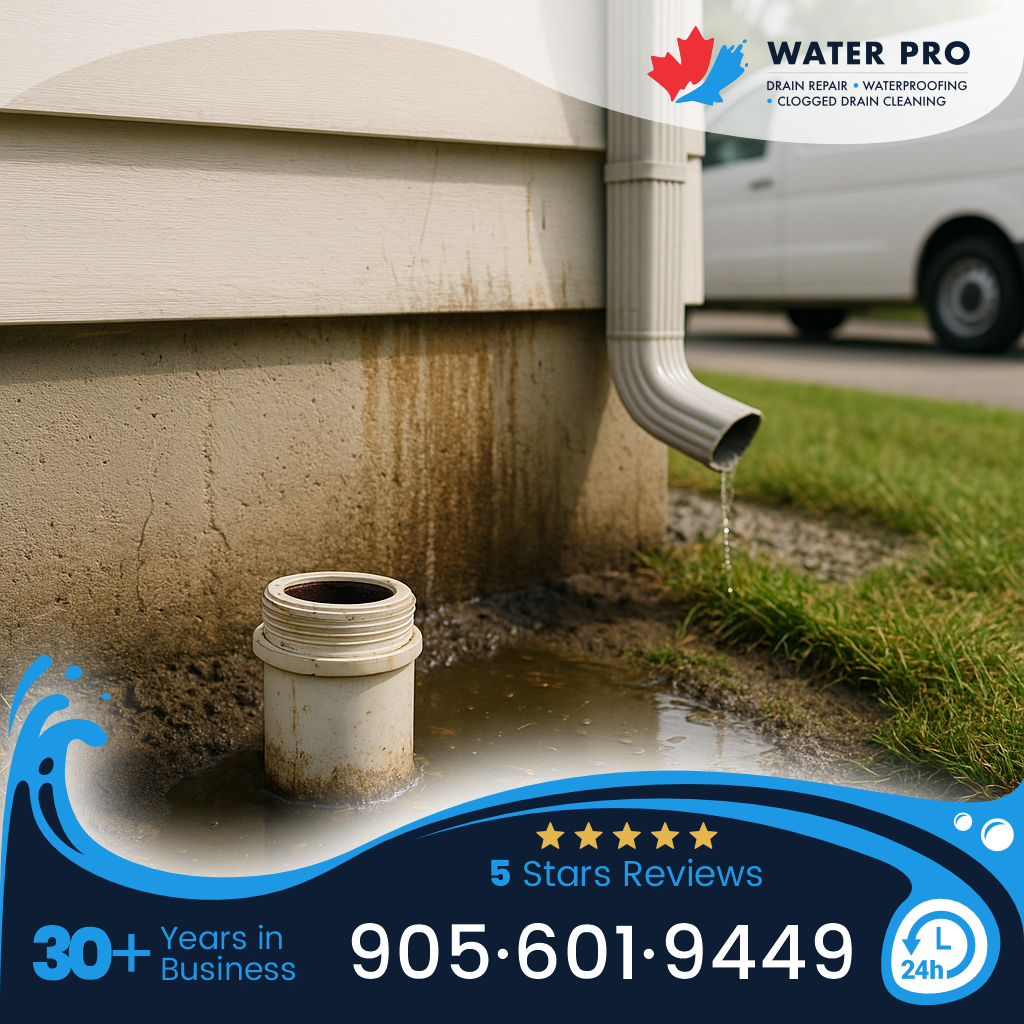
- Visible signs: water from floor drains, damp or discoloured walls near the floor–wall joint, or wet stored items in a low-level unit.
- Timing: backups often happen during heavy rain, rapid snowmelt, or when municipal sewers are under high flow.
For guidance on moisture and mold that can follow sewage exposure, see Canada.ca’s homeowner resources on moisture and mould.
Common Causes And How Professionals Assess Them
It’s helpful to know what typically leads to backups so homeowners understand the assessment process and realistic next steps.
Inspection Steps
Assessments begin with history and a visual check, then progress to targeted diagnostic tools when needed.
- Initial interview and visual inspection of the sump pit, floor drains, and obvious entry points.
- Camera inspection of the sewer lateral and main drain to look for cracks, roots, or blockages.
- Smoke or dye testing when cross-connections or hidden inflows are suspected.
What We Check On Site
Before recommending work, technicians look at both plumbing and site conditions that influence backups.
- Condition of the sewer lateral: signs of collapse, offsets, root intrusion, or grease build-up.
- Location and access to cleanouts and the main connection; for camera inspection and lateral repair options, see drain repair & services.
- Grading and surface drainage around the foundation and the condition of any existing sump or backwater devices.
- Documentation: photos and a clear scope so you have an itemised recommendation and timeline.
Prevention Options: Valves, Pumps, And Pipe Relining
It’s helpful to know the common technical options and how they work together to reduce the chance of a backup. A combination of devices and targeted repairs is often more effective than a single measure.
Common options address different entry paths: municipal flow, groundwater, and damaged private pipes. For example, a backwater valve prevents sewage from the municipal main from flowing back into your basement, while a sump pump handles groundwater and surface inflow. For information on installations and systems, see backwater valve & sump pumps.
- Backwater valve: installed on the main sanitary lateral to block reverse flow from the sewer main. Regular inspection is recommended, especially after a heavy rainfall event.
- Sump pump with battery backup: pumps groundwater from a sump pit and keeps operating during power outages with a battery or generator backup.
- Pipe relining and repairs: trenchless relining repairs cracks and joints or seals roots without full excavation, restoring flow capacity and structural integrity.
- Surface drainage and grading: redirecting surface water away from the foundation reduces the load on basement drains and sump systems.
Choosing The Right Mix
Before any installation, we review how grading, foundation details, and existing plumbing interact so the plan fits your home and local code. Every property has nuances; we talk them through so you feel informed and comfortable.
- When combined systems make sense: many Toronto homes benefit from a backwater valve plus a dedicated sump pump with battery backup, and targeted relining of damaged sections.
- Maintenance expectations: schedule an annual valve inspection and test the sump pump regularly. Backup batteries typically last 2–5 years depending on use and type.
- Operational notes: camera inspection and flow tests typically identify which combination will reduce recurring backups most cost‑effectively.
Costs, Timelines, And Local Subsidies
A few considerations we review together include estimated costs, how long work usually takes, and whether local programs can offset expenses.
- Typical cost ranges (estimates): backwater valve installation $2,000–$4,500; sump pump systems $700–$3,500; trenchless pipe relining $2,000–$8,000 depending on length and condition. Final quotes come from an on-site assessment.
- Timelines: simple installs often take 1–2 days; combined projects or those requiring excavation can take 3–7 days plus permit time. Camera diagnostics and written estimates are usually delivered within 1–2 business days of inspection.
- Toronto subsidy and permit notes: the City of Toronto offers a Basement Flooding Protection Subsidy Program for eligible items such as backwater valves and sump pumps. Program eligibility, permit requirements, and inspection steps affect timing and final cost. See the City of Toronto program page for details and current rules.
Example: a mid-century detached home in the GTA had repeated backups. After a camera inspection on day 1, the recommended scope was a backwater valve plus a sump pump with battery backup and a short relining section. The work took 2 days, and the owner paid about $3,800 before applying for a local subsidy; final out-of-pocket cost depended on rebate eligibility and permit fees.
Next Steps And How We Help
Before we begin, we check the sewer lateral, grading, and interior plumbing so the plan fits your home and local code. This helps produce a clear scope, timeline, and estimate you can use for insurance or subsidy applications.
- Homeowner checklist before a visit: note when backups happen (after rain, during thaw, or intermittently), list affected fixtures, and check any existing sump or valve documentation.
- What to expect during our visit: a 30–90 minute assessment, camera inspection if needed, and a written estimate within 1–2 business days. If work is scheduled, small installs are often completed in 1–2 days.
- Common outcomes: clients usually report relief and clearer maintenance steps after work, such as inspection intervals and battery replacement schedules.
If you’d like an assessment, please contact us or Call (905) 601-9449. We offer licensed, insured technicians, 24/7 emergency response, free estimates, and warranty-backed workmanship with clean, careful job execution.
This article offers general information for homeowners and is not engineering, legal, or plumbing advice. Assessments and solutions are reviewed during an on-site visit by licensed professionals. If you’re considering waterproofing or drain work, feel free to contact us or call — we’ll discuss your goals and outline a plan that feels comfortable and right for your home.
🔗 Learn more: https://waterproofingdrain.com/
📞 Call us: 905 601-9449
✉️ Write us: info@waterproofingdrain.com
🕒 Open hours: Mon – Sat, 9:00am – 9:30pm