


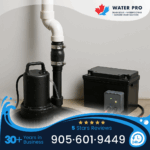

Sump Pump Battery Backup: Flood Protection During Power Outages is a practical option for Toronto and GTA homeowners who want protection when the grid or a primary pump fails. Many homeowners first notice damp corners, a musty odour, or slow seepage at the floor–wall joint before thinking about a backup. If that sounds familiar, it’s helpful to know a few straightforward options and what a professional assessment typically covers.
Before any work, we review grading, foundation details, and plumbing so the plan fits your home and local code. We offer fast 24/7 assistance, free estimates, licensed and insured service, and warranty-backed work. If you’d like a site assessment, contact us or call (905) 601-9449.
How A Battery Backup Pump Works
A battery backup system runs when mains power is out or the primary pump fails. This bridge describes the activation scenario and main components.
A typical system includes a deep‑cycle battery, a charger/monitor, an automatic switch, and an audible alarm. The main pump runs from grid power in normal conditions. If power is lost or the main pump stops, the backup pump activates automatically and discharges water away from the foundation.
- Automatic switch: senses water level or loss of mains power and starts the backup pump.
- Battery type: deep‑cycle batteries are common because they handle repeated discharge cycles better than starter batteries.
- Alarms and monitors: audible alerts and digital monitors let you know the backup is running or the battery is low.
- Run time varies: a 12‑volt deep‑cycle battery sized to the pump’s draw may run several hours; actual time depends on pump size and duty cycle.
Why Backup Matters For Toronto Basements
This bridge notes local risks such as spring thaws, heavy summer storms, and high water tables in the Golden Horseshoe.
Some homes may see seepage during spring thaws. This is common in older foundations and often relates to hydrostatic pressure and saturated soils. During storms or power outages, a primary pump that can’t run raises the chance of basement flooding, which can complicate repairs and insurance claims.
Many homeowners first notice small signs like damp drywall or puddling near the sump pit before a larger problem develops. Every property has nuances; we talk them through so you feel informed and comfortable. For homeowners in Toronto, the city’s basement flood protection resources can help explain subsidy or permit details when applicable (Toronto BFPSP).
Backup Options, Costs, And Typical Timelines
This bridge introduces the common backup choices and what homeowners usually consider when comparing systems.
Common Backup Types
Bridge: three main routes are battery-powered secondary pumps, water-powered backups, or combined systems for added redundancy.
- Battery-powered secondary pump: uses a deep‑cycle battery, automatic float/switch, and audible alarm. It’s widely used for residential retrofits and can run for hours depending on battery amp-hours and pump draw.
- Water-powered backup: uses municipal water pressure and needs adequate supply pressure; not suitable for homes on private wells.
- Combo systems: install both battery and water-powered backups together for extra protection, often paired with a primary unit and a backflow prevention device. For combined solutions, technicians often coordinate with backwater valve & sump pumps work.
Cost And Timeline Ranges
Bridge: here are typical price bands and scheduling expectations for GTA homes.
- Installed costs (typical ranges): battery backup $600–$1,200; water-powered backup $300–$1,000; combo systems $1,000–$3,000. Final quotes vary by pit access and electrical needs.
- Installation time: many retrofits are completed in 1 day; more complex jobs or those requiring permits can take longer to schedule.
- Battery life and replacement: deep‑cycle batteries commonly last 3–5 years; budget $100–$400 for replacement batteries depending on capacity and type.
Installation, Testing, And Maintenance
This bridge explains what homeowners can expect during installation and the routine checks that follow.
Onsite installation typically begins with a short assessment of the sump pit, pump size, float configuration, and electrical access. In many standard homes a retrofit can be completed in 1 day. More complex setups that need wiring upgrades or permit work may take longer to schedule.
During installation, technicians fit the backup pump and battery, connect the automatic switch and alarm, and route the discharge away from the foundation. We verify electrical connections and test the system under load before cleaning the work area. Every property has nuances; we review grading and plumbing so the plan fits your home and local code.
Testing And Alarm Checks
This bridge covers regular homeowner checks and what pros will test during service calls.
- Monthly quick test: use the test switch or briefly interrupt mains power so the backup activates. Confirm the pump runs and the alarm sounds.
- Record the run time and any odd noises; note whether the alarm resets and whether charging indicators read normally.
- Professional inspection: ask for an annual service to check the charger, float switch calibration, wiring, and alarm function. Technicians will simulate load and measure battery health.
- For electrical work or if you see unusual behaviour, contact a licensed technician rather than attempting repairs yourself.
Battery Replacement And Service Intervals
This bridge outlines expected lifespans and recommended service intervals for deep‑cycle batteries and system components.
- Battery life: deep‑cycle batteries commonly last 3–5 years depending on usage, temperature, and maintenance.
- Replacement budgeting: expect $100–$400 for a replacement battery, varying by capacity and brand.
- Service cadence: schedule an annual professional inspection and plan to replace the battery on a multi‑year schedule. Keep records of tests and replacement dates for maintenance and insurance purposes.
- Safe disposal: used batteries are processed as hazardous materials; follow local guidelines for drop‑off or ask your service provider to manage disposal.
What To Expect From A Professional Visit And Next Steps
This bridge describes the typical onsite process, the written estimate you’ll receive, and simple next steps to move forward.
Most standard home inspections take 30–60 minutes. For multi‑unit or foundation repairs the visit may be longer. The technician checks grading, weeping tile access, sump pit size, pump capacity, and electrical access. We also review discharge routing and any backwater valve or sewer‑connection issues that affect the final plan.
- Written quote: you’ll get a clear scope with options (battery backup only, water‑powered backup, or a combined solution) and a timeline. Many straightforward retrofits install in 1 day; scheduling is usually 1–2 weeks depending on demand.
- What homeowners typically feel: relief and clearer next steps. After a visit you should have a maintenance checklist and a recommended service interval.
- Common mistakes we see: undersized batteries that run out too quickly, discharge routed too close to the foundation, or skipping annual checks. Before any work, we review grading, foundation details, and plumbing so the plan fits your home and local code.
Mini case example: a 50 AH deep‑cycle battery paired with a 1/3 HP backup pump may provide roughly 3–8 hours of intermittent run time depending on duty cycle. A typical GTA retrofit that includes labor and parts might total about $900, though final pricing depends on site access and system choice.
If you’re considering broader moisture control at the same time, ask about combined quotes for sump upgrades and basement waterproofing. Bundling work can be more efficient and gives a single maintenance plan.
A Practical Next Step For Your Home
This bridge offers a calm, specific next step to move from concern to a plan that fits your property and budget.
Start with a short onsite assessment so a licensed technician can match a backup solution to your pit, pump, and electrical access. If you’d like a site visit and a free estimate, contact us or call (905) 601-9449. We provide licensed, insured crews and warranty-backed work, and we will leave the site clean and documented.
This article offers general information for homeowners and is not engineering, legal, or plumbing advice. Assessments and solutions are reviewed during an on-site visit by licensed professionals. If you’re considering waterproofing or drain work, feel free to contact us or call — we’ll discuss your goals and outline a plan that feels comfortable and right for your home.
🔗 Learn more: https://waterproofingdrain.com/
📞 Call us: 905 601-9449
✉️ Write us: info@waterproofingdrain.com
🕒 Open hours: Mon – Sat, 9:00am – 9:30pm