
Pipe & Drain Relining: Fast No-Dig Repairs is a trenchless option that fixes cracked, corroded or root-intruded sewer and drain pipes without open excavation. Many homeowners first notice problems as slow drains, repeated backups, or a musty odour near the floor–wall joint. In Toronto and the GTA, relining is often chosen where digging would damage landscaping or driveways, or when a quicker repair is needed.
It’s helpful to know we offer fast, 24/7 response, free estimates, licensed and insured crews, and warranty-backed work. If you’d like a site review, contact us or Call (905) 601-9449 for a free estimate and next steps.
What Pipe & Drain Relining Means For Homeowners
This section explains the basics and what a homeowner can expect during an assessment and repair.
Cured-in-place pipe (CIPP) relining restores the inside of the existing pipe by inserting a resin-saturated liner and curing it in place. The work is described as trenchless or no-dig because it avoids large excavations along the lateral between the house and the municipal connection. Many homeowners appreciate that landscaping and hardscaping are preserved and restoration costs are typically lower.
- Typical signs: slow drains, recurring backups, wet or damp spaces near the floor–wall joint, or a persistent musty smell.
- Common pipe types: older clay and cast-iron laterals often benefit from relining when the host pipe is continuous enough to accept a liner.
- Service experience: most residential lateral relines are scheduled with a CCTV inspection first, then cleaning and lining, with minimal surface disturbance.
For more details on scope and services, see our pipe & drain relining page.
How Trenchless CIPP Relining Works
This overview describes the main steps you’ll see on site and typical timeframes.
Inspection And Preparation
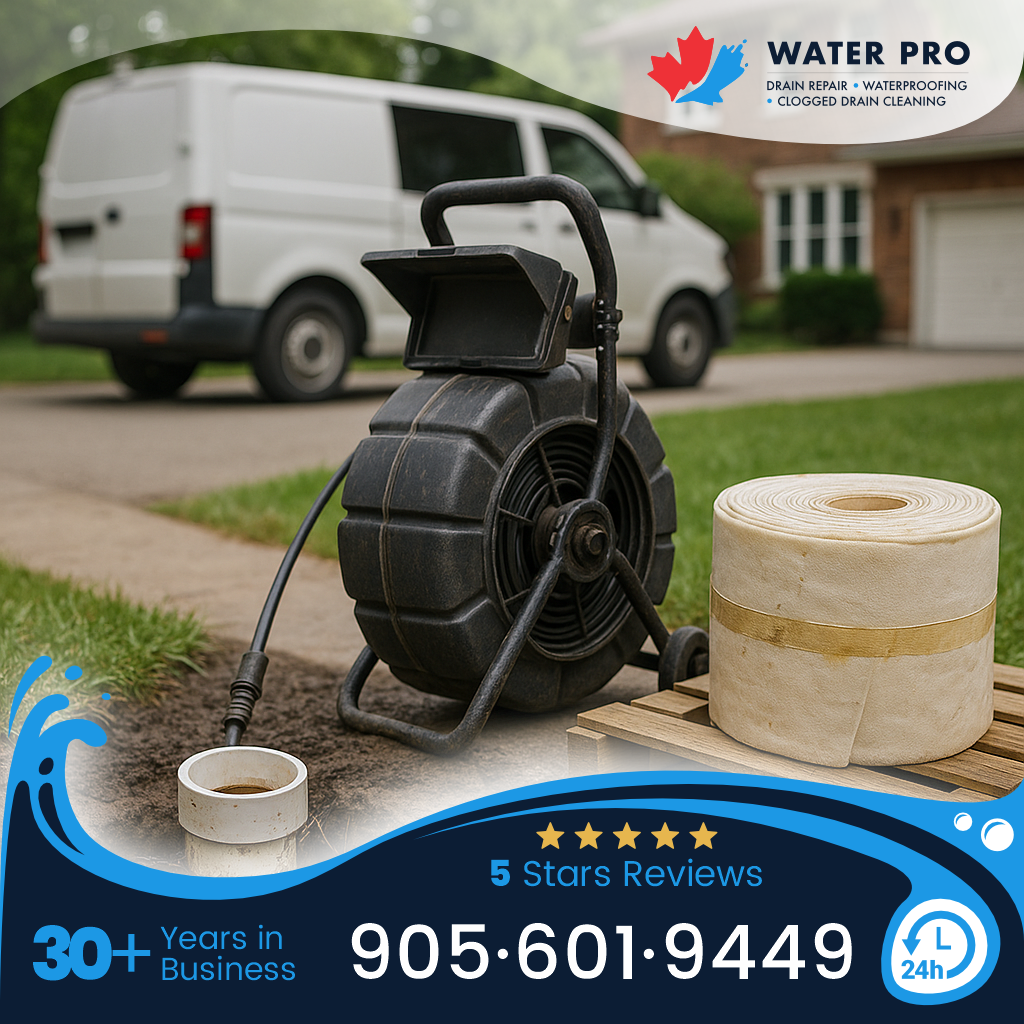
We begin with a CCTV camera inspection to map defects and identify laterals and connections. This report gives clear images and a written recommendation you can keep.
- CCTV inspection usually takes a few hours and shows cracks, offsets, root intrusion, and the condition of joints.
- Cleaning and root removal follow; crews use mechanical cutters and high-pressure water to prepare the host pipe. This step commonly takes 0.5–1 day depending on buildup.
- Before any work, we review grading, foundation details, and plumbing so the plan fits your home and local code.
Liner Insertion, Curing And Testing
Once the pipe is prepared, a resin-saturated liner is inserted and cured to form a new pipe within the old host pipe.
- Insertion methods vary (inversion or pull-in), and curing is done with hot water, steam, or UV light. Cure cycles are typically completed in the same day or within 24 hours for a standard lateral.
- After curing, crews reinstate service connections using robotic cutters or pre-formed connection points, then run a final CCTV and leak or pressure test.
- Clients usually receive a post-installation report and warranty documentation. Every property has nuances; we talk them through so you feel informed and comfortable.
Who Benefits And Toronto / GTA Considerations
This section covers which properties are good candidates and what to check locally before work begins.
Good candidates include homes with clay or cast-iron laterals, moderate cracking, root intrusion, or repeated backups where the pipe is not collapsed or badly offset. Full replacement may be required if the host pipe has severe structural failure.
- Property types: older detached homes and heritage properties in the Golden Horseshoe often choose relining to protect landscaping and driveways.
- Municipal context: private sewer lateral responsibility and permit requirements vary by municipality. In Toronto, homeowners should confirm permit needs and any local procedures before starting work. City of Toronto – permits
- What to ask: request a CCTV report, a clear scope of work, timeline expectations, and warranty terms before scheduling.
Timelines, Typical Costs And A Mini-Case Example
This section gives realistic timeframes and ballpark cost ranges so you can plan and compare options for trenchless repairs.
Typical timelines: a CCTV inspection and cleaning often take 1 day. Lining and curing for a residential lateral commonly take 1–2 days. Allow extra time for municipal permits or complex access; that may add days or a few weeks depending on local procedures.
- CCTV inspection: commonly $300–$800 for a residential lateral and a written report.
- Cleaning and root removal: commonly $300–$1,200 depending on severity.
- Relining (material + installation): typical residential ranges often fall between $100–$300 per linear foot; total depends on length, access and pipe diameter.
- Permits and minor restoration: $0–$2,500 depending on municipality and whether landscaping or hardscaping needs work.
Service experience: for many homes the active work (inspection, cleaning, liner installation and testing) is completed in 1–3 days. Larger jobs or permit timelines extend the calendar schedule.
Mini-case example (illustrative): a 30 ft private sewer lateral in Toronto with moderate root intrusion.
- CCTV inspection and report: $500.
- Cleaning and root cutting: $700.
- Relining at $150/ft × 30 ft = $4,500.
- Minor cleanout installation and permit fee: $400.
- Approximate total: $6,100 (range roughly $4,000–$9,000 depending on access and condition).
This example shows why many homeowners choose trenchless relining: the direct repair cost can be lower than a full dig-and-replace when you factor in landscaping and driveway restoration. Every home is different; we provide a site-specific quote after an on-site CCTV review.
Practical Next Steps And Homeowner Checklist
This final section lists clear actions you can take and what to ask during a site visit so you feel informed and comfortable with the plan.
- Arrange a CCTV inspection and request the full report and video before approving work.
- Ask whether the proposed liner meets common industry practice and testing standards, such as ASTM F1216, and request post-install CCTV and testing documentation. ASTM F1216 – CIPP standard
- Confirm who is responsible for the private sewer lateral and check local permit needs with your municipality before scheduling work.
- Request a written scope that lists line items (inspection, cleaning, liner, reinstating connections, testing, and any restoration). Ask about warranty terms and what follow-up inspections are included.
- Keep records and plan periodic CCTV checks every 3–7 years or sooner if you notice slow drains or backups.
Risks and common mistakes presented calmly: delaying assessment can mean repeated backups or emergency calls, and a severely collapsed pipe may later require full replacement with more disruption. Before any work, we review grading, foundation details, and plumbing so the plan fits your home and local code. Every property has nuances; we talk them through so you feel informed and comfortable.
If you’d like a clear next step, we can schedule a CCTV inspection and free estimate. For service or questions, contact us or Call (905) 601-9449.
This article offers general information for homeowners and is not engineering, legal, or plumbing advice. Assessments and solutions are reviewed during an on-site visit by licensed professionals. If you’re considering waterproofing or drain work, feel free to contact us or call — we’ll discuss your goals and outline a plan that feels comfortable and right for your home.
🔗 Learn more: https://waterproofingdrain.com/
📞 Call us: 905 601-9449
✉️ Write us: info@waterproofingdrain.com
🕒 Open hours: Mon – Sat, 9:00am – 9:30pm