


Weeping Tile Installation: Keep Basements Dry is a practical way to manage groundwater around foundations and reduce basement seepage. Many homeowners first notice damp corners, a musty odour, or water pooling at the floor–wall joint before they call for help. This article explains what a weeping tile system does, how professionals assess options, and what you can expect during work in the Toronto and GTA area.
We write in a calm, homeowner-first way. You will read clear descriptions of common signs, a neutral overview of interior and exterior approaches, and simple time and cost frames so you can plan. If you need an on-site review, please contact us or call (905) 601-9449 for a free estimate. We offer 24/7 assistance, licensed and insured crews, warranty-backed work, and careful jobsite practices.
What Is Weeping Tile and Why It Matters
Many older and newer homes use a perforated pipe placed at the footing level to collect groundwater and move it away from the foundation. This foundation drain—often called weeping tile or a French drain—reduces hydrostatic pressure that can push water through cracks or joints.
Some homes may see seepage during spring thaws or after heavy rain. This is common in areas with a high water table or clay soils, both of which occur across parts of the Golden Horseshoe. Before any work, we review grading, foundation details, and plumbing so the plan fits your home and local code.
During an inspection, technicians look for damp spots, efflorescence, and where water enters or pools. They check downspouts, lot grading, existing drains, and the condition of any sump pump or backwater valve. Typical on-site inspections take 30–90 minutes and include a written summary of options.
How Weeping Tile Systems Work
Weeping tile systems collect water at the base of the foundation and move it to a safe discharge point. Options include routing to a sump pump, routing to a storm connection where permitted, or tying into an exterior daylighting point when the lot allows.
Exterior Weeping Tile
Exterior systems require excavation along the foundation to the footing level. The pipe is bedded in clean stone and wrapped or protected as needed. Work steps commonly include excavation, removal of old backfill, placing perforated pipe, stone backfill, and restoration of soil and landscaping.
- Excavation and footing-level trenching.
- Perforated pipe in washed stone with geotextile protection as appropriate.
- Discharge routed to a storm connection or daylighted away from the foundation, depending on local allowances.
- Landscaping and hardscape restoration after backfill; timing for final landscaping often 1–4 weeks.
Interior Weeping Tile
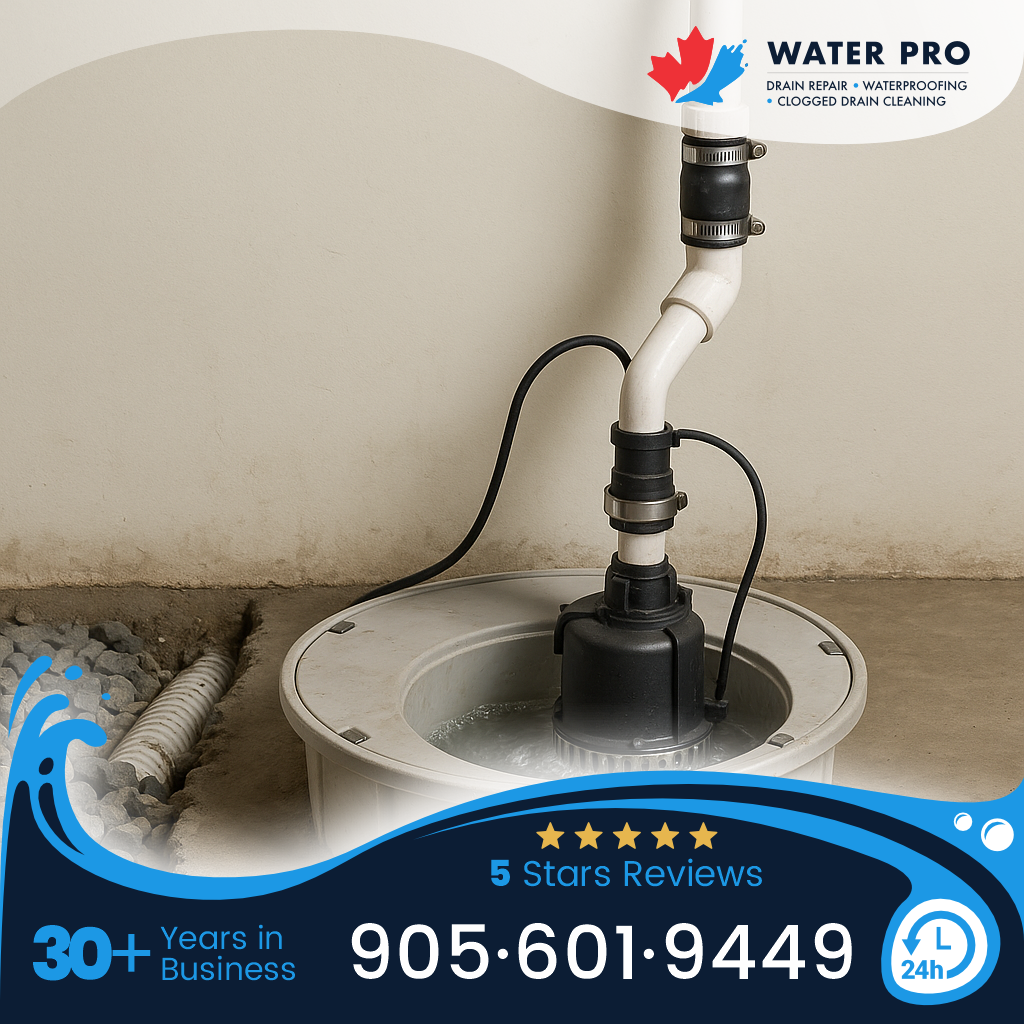
Interior systems are installed from inside and usually sit below the basement slab at the footing level. They are chosen when exterior access is limited or when the homeowner prefers less excavation outside. Installation typically includes cutting a narrow trench in the slab, placing pipe in stone, and routing to a sump pit.
- Concrete cutting and removal along the interior perimeter.
- Perforated pipe in stone, sloped to a sump pit with a pump discharge.
- Connection to a backwater valve or storm line when allowed; otherwise sump discharge is routed to grade or municipal connection per code.
- Slab repair and floor restoration; most on-site work takes 1–3 days for a typical basement, with finish work scheduled afterward.
Interior installation is part of broader basement waterproofing work and often coordinated with other services like sump pump and backwater valve installation. For more details on integrated solutions, see our basement waterproofing page.
Typical Process, Timelines, and Costs
This section outlines the usual sequence homeowners see when installing or replacing weeping tile and related systems. It covers inspection, permits, on-site work, and realistic cost ranges for Toronto and the GTA.
Most projects start with a diagnostic visit that lasts 30–90 minutes. During that visit we note damp areas, test for water entry points, review downspouts and grading, and inspect any existing sump pump or foundation drain. Before any work, we review grading, foundation details, and plumbing so the plan fits your home and local code.
- Permits and locates: allow 2–10 days for utility locates and any municipal review. Some permit processes or subsidy applications may take longer; example municipal programs can take 8–10 weeks for decisions.
- Work duration: a typical interior weeping tile job for a full basement commonly takes 1–3 days on site for trenching, pipe and stone placement, and sump installation. Exterior excavations usually take 2–5 days depending on access and restoration needs.
- Costs: interior systems often range from about $80–$200 per linear foot installed, with full-basement projects commonly between $3,000 and $15,000 depending on scope and finish restoration. Exterior systems can be higher when deep excavation and major landscaping are required.
- Restoration: expect surface repairs and landscaping scheduling to extend the overall timeline by 1–4 weeks after the main work is finished.
Sample Cost/Timeline Mini-case
This brief example shows how a typical job might look numerically so you can compare to local estimates.
- Example job: 80 ft interior weeping tile, concrete cutting, stone bed, sump pit and pump, basic slab repair. Estimated cost: $8,000. On-site work: 2–3 days. Final restoration and touch-ups: 1–3 weeks.
- If a backwater valve or higher-capacity sump pump is needed, add $1,000–$3,000 depending on model and complexity. For integrated solutions, see options for backwater valve & sump pumps.
When comparing quotes, ask about warranty terms, licensed and insured crews, disposal and restoration plans, and whether the work will be inspected by the municipality. Every property has nuances; we talk them through so you feel informed and comfortable about timing and cost.
Regional Considerations for Toronto & The Golden Horseshoe
Local soil types, municipal rules, and the prevalence of older foundations affect design choices and approvals in Toronto and the Golden Horseshoe. Clay soils and a high water table increase the need for dependable drainage and often influence whether interior or exterior work is best.
The City of Toronto and many municipalities advise that foundation drains be routed appropriately and not connected to sanitary sewers in a way that violates local rules. Some homeowners may qualify for municipal support; see the City of Toronto basement flooding subsidy for program details and timelines.
Before work begins, we check local permit needs and coordinate required inspections. Typical regional variables we review include lot grading, proximity to neighbour drainage, existing storm connections, and seasonal constraints such as spring thaw when soils are saturated.
Homeowner Checklist and Next Steps
It’s helpful to know a few simple items before scheduling an estimate. These steps make the on-site assessment faster and help contractors provide a more accurate scope and cost.
- Document where you see moisture: take photos of damp corners, floor–wall joints, or staining and note when these occur (after rain, during thaw, or year-round).
- Clear access: move stored items away from perimeter walls so the crew can inspect and, if needed, work safely.
- Prepare basic property info: age of house, any previous waterproofing work, location of downspouts, and whether you have a sump pump or backwater valve.
- Ask contractors these questions: projected timeline, warranty length and coverage, disposal/restoration plan, and how the system will discharge water.
- Maintenance expectations: schedule sump pump tests every 6–12 months, check alarms and battery backups, and arrange an annual or biannual inspection of the drainage system.
If you’re concerned about costs or eligibility for assistance, municipal subsidy programs sometimes support basement flooding protection and may influence timing. Every property is different; we provide written scopes so you can compare options comfortably.
For a free on-site estimate and a clear plan tailored to your home in Toronto or the GTA, contact us or call (905) 601-9449. Our team offers 24/7 response, licensed and insured service, warranty-backed work, and careful jobsite management so you feel supported from inspection through restoration.
This article offers general information for homeowners and is not engineering, legal, or plumbing advice. Assessments and solutions are reviewed during an on-site visit by licensed professionals. If you’re considering waterproofing or drain work, feel free to contact us or call — we’ll discuss your goals and outline a plan that feels comfortable and right for your home.
🔗 Learn more: https://waterproofingdrain.com/
📞 Call us: 905 601-9449
✉️ Write us: info@waterproofingdrain.com
🕒 Open hours: Mon – Sat, 9:00am – 9:30pm