


Weeping Tile Installation: Protect Your Basement and Foundation is a practical topic for many Toronto and GTA homeowners who notice damp corners, a musty odour, or water at the floor–wall joint. It’s helpful to know what a weeping tile does, how professionals assess a home, and what typical options look like in this region. If you’d like a site visit, contact us or call (905) 601-9449 for a free estimate; we offer 24/7 response and carry licensed, insured crews with warranty-backed work.
Many homeowners first notice moisture during spring thaws or after heavy rain. This often relates to groundwater pressure against the foundation or blocked drains. Before any work, we review grading, foundation details, and plumbing so the plan fits your home and local code.
What Is a Weeping Tile And Why It Matters
A short, calm definition of what a weeping tile or foundation drain is and why it matters for basements in the Golden Horseshoe.
A weeping tile is a perforated pipe placed at or below the footing to collect groundwater and move it away from the foundation. It helps manage hydrostatic pressure and reduces the chance of seepage through the slab or at the floor–wall joint. Many homeowners first notice moisture at the floor–wall joint, damp plaster, or a recurring musty smell.
- Common setups: exterior pipe tied to storm lines or sump discharge; interior perimeter drain routed to a sump pump where exterior access is limited.
- Regional note: Toronto and GTA properties often see issues during spring thaw and heavy summer storms because groundwater levels rise seasonally.
For connected services and further work, consider professional basement waterproofing that matches the right approach to your site and budget.
How It Works — Exterior And Interior Approaches
A brief introduction that explains there are two primary professional approaches and when each is typically chosen for Toronto-area homes.
Exterior Excavation And Tile Replacement
Bridge: One-line overview of exterior repair and when it is recommended.
- Excavate to the footing and clear or repair the foundation wall as needed.
- Apply a waterproof membrane where required and place a layer of gravel at the footing level.
- Lay a perforated drain pipe (weeping tile) on the gravel, slope it to a discharge point or to a sump pit, and backfill with clean stone and appropriate soil.
- Restore landscaping and hardscapes; typical site work can take 3–7 days depending on access and weather.
Interior Perimeter Drain And Sump Pump Tie-In
Bridge: One-line overview of the interior approach and why it’s commonly used in tighter urban lots.
- Cut and remove a narrow strip of concrete at the slab edge next to the footing.
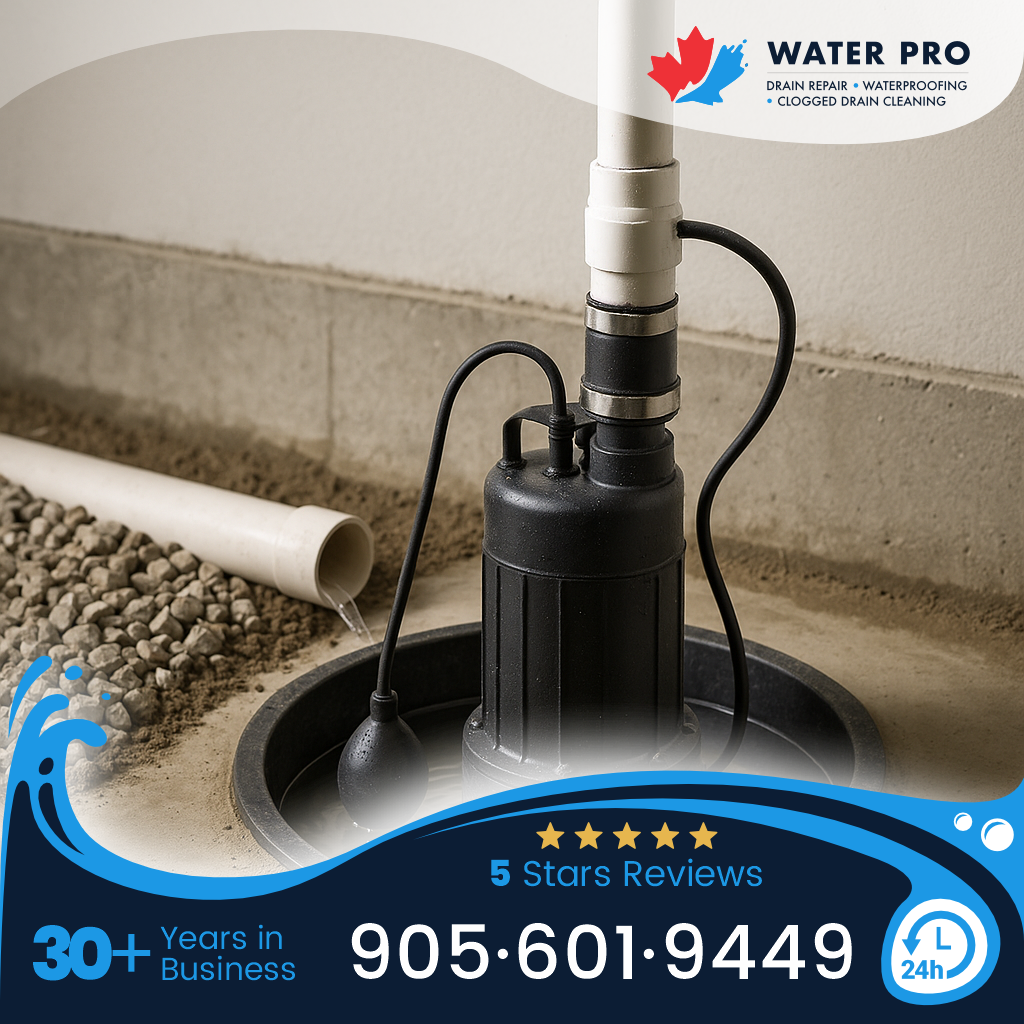
- Install a bed of gravel and a perforated pipe along the interior perimeter, sloping to a sump pit.
- Connect the pump and route discharge outside to municipal-appropriate locations or to a legal discharge point; pour a new concrete seam.
- Typical turnaround: 1–3 days for a standard basement, plus time for permit checks if required.
Timelines, Typical Costs, And Program Support In The GTA
Bridge: A short note that costs and timelines depend on access, scope, and whether exterior excavation is needed.
Costs vary by approach and site conditions. Interior perimeter drains tied to a sump pump commonly range from about $3,000 to $8,000 for a typical bungalow; this often reflects 50–120 dollars per linear foot for materials and labour. Full exterior excavation and weeping tile replacement typically ranges from $10,000 to $30,000 or more, depending on restoration needs and landscaping.
Typical timelines in Toronto and the surrounding Golden Horseshoe are predictable: interior installs usually take 1–3 days, while exterior excavation projects often run 3–7 days plus time for landscaping restoration. Seasonal factors matter; deep excavation is simpler in late spring through early fall when frost is out of the ground.
Municipal programs can offset costs in some areas. If you’re exploring subsidy options, check local program details and application timelines as they vary by municipality and can take several weeks for approvals. For City of Toronto guidance, see the municipal basement flooding resources.
Risks, Common Mistakes, And What Professionals Check
Bridge: A focused note that professionals treat safety and code compliance as standard parts of a repair plan for GTA homes.
- Common mistakes include reconnecting a drainage pipe to the sanitary sewer, using improper backfill, or skipping a required sump pump or backwater valve where discharge or sewer conditions demand one.
- Inadequate slope or poor tie-in details can cause recurring wet spots rather than a lasting fix.
- Failing to check grading and downspout routing can leave the surface drainage working against the new system.
Before any work, we review grading, foundation details, and plumbing so the plan fits your home and local code. We also look for nearby utilities, finished basements that need careful protection during work, and any permit requirements. If a sump is required, we will discuss pump sizing and ask about backwater valve needs as part of the plan.
Left unaddressed, a failing or missing weeping tile can lead to recurring seepage, more frequent insurance claims, and, over time, potential for foundation damage. If that applies to your home, the next step is a site assessment and a written estimate that lays out options and timelines.
Mini Case Example And A Homeowner Checklist
Bridge: A brief numeric example followed by a short checklist homeowners can use when booking an assessment.
Mini case (interior approach): a 1,000 sq ft bungalow with about 80 linear feet of perimeter drain. Estimated install at $75 per linear foot = $6,000. Add a quality sump pump with a battery backup for about $1,500. Total project time: roughly 1–2 days plus concrete curing time. Expected outcome: reduced seepage, a pump-based discharge solution, and a new concrete seam along the perimeter.
Mini case (exterior approach): a full perimeter excavation of 120 linear feet with waterproof membrane and new weeping tile at $150 per linear foot = $18,000. Site restoration and landscaping can add time and cost. Typical duration: 4–7 days, depending on site access.
- Homeowner checklist before the visit: take photos of damp areas, note when you first saw water, gather any past repair invoices, and mark accessible exterior gate/side-yard entry points.
- Questions to ask a contractor: are you licensed and insured, what warranty is offered, how long will work take, will permits be needed, and can you provide a written estimate?
- Paperwork tip: if applying for municipal support, bring proof of ownership and recent utility or tax documents as required by local programs.
Next Steps For Toronto And GTA Homeowners
Bridge: A concise set of practical actions to move from concern to an agreed plan with a licensed contractor.
- Arrange a licensed on-site assessment with a provider who responds quickly and can give a free estimate.
- Collect photos and any previous repair records to help the estimator understand the history.
- Ask about municipal subsidy programs and permit timelines early so you can plan budget and scheduling.
- Request a written scope of work that lists materials, start and finish dates, and warranty terms.
If you’d like a site visit, contact us or call (905) 601-9449. We offer 24/7 response, free estimates, licensed and insured crews, and warranty-backed work with careful jobsite protection and cleanup.
This article offers general information for homeowners and is not engineering, legal, or plumbing advice. Assessments and solutions are reviewed during an on-site visit by licensed professionals. If you’re considering waterproofing or drain work, feel free to contact us or call — we’ll discuss your goals and outline a plan that feels comfortable and right for your home.
🔗 Learn more: https://waterproofingdrain.com/
📞 Call us: 905 601-9449
✉️ Write us: info@waterproofingdrain.com
🕒 Open hours: Mon – Sat, 9:00am – 9:30pm