
Wet Basement Repair: Stop Leaks Before They Worsen is a useful starting point for homeowners in Toronto, the GTA and the Golden Horseshoe who are seeing dampness, mould or periodic flooding in their basements. Many homeowners first notice moisture at the floor–wall joint, a musty odour in a storage area, or damp carpet after heavy rain or spring thaw. These are common signs that water is moving where it shouldn’t and that a professional assessment will help clarify causes and options.
We offer 24/7 assistance, licensed and insured crews, free estimates and warranty-backed work. If you’d like to talk through what you’re seeing or arrange an on-site assessment, contact us or call (905) 601-9449. Before any visit, we note that every property has nuances; we review grading, foundation details, and plumbing so the plan fits your home and local code.
What Causes Wet Basements In Toronto And The GTA
Many factors in this region contribute to basement moisture. This short paragraph links local weather and soil conditions to common failure points.
Hydrostatic pressure from saturated soil is a frequent driver of seepage in older foundations. Poor exterior grading, blocked or undersized downspouts and full eavestroughs let water pool near footings. Weeping tile or foundation drains can clog or be connected to storm/sewer lines, and that affects how water moves around the foundation. Seasonal spring thaws and intense rainfall events in the Toronto area often expose weak points where water finds a path inside.
- Soil saturation and hydrostatic pressure pushing water through cracks and joints.
- Improper grading or downspouts discharging too close to the foundation.
- Blocked or failing foundation drains (weeping tile) and connected sewer issues.
- Sewer backflow during heavy storms in low-lying areas.
Common Signs Homeowners Notice
This section lists the typical observations that prompt a call for service and what to record before a visit.
- Damp corners, musty odour, peeling paint or white mineral deposits on walls.
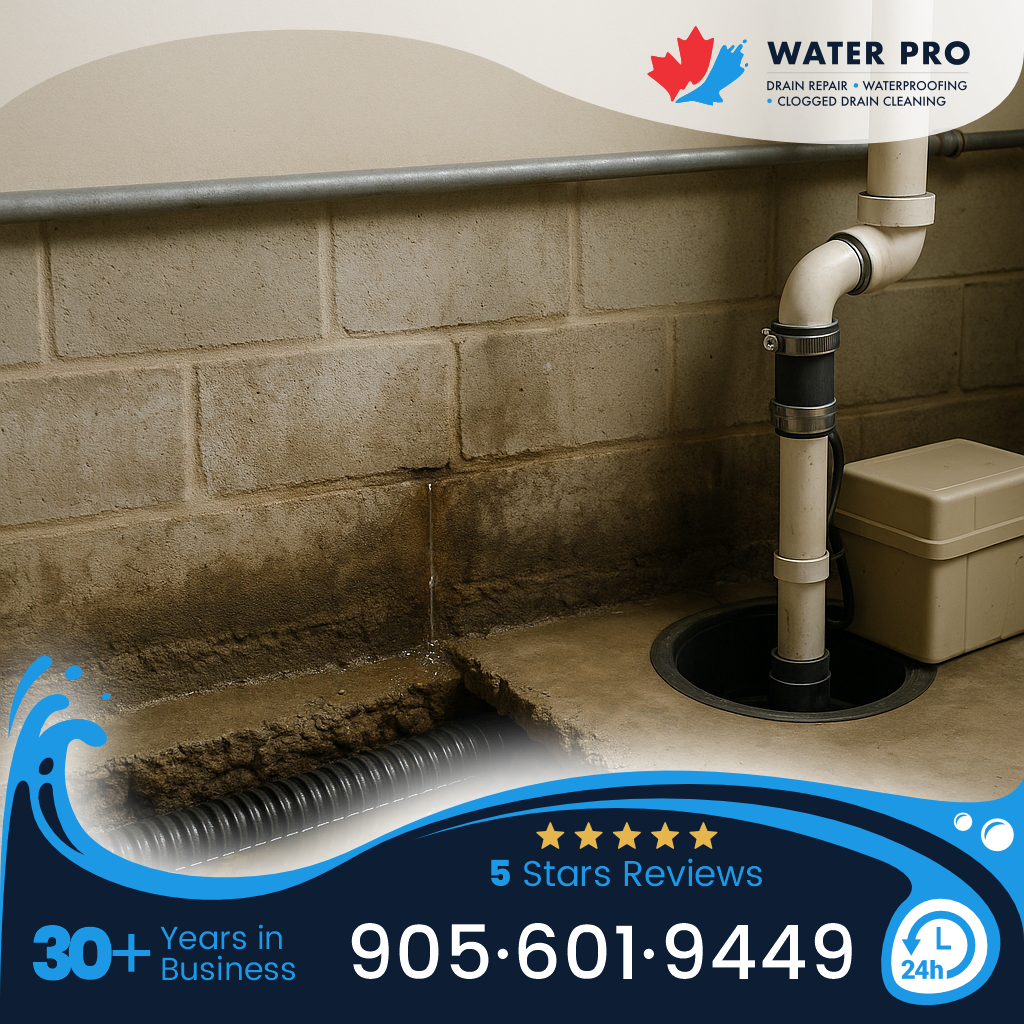
- Water pooling near the floor–wall joint after rain or seasonal thaw.
- Condensation on cold pipes, wet carpet, or periodic standing water.
- Repeated sump pump cycling or an alarm that sounds during storms.
When you call, note when problems occur (after heavy rain, overnight, during thaw) and take photos if possible. That helps the technician narrow likely causes before the on-site assessment.
How Wet Basement Repair Works
This heading outlines the normal professional process from inspection to the recommended plan and timelines you can expect.
Assessment And Diagnosis
Most assessments are completed in a single on-site visit that lasts 30–90 minutes depending on the property. The technician will look at the floor–wall joint, sump pit, window wells, eavestroughs and downspouts, and check interior humidity and visible masonry conditions.
- Visual inspection and moisture mapping to locate problem areas.
- Camera inspection of accessible drains and sewer connections when needed.
- Inspection of existing sump pumps and backwater valves for condition and functionality.
- Discussion of options that fit the home and local code, with practical timeframes (diagnosis in one visit; some repairs in 1–2 days; larger projects 2–7 days).
Typical Repair Options
Options are chosen to match the cause, the home’s layout, and budget. We describe common approaches neutrally so homeowners know what to expect.
- Interior perimeter drain and sump pump with battery backup to manage incoming groundwater; this often requires 2–4 days on-site depending on access.
- Exterior excavation and membrane waterproofing for full foundation protection; this is a larger project that may take several days to a week.
- Crack injection for localized masonry cracks and targeted repairs that can often be completed in 1 day.
- Backwater valve installation or maintenance to prevent sewer backflow during storms.
- Grading and downspout work to move roof runoff at least 2 metres from the foundation and reduce surface flow.
- Pipe relining for damaged sanitary or storm lines without full excavation where applicable.
For exterior membrane work and full foundation protection, we often reference basement waterproofing as the appropriate service and will review permits and timing as part of the estimate.
Costs, Timelines And Local Programs
This section gives realistic cost ranges, typical project lengths, and a note on local subsidy and permit considerations for Toronto-area homes.
Typical Costs And Timelines
Below are common price and time ranges to help homeowners plan. Actual quotes depend on access, foundation type and the scope agreed during the on-site assessment.
- Minor crack injection or targeted masonry repair: often several hundred to low thousands of dollars; typically completed in 1 day.
- Interior perimeter drain plus sump pump installation: commonly in the mid-thousands to low five-figure range; most jobs take 2–4 days on site depending on access and finishes.
- Full exterior excavation and membrane waterproofing: larger project costs and longer timelines; expect multiple days to a week or more for excavation, membrane installation and backfill.
- Backwater valve installation: variable cost depending on sewer access; may require a permit and 1–2 days for installation.
Example mini-case: an interior perimeter drain with a new sump pump and standard battery backup can range from about $4,000 to $12,000 and is often finished in 2–4 days for a typical detached home with basement access.
Toronto Subsidies, Permits And Licensing
This paragraph outlines what Toronto homeowners should check about local programs and permit needs before starting work.
- The City of Toronto offers a basement flooding protection subsidy program for eligible items such as backwater valves and sump pump upgrades; processing may take up to 8–10 weeks depending on documentation and demand. See the City of Toronto program page for details: City of Toronto — basement flooding protection subsidy.
- Some installations, particularly those altering sewer connections or installing a new backwater valve, may require a permit. We review permit requirements and documentation as part of the estimate visit.
- Work should be performed by licensed, insured professionals who follow local code; we include permit coordination in our estimates when required.
Next Steps For Homeowners And A Short Checklist
This section offers practical actions to prepare for an assessment and simple maintenance steps to reduce risk while you plan repairs.
- Before the visit: take photos of wet areas, note dates and conditions when moisture appears, and mark sump pits, basement windows and downspout locations for the technician.
- Maintenance basics: keep eavestroughs clear, direct downspouts at least 2 metres from the foundation, and check that surface grading slopes away from the house.
- Sump and valve care: test sump pumps monthly by pouring water into the pit and listening for activation; consider a battery backup if power outages are a concern. Backwater valves should be inspected and cleaned annually.
- When deciding on repairs, weigh short-term fixes (crack injection) against longer-term protection (perimeter drainage or exterior membrane) and discuss timing, budget and disruption with your contractor.
A few considerations we review together include access constraints, finished basement areas that may affect excavation choices, and whether the property is in a low-lying block that has a history of sewer surcharge events. Every property has nuances; we talk them through so you feel informed and comfortable.
Putting It Into Practice For Your Home
Some homes may see seepage during spring thaws. This is common in older foundations and often relates to hydrostatic pressure or blocked drainage systems. If it appears, we’ll review grading, drains, and sump options and outline next steps that fit your home and budget.
If you’d like an on-site assessment or a free estimate for work such as a new sump and battery backup, backwater valve installation, or full basement waterproofing, please contact us or call (905) 601-9449. We offer 24/7 assistance, licensed and insured crews, and warranty-backed work to help you move forward with clear next steps.
This article offers general information for homeowners and is not engineering, legal, or plumbing advice. Assessments and solutions are reviewed during an on-site visit by licensed professionals. If you’re considering waterproofing or drain work, feel free to contact us or call — we’ll discuss your goals and outline a plan that feels comfortable and right for your home.
🔗 Learn more: https://waterproofingdrain.com/
📞 Call us: 905 601-9449
✉️ Write us: info@waterproofingdrain.com
🕒 Open hours: Mon – Sat, 9:00am – 9:30pm