
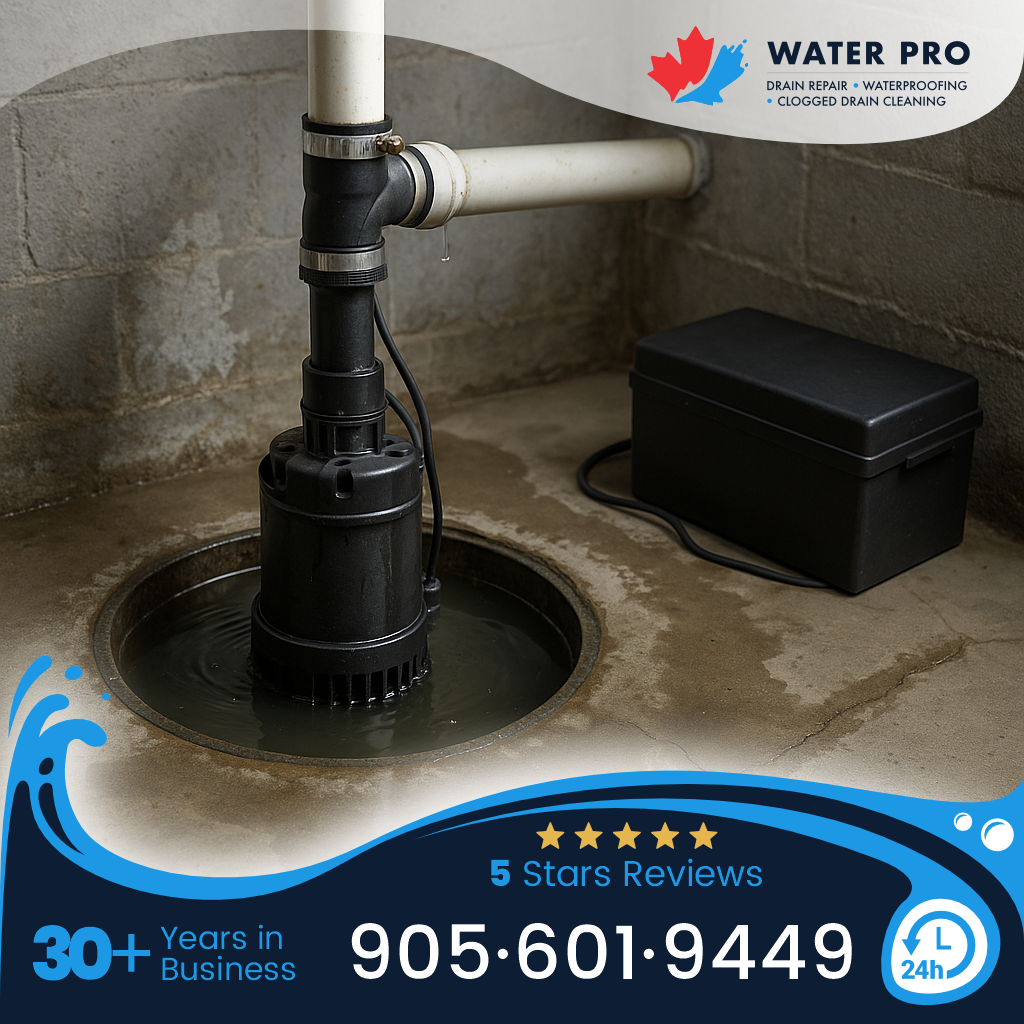

Sump Pump Battery Backup: Flood Protection During Outages is a practical option for Toronto and GTA homeowners who want a measured response to power loss during storms. Many homeowners first notice moisture at the floor–wall joint, a musty odour in finished basements, or puddling after heavy rain. A battery backup provides temporary pump power when the grid is out so you have time to manage inflow and protect belongings.
It’s helpful to know that Water Pro Master Corp offers 24/7 response, free estimates, licensed and insured service, warranty-backed work, and careful job execution. If you’d like to discuss options for your home or schedule an on-site assessment, contact us or call (905) 601-9449. Every visit includes a clear explanation of options and a written estimate.
Many clients say they feel relief after installation because they have a simple maintenance plan and predictable run-time information. Before any work, we review grading, foundation details, and plumbing so the plan fits your home and local code. Every property has nuances; we talk them through so you feel informed and comfortable.
What Is a Sump Pump Battery Backup and Why It Helps
This section explains what the device does and when homeowners usually consider one.
A sump pump battery backup is a separate power source and control system that runs the sump pump if household electricity fails. Homeowners often request backups when they have finished basements, sensitive storage, or a history of sump activity during heavy rain or spring thaws. This option helps manage water while power outages or main pump failures are addressed.
Typical assessments include checking the existing sump pit, pump horsepower, discharge path, and electrical access. Most standard retrofits take 1 day; more complex installs that need wiring changes or a new pit can take 1–2 days. We provide a straightforward runtime estimate (hours of operation) based on pump size and expected inflow rates.
After installation, clients usually receive a maintenance checklist and a recommended testing schedule. Routine testing and annual professional service keep the backup ready. If you also need a backwater valve or related drainage work, we can review options for backwater valve & sump pumps during the same visit.
How Backup Systems Work: Components and Typical Setups
This section outlines the main parts of a backup system and common installation layouts.
Key Components
Here are the pieces that make a backup system operate and what to expect from each.
- Battery unit and charger: Typically sealed lead‑acid (AGM) or lithium options. Lead‑acid is lower upfront cost; lithium is lighter and lasts longer. Battery life varies by chemistry—expect replacement every 3–10 years depending on type and use.
- Automatic transfer switch (ATS): Switches power to the backup automatically when voltage drops. This avoids manual steps during outages.
- Alarms and monitoring: Visual and audible alarms alert you to low battery or pumping activity. Some systems offer remote alerts for peace of mind.
- Inverter/charger and wiring: Converts battery DC to the AC power pumps need and manages charging when grid power is present.
Common Configurations
Below are typical setups homeowners choose based on risk profile and budget.
- Sealed battery backup paired with the existing primary pump: A cost-effective retrofit that provides hours of run-time depending on battery size and pump horsepower.
- Dual‑pump setup: Primary electric pump plus a secondary battery-driven pump in the same pit. This setup separates duties and can extend overall reliability.
- Water‑powered backup: An option where municipal water pressure is sufficient; it does not rely on electricity but needs an available water line and meets local code requirements.
- Integrated systems with remote monitoring: For property managers or high-value finished basements, these add alerts and usage logs for quicker response during events.
Toronto & GTA Considerations, Subsidies, and Eligibility
This section covers region-specific programs and what homeowners should check before moving forward.
City programs in Toronto can help offset the cost of sump pumps and related devices for eligible properties. It’s helpful to know the City of Toronto basement flooding protection subsidy program and current application steps before you book work. You can review program details and eligibility on the city site: City of Toronto basement flooding subsidy program.
Typical eligibility covers single-family homes and some small multi-unit properties; requirements and documentation vary. A few considerations we review together include property type, proof of ownership, invoices and installation photos for claims, and whether the proposed device (for example, a battery backup or backwater valve) fits program rules. Processing can take several weeks, so factor 4–10 weeks for final decisions depending on application volume.
Before any work, we review grading, foundation details, and plumbing so the plan fits your home and local code. Every property has nuances; we talk them through so you feel informed and comfortable about the subsidy process and the technical choices.
Costs, Timelines, and a Numeric Mini-Case
This section gives realistic price and timing ranges and a short example to help you plan.
Typical installed costs for a battery backup sump pump in the Toronto area range from about $400 to $1,200 or more. Prices vary by battery chemistry (lead‑acid vs. lithium), pump horsepower, wiring needs, and whether a new pit or electrical work is required. Emergency or after-hours service may add to labour charges.
Timeline expectations are straightforward. A standard retrofit often takes 1 day. More involved work—new pit, permits, or electrical upgrades—can take 1–2 days or require multiple visits for inspection and wiring. Battery replacement cycles generally fall between 3 and 10 years, depending on the chemistry and usage.
Short Example Case
This brief numeric example shows how cost, subsidy, and runtime can interact.
- Example: A homeowner installs a sealed battery backup paired with an existing 1/3 HP primary pump. Unit and labour cost $900. If the property qualifies for a City subsidy for sump equipment, eligible rebates can reduce the net cost substantially. Under moderate inflow, a mid‑range battery might provide 4–8 hours of run-time; heavier inflow reduces runtime proportionally.
When we estimate run-time, we use pump horsepower and expected inflow rates so you receive a realistic hours‑of‑protection figure. That helps plan next steps during extended outages, such as temporary water removal or arranging emergency services.
Risks, Common Mistakes, and What To Watch For
This section calmly outlines risks and common installation mistakes, then suggests practical next steps.
Ignoring backup options can leave finished basements and stored belongings vulnerable during storms or grid outages. Some likely outcomes include prolonged dampness, damaged items, and conditions that can encourage mould growth. We describe this without alarm: many of these effects develop over time when water is present and not addressed.
Common mistakes include undersizing the battery for the pump, relying on a single pump without redundancy, or leaving the system untested for long periods. Another frequent issue is improper discharge routing; plumbing and municipal rules can affect how and where water is sent. Before work begins, we check these items and explain options for dual‑pump setups, automatic transfer switches, and proper discharge routing.
If you’re unsure whether your current setup is adequate, schedule a licensed on-site assessment. We test the pit, review wiring, and provide a written plan with choices, timelines, and maintenance steps so you can make an informed decision.
Homeowner Checklist and Next Steps
This wrap-up gives clear, actionable items to prepare for an assessment and follow-up care.
- Document what you see and smell: take photos of damp corners, water at the floor–wall joint, or any puddling after rain.
- Note current sump pump model and last service date. Record any recent power outages that affected the pump.
- Gather property documents for subsidy applications if you plan to apply (proof of ownership, prior invoices, and photos).
- Ask for runtime estimates for battery backup options and whether a dual‑pump setup or automatic transfer switch is the recommended approach.
- Plan monthly quick tests and an annual professional check. Replace batteries per the manufacturer schedule—typically every 3–10 years depending on chemistry.
When you’re ready, please contact us or call (905) 601-9449 to arrange a free estimate and on-site assessment. If your property needs broader drainage or foundation work, we can review basement waterproofing options as part of the same visit.
This article offers general information for homeowners and is not engineering, legal, or plumbing advice. Assessments and solutions are reviewed during an on-site visit by licensed professionals. If you’re considering waterproofing or drain work, feel free to contact us or call — we’ll discuss your goals and outline a plan that feels comfortable and right for your home.
🔗 Learn more: https://waterproofingdrain.com/
📞 Call us: 905 601-9449
✉️ Write us: info@waterproofingdrain.com
🕒 Open hours: Mon – Sat, 9:00am – 9:30pm