

A basement rarely floods because of one dramatic failure. More often, water finds several small advantages at once: downspouts empty beside the foundation, soil slopes toward the house, old weeping tile is clogged, or a sump pump cannot keep up during a hard storm. This basement drainage system guide explains how the pieces work together so GTA homeowners can stop guessing and protect the space below grade.
A dry basement is not just about keeping rain out. It is about moving groundwater, roof runoff, and wastewater away from the home safely. The right solution depends on where the water is coming from, how quickly it appears, and whether the problem is stormwater, groundwater, plumbing, or a sewer backup.
Start by identifying the source of the water
Before installing a pump or opening a wall, look for the pattern. Water that appears after heavy rain, especially along exterior basement walls, often points to groundwater pressure, poor grading, or failed footing drains. A damp line near the floor can mean water is rising at the foundation footing and finding its way through cracks or joints.
Water near a floor drain, toilet, laundry connection, or shower is different. If it is dirty, smells like sewage, or comes up through a drain, treat it as a possible sewer backup. Do not assume waterproofing will solve a blocked or overloaded sewer line. A camera inspection can show whether roots, scale buildup, a broken pipe, or a sagging section of drain is causing the issue.
Condensation can also be misleading. If walls feel damp during humid weather but there is no clear rain pattern, moisture may be forming on cool foundation surfaces. Ventilation and dehumidification can help, but they will not fix active seepage. The goal is to diagnose first, then repair the actual route water is taking.
The basement drainage system, explained
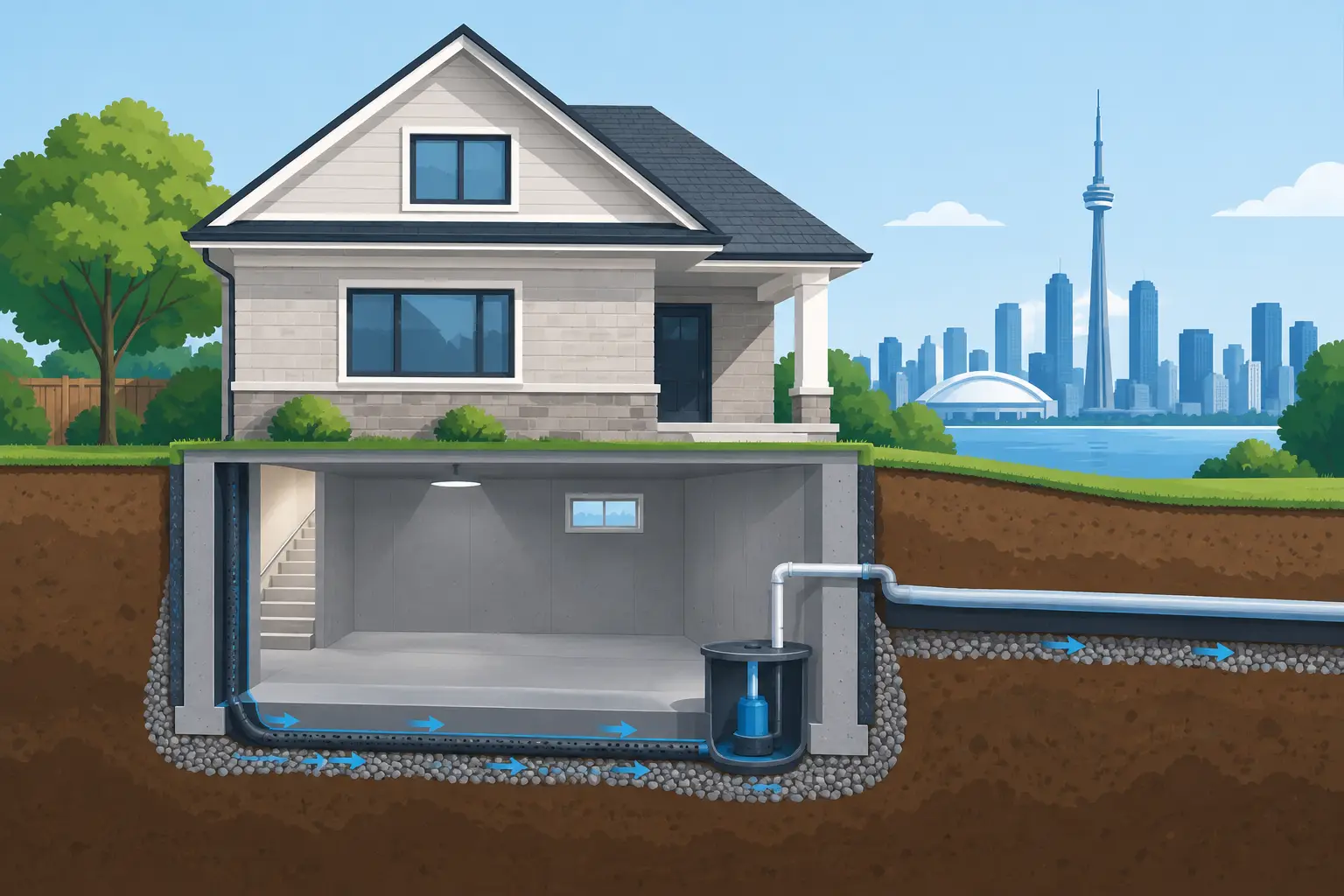
A complete basement drainage system usually has exterior controls, a collection method at the foundation, and a reliable discharge path. Each part matters. Replacing only one weak component can improve conditions, but it may not prevent the next major storm from exposing another problem.
Grading, gutters, and downspouts
The simplest drainage work happens above ground. Soil should slope away from the foundation so rainwater does not pool beside the house. A practical target is roughly 6 inches of fall over the first 10 feet where site conditions allow. Low spots, settled walkways, and garden beds built too high against siding can all direct water toward the basement.
Gutters need to be clear and properly pitched, while downspouts should carry water well away from the foundation. Extensions that stop a foot or two from the wall simply relocate the puddle. In tight urban lots, the discharge route must be planned carefully so water does not create an icy walkway, drain toward a neighbor, or cycle back toward the home.
These improvements are affordable and worthwhile, but they have limits. They reduce surface water. They do not clear blocked weeping tile or repair a foundation crack under hydrostatic pressure.
Weeping tile and exterior footing drains
Weeping tile, often called a footing drain, is perforated pipe installed around the base of the foundation. It collects groundwater before pressure builds against basement walls and directs that water to a sump pit or approved outlet. In older GTA homes, these drains may be undersized, filled with sediment, damaged, or missing altogether.
Exterior waterproofing and new weeping tile are often the strongest long-term answer when water is entering through foundation walls, particularly when excavation is already needed for cracks or deteriorated exterior surfaces. The work involves exposing the foundation, cleaning and repairing it, applying a waterproof membrane, installing drainage material, and backfilling correctly.
The trade-off is access and cost. Excavation can be disruptive around landscaping, decks, porches, and tight property lines. Still, when the outside wall is the source, repairing it from the outside addresses the water before it reaches the basement.
Interior drainage and sump pumps
Interior drainage is designed to manage water that reaches the foundation footing or comes through the wall-floor joint. A contractor installs a drainage channel beneath or along the edge of the basement slab, directing water into a sump pit. From there, a sump pump sends it away from the house.
This approach is often practical for finished or partially accessible basements where exterior excavation is difficult. It does not make the outside of the foundation waterproof, but it gives groundwater a controlled path instead of allowing it to spread across the floor.
A sump pump is only as dependable as its setup. The pit needs adequate capacity, the pump must be correctly sized, and the discharge line must remain clear and protected from freezing. A check valve prevents pumped water from flowing back into the pit. For homes that lose power during storms, a battery backup or secondary pump can be the difference between a close call and a flooded basement.
Test the pump several times a year by slowly pouring water into the pit until the float activates. If the pump hums without moving water, cycles constantly, runs loudly, or fails to start, arrange service before the next storm. Waiting until water is at the stairs is not a maintenance plan.
Backwater valves for sewer backup protection
A backwater valve is not part of groundwater drainage, but it is an essential layer of basement protection for many properties. It helps prevent wastewater from a municipal sewer from flowing backward into lower-level fixtures during a surcharge event.
A properly installed backwater valve must be accessible for inspection and cleaning. It also needs to be matched to the home’s plumbing layout. If a valve is blocked, damaged, or installed without considering fixture connections, it may not perform when it is needed most. Homes with basement bathrooms, laundry rooms, rental units, or finished recreation spaces should consider an inspection before assuming they are protected.
Warning signs you should not ignore
Some drainage problems announce themselves early. A musty smell, white mineral deposits on concrete, peeling paint, rusted furnace components, or recurring damp carpet edges all deserve attention. So do cracks that widen, water that returns in the same area after every storm, and a sump pump that runs for long periods with no obvious discharge.
Call for urgent help if water is rising quickly, sewage is entering the basement, electrical equipment is near standing water, or a foundation wall is visibly bowing. Keep people away from contaminated water, avoid using plumbing fixtures during a suspected sewer backup, and do not enter pooled water if outlets, appliances, or electrical panels may be affected.
Choosing the right repair instead of the biggest repair
There is no one-size-fits-all fix. A home with overflowing gutters and poor grading may need straightforward exterior drainage corrections. A property with groundwater at the footing may need interior drainage and a sump pump. Water entering through an exposed crack may call for targeted foundation crack repair, while repeated wall seepage can justify exterior waterproofing and new weeping tile.
The best next step is a full on-site assessment, not a quick guess based on a damp spot. Ask what evidence supports the recommendation, where the water will discharge, whether permits are required, and how the finished area will be protected during work. Clear answers matter, especially when a contractor recommends excavation or work beneath a concrete slab.
For drain-related symptoms, camera inspection is especially valuable. It can confirm whether the issue is a broken sewer line, root intrusion, or blockage before anyone starts digging. In some cases, trenchless pipe relining or pipe bursting can restore a damaged line with far less disruption than a full excavation.
Keep your system working after installation
Drainage systems need occasional attention. Clean gutters in spring and fall, check downspout extensions after landscaping work, and make sure soil has not settled toward the foundation. Test the sump pump, inspect the pit for debris, and confirm the discharge point is open before periods of heavy rain.
If you have a backwater valve, have it inspected and cleaned on a regular schedule. If you notice new dampness, do not cover it with paint or store boxes in front of it. A small change in the pattern can be the first sign that a drain is clogging or groundwater conditions have changed.
Water Pro Master Corp helps homeowners across the GTA diagnose basement water problems with licensed plumbing expertise, drainage equipment, and practical waterproofing solutions. The focus should always be fast, clean work with no surprises – and a repair that addresses the source, not just the puddle.
A dry basement starts with a clear path for water to leave. If that path is uncertain, get it checked before the next storm decides the issue for you.