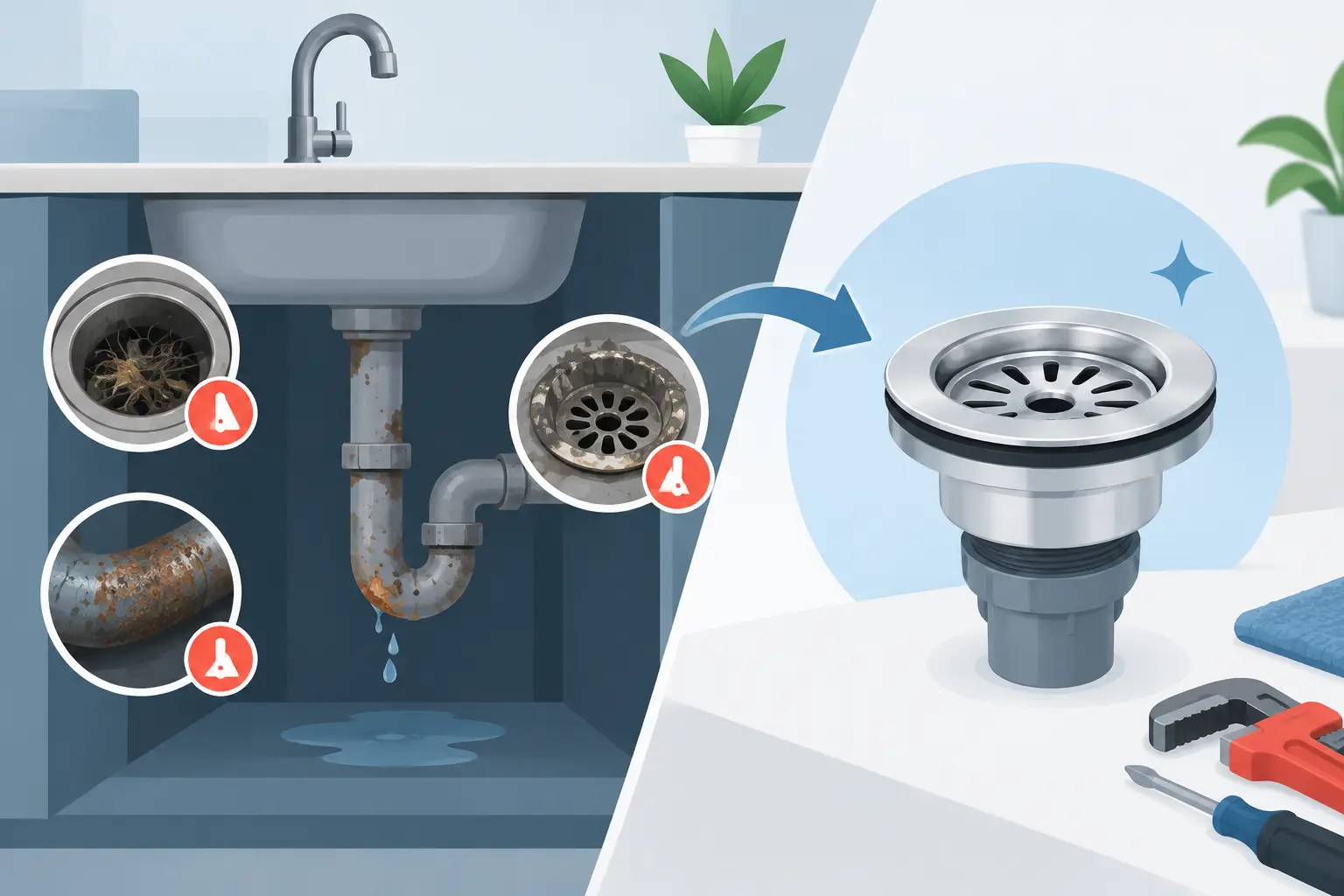



A drain that clogs once is frustrating. A drain that backs up after every heavy rain, sends sewage into the basement, or needs snaking every few months is a warning that the problem may be deeper. When should drains be replaced? Usually when the pipe itself has failed – not simply when debris has created a temporary blockage.
For homeowners across Toronto, Mississauga, and the GTA, waiting too long can turn a manageable drain repair into contaminated water damage, damaged flooring, and a basement that cannot be used. The good news is that a camera inspection can show what is happening underground before you commit to a major repair. No guessing, no surprises – just a clear diagnosis and the right fix for the condition of the line.
When Should Drains Be Replaced Instead of Repaired?
Drain replacement is warranted when the pipe is cracked, collapsed, severely corroded, incorrectly sloped, or repeatedly invaded by tree roots. Cleaning can restore flow for a while, but it cannot make a broken pipe structurally sound. The same applies to an old clay, cast-iron, or Orangeburg sewer line that has reached the end of its useful life.
A replacement is also worth serious consideration when the same drain problem keeps returning after professional cleaning. If a plumber has removed roots and buildup more than once, the pipe likely has openings, offsets, or damage that gives those roots a path back in. Repeated service calls add up, and each backup brings another risk to your home.
That does not mean every slow drain needs excavation. Grease buildup, a one-time blockage, or a localized root intrusion may be resolved with drain snaking or hydro jetting. A spot repair or trenchless pipe lining can also be the better choice when damage is limited to one section. The condition, material, depth, and location of the pipe all matter.
Recurring Backups Are a Major Red Flag
When multiple fixtures back up at once – such as a basement floor drain, toilet, shower, or laundry sink – the issue is often in the main sewer line rather than one fixture drain. If this happens during normal water use, the line may be restricted, damaged, or sagging underground.
A sewage backup after rain can point to a separate but equally serious concern. Groundwater may be entering damaged pipes, or excess stormwater may be overwhelming the system. In older neighborhoods, aging private sewer connections can be especially vulnerable. Stop using water if sewage is rising or spilling indoors, keep people and pets away from the affected area, and arrange emergency service right away.
Roots Keep Coming Back
Mature trees add value to a property, but their roots naturally seek moisture. Even a tiny opening at a pipe joint can attract them. Over time, roots form a dense mass that catches paper, waste, and debris until the line blocks completely.
Professional root cutting and hydro jetting can clear the obstruction. However, if roots return within a year or two, cleaning alone is only buying time. A camera inspection can reveal whether pipe relining, pipe bursting, or full replacement will prevent the next backup.
The Pipe Is Cracked, Collapsed, or Bellied
A drain camera does more than confirm a clog. It can identify cracks, separated joints, corrosion, and pipe sections that have dropped out of alignment. A “belly” is a low area in the pipe where water and waste collect instead of flowing toward the sewer. It may cause recurring slow drainage even after thorough cleaning.
A localized crack may be repaired without replacing the entire line. A collapsed line, widespread deterioration, or a serious belly usually calls for replacement because the pipe no longer has the proper structure or slope. Leaving it in place invites future blockages and possible soil movement around the failed section.
Drain Problems That Usually Do Not Need Replacement
It is easy to assume the worst when a sink drains slowly or a toilet gurgles. In many cases, the answer is simpler. Hair, soap residue, grease, wipes, and mineral buildup can restrict a healthy pipe. A professional cleaning can restore normal flow without replacing anything.
A single isolated clog may also come from the fixture trap or a short branch line. This is why a proper diagnosis matters. Replacing a main sewer line will not solve a blockage under one bathroom sink, and aggressive chemical drain cleaners can damage older pipes while failing to remove the real obstruction.
The practical question is not whether a drain has ever clogged. It is whether the pipe is structurally sound and likely to stay that way after it is cleaned. Honest recommendations should separate a maintenance issue from a failing drain system.
How Age and Pipe Material Affect the Decision
Older homes throughout the GTA may still have original drain materials that are prone to failure. Clay tile pipes have joints that can separate and invite roots. Cast iron can rust internally, becoming rough and narrow over time. Orangeburg, a fiber-based pipe used in some mid-century homes, can deform, blister, and collapse as it ages.
Age alone is not a reason to replace a line. Some older pipes remain in good condition, while a newer pipe may have been damaged by settlement, construction, or poor installation. Still, if your home has an aging sewer lateral and you are planning a finished basement, major landscaping, or a home addition, a camera inspection is a smart way to understand what is below the ground before problems become expensive.
Replacement Options: Not Every Job Means Digging Up the Yard
The best repair method depends on the camera findings and access to the line. Traditional excavation is sometimes necessary, especially when a pipe has collapsed, requires a slope correction, or has extensive damage. It provides direct access and allows the failed pipe to be removed and replaced properly.
For many properties, trenchless methods reduce disruption. Pipe relining creates a new, durable pipe inside an existing line when the host pipe is stable enough to support it. Pipe bursting can replace a damaged pipe by pulling a new line through the old route. These methods can protect driveways, landscaping, and finished areas, although they are not suitable for every condition.
A qualified drain specialist should explain the trade-offs plainly: what the camera found, why one method is recommended, what areas may need access, and what the estimate includes. The lowest initial price is not always the least expensive choice if it leaves the underlying failure in place.
Do Not Ignore Basement Moisture and Sewer Risk
Drain failure and basement water problems can overlap. A damaged sewer line can leak into the soil near the foundation, while poor exterior drainage, failed weeping tiles, or groundwater pressure can make a basement wet during storms. These are different problems, but both demand a complete diagnosis instead of a quick surface fix.
If sewer water has entered your basement, treat it as an urgent health and property issue. If the water is clean but appears after heavy rain, investigate waterproofing, sump pump performance, foundation cracks, and exterior drainage alongside the plumbing system. Water Pro Master Corp helps homeowners evaluate these connected risks with drain diagnostics and practical repair options.
What to Do Before Your Drain Fails Completely
Do not wait for a total collapse or a sewage-filled basement to learn the condition of your drains. Schedule a camera inspection if you have recurring clogs, gurgling fixtures, unpleasant sewer odors, unexplained wet spots, roots found during cleaning, or an older line with no inspection history.
Until a professional can assess the system, avoid flushing wipes, paper towels, grease, and other materials that can catch on a damaged pipe. Keep a record of when backups happen and whether they follow rain or normal household water use. Those details help pinpoint the cause faster.
Your drains work quietly when they are healthy. If they have started demanding attention, act while you still have choices – a clear camera diagnosis today can prevent a much bigger emergency tomorrow.