
A wet basement rarely starts as a basement problem. More often, rainwater is collecting beside the foundation, roof runoff is landing in the wrong place, or aging underground drains are no longer carrying water away. This guide to exterior drainage systems explains how the parts work together, what warning signs to watch for, and when a professional inspection can stop a small drainage issue from becoming foundation damage or a flooded basement.
What an exterior drainage system does
An exterior drainage system manages water before it can build pressure against your foundation walls or enter the home. Its job is straightforward: collect rainwater and groundwater, move it through properly graded pathways or pipes, and discharge it safely away from the building.
That sounds simple, but the conditions around every property are different. A flat yard, heavy clay soil, a finished basement, a long downspout run, a high water table, or an older home with deteriorating drain tile can all change the right solution. The goal is not to send water somewhere else on the property. The goal is to direct it to an approved discharge point without creating erosion, standing water, or problems for a neighbor.
In Toronto, Mississauga, and across the GTA, freeze-thaw cycles and intense summer storms add pressure to drainage systems. Soil shifts, connections loosen, roots find small openings, and runoff can overwhelm a system that once seemed adequate. Water damage does not wait – and neither should a drainage plan when warning signs appear.
The main parts of exterior drainage systems
Grading and surface drainage
The ground immediately around a house should slope away from the foundation. A common target is a drop of roughly 6 inches over the first 10 feet, although site conditions and local requirements may call for a different approach. The point is to prevent water from ponding beside the home.
Low spots near the foundation, settled walkways, and garden beds built too high against the wall can all trap runoff. Regrading may be the right answer when the issue is mostly surface water. It is often less invasive than excavation, but it will not solve groundwater entering through a failing foundation wall or clogged footing drain.
Swales, shallow landscaped channels that guide surface water across a yard, can also help on larger properties. They need enough slope to move water without washing soil away. Poorly designed swales simply relocate the puddle.
Gutters, downspouts, and extensions
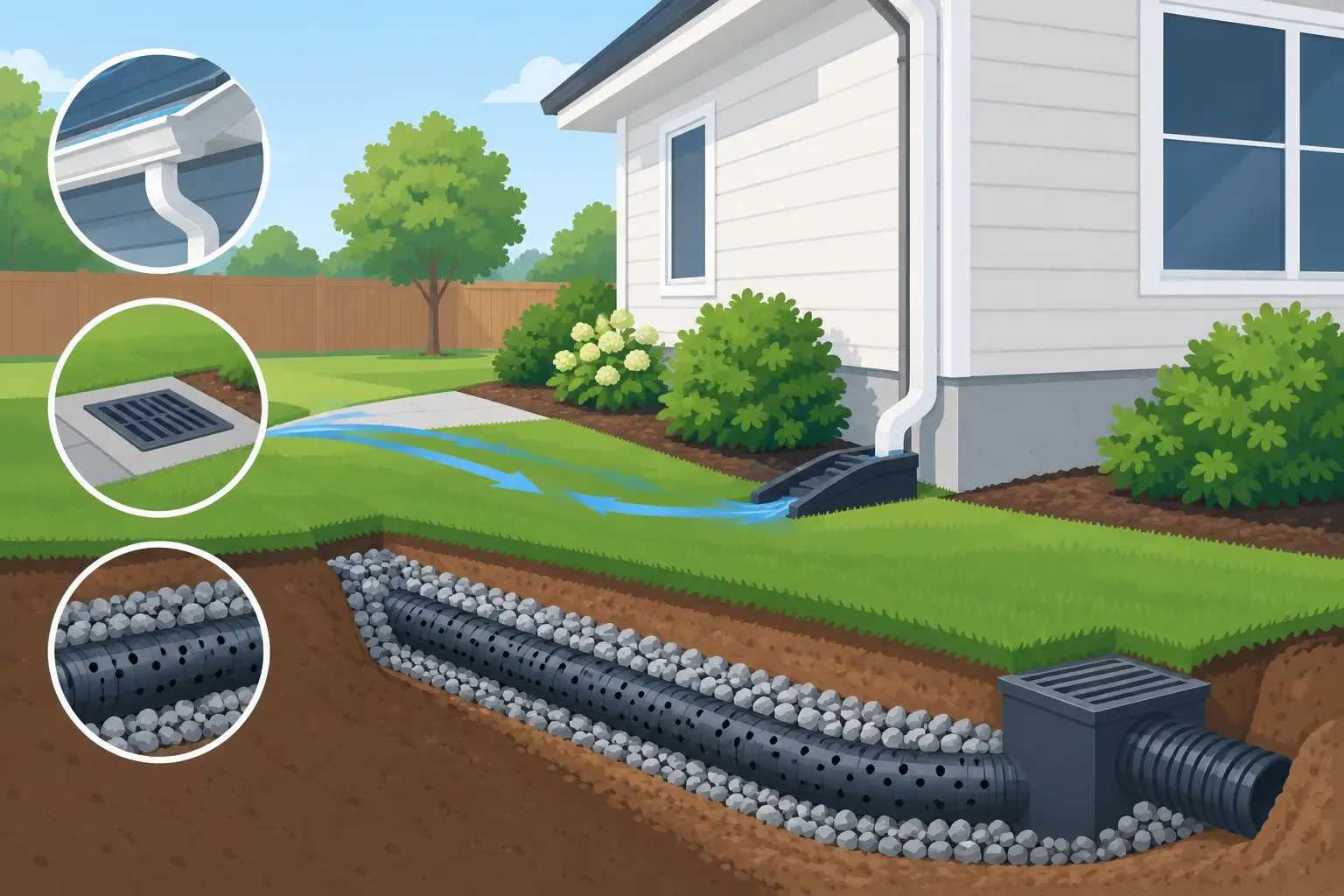
Your roof sheds a surprising amount of water during a heavy storm. Gutters collect that runoff, and downspouts must carry it far enough from the foundation to prevent it from soaking back into the soil beside the walls.
A downspout that ends at the corner of the house is one of the most common drainage failures. Extensions, buried solid drain pipe, or a properly designed catch basin system may be appropriate. The best choice depends on the lot, slope, soil, and where water can legally and safely discharge.
Keep gutters clean and check that downspout connections are secure. If water spills over the gutter edge, leaks from joints, or pools where the downspout ends, the system is not doing its job during the exact weather conditions when you need it most.
Weeping tile or footing drains
Weeping tile, also called a footing drain, is a perforated pipe installed near the base of the foundation. It collects groundwater before that water can create hydrostatic pressure against below-grade walls. The pipe is typically surrounded by clean drainage stone and protected with filter fabric to limit soil intrusion.
This system is especially important for homes with basements. When groundwater has nowhere to go, it presses against the foundation and looks for a path inside through cracks, joints, floor-wall seams, or porous concrete. A working footing drain relieves that pressure and routes collected water toward a sump basin or another approved outlet.
Older homes may have clay tile, damaged pipe, collapsed sections, or drains clogged by silt and roots. In those cases, a camera inspection can reveal the condition of the line before anyone recommends major excavation. No surprises – just evidence for the repair plan.
French drains and area drains
A French drain is a gravel-filled trench with a perforated pipe that intercepts water moving through soil. It can be useful for a soggy side yard, water collecting near a retaining wall, or runoff moving toward a foundation. It is not a universal fix. If the source is a failed footing drain or a broken sewer line, a French drain alone will not address the underlying issue.
Area drains collect surface water at low points, such as the bottom of exterior stairs, driveways, patios, or window wells. They require debris protection and regular maintenance. Leaves, mulch, ice, and sediment can block a grate quickly, leaving water with nowhere to go.
Window wells, waterproofing, and sump pumps
Below-grade windows need properly sized window wells with clean drains. A window well that fills during rain can force water through the window frame or into the wall assembly. Covers can reduce debris and direct rainfall away, but they should not replace proper drainage beneath the well.
Exterior waterproofing adds another line of defense. During this process, contractors excavate to expose foundation walls, repair cracks as needed, apply a waterproof membrane, and install or replace the exterior drainage system. This is more involved than surface improvements, but it is often the durable solution for recurring water intrusion tied to foundation walls and footing drains.
Where collected water must be lifted, a sump pump moves it from a sump basin to a suitable discharge location. A sump pump is only as dependable as its power, float switch, discharge line, and maintenance. For homes vulnerable to outages during storms, battery backup protection is worth serious consideration.
Warning signs you should not ignore
Drainage failures do not always begin with visible basement flooding. Early signs are often outside: soil pulling away from the foundation, water pooling after rain, overflowing gutters, spongy lawn areas, or downspouts discharging beside the house.
Inside, watch for musty odors, damp carpet edges, peeling paint, white mineral deposits on concrete, cracks that leak during storms, and water at the floor-wall joint. These symptoms can have more than one cause, which is why guessing can lead to unnecessary work. A camera inspection, moisture assessment, and review of the exterior grade can identify whether the problem is surface runoff, a failed drain, a foundation crack, or a combination.
Sewage odors, slow drains, or water backing up through a floor drain are different warning signs. They may point to a sanitary sewer or storm connection issue rather than a foundation drainage problem. Treat a suspected sewer backup as urgent and avoid using fixtures until the line has been assessed.
Choosing the right drainage repair
The most effective solution matches the source of the water. If roof runoff is saturating one corner of the home, correcting gutters, downspouts, and grading may solve it. If groundwater is rising against foundation walls and the footing drains are blocked, exterior excavation and weeping tile replacement may be necessary. If a drain line is cracked or root-damaged, trenchless repair can sometimes restore it with less disruption than a full dig.
Do not choose a system based only on the lowest initial price. A short downspout extension is affordable and useful when runoff is the issue. It is not a substitute for repairing collapsed weeping tile. Likewise, interior waterproofing can be a practical drainage route in certain basements, but it does not repair exterior wall defects or poor grading above ground.
A clear estimate should explain the diagnosed problem, the proposed repair, where water will discharge, what excavation or restoration is involved, and what warranty applies. Ask whether the contractor will use camera diagnostics, how they protect landscaping and access areas, and how the system will be tested before the job is complete.
Maintenance that protects the investment
Exterior drainage needs regular attention, especially before spring melt and heavy-rain seasons. Clean gutters, clear area-drain grates, inspect downspout extensions, and make sure sump discharge lines are not blocked or frozen. Walk around the property during or shortly after a strong rainstorm. It is one of the fastest ways to see where water actually travels.
Check that soil has not settled toward the home and that mulch or landscaping has not covered critical drains. Test the sump pump according to the manufacturer’s guidance and address unusual cycling, vibration, or standing water in the basin promptly.
When recurring moisture, pooling water, or basement leaks are already present, maintenance alone may not be enough. Water Pro Master Corp can assess the drainage system, inspect underground lines, and recommend a clean, durable repair plan built around your property rather than a one-size-fits-all fix.
The best time to correct exterior drainage is before the next hard rain turns a warning sign into a costly cleanup. A dry foundation starts outside, with water given a clear path away from the place you call home.