
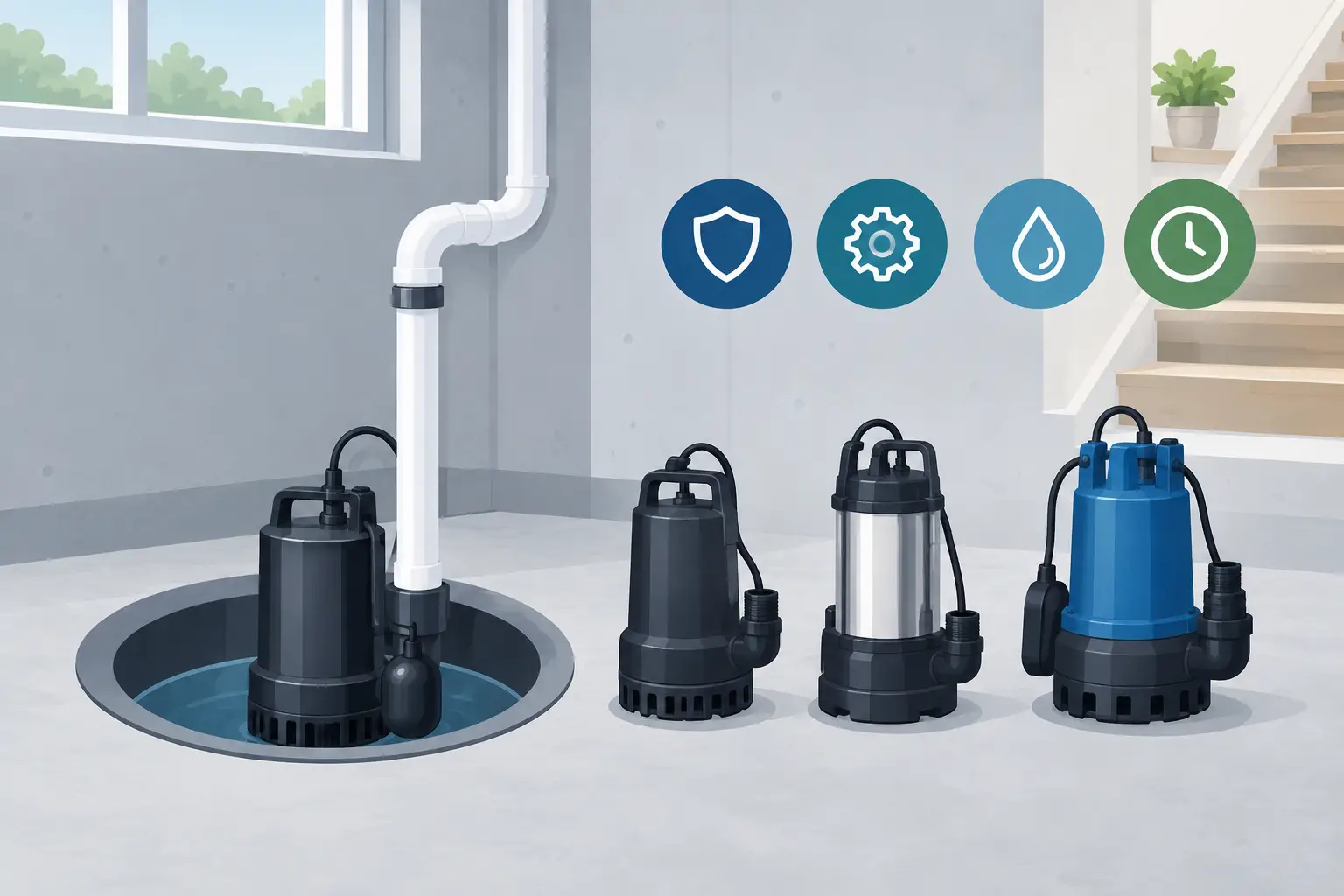



A sump pump is easy to ignore right up until a heavy storm sends water across a finished basement floor. Then the difference between the right system and an undersized, poorly installed pump can mean the difference between a dry home and a major cleanup. To choose a basement sump pump properly, look beyond the box label. Your pump needs to match your water volume, pit depth, discharge route, power reliability, and the real conditions around your foundation.
For homes in areas with older drainage systems, high groundwater, or recurring stormwater problems, the pump is only one part of the protection plan. A strong pump cannot compensate for a clogged weeping tile, a cracked foundation wall, or a discharge line that freezes every winter. Start with the pump, then make sure the entire system gives water somewhere safe to go.
Choose a Basement Sump Pump for Your Actual Water Problem
Not every wet basement needs the same sump pump. A home that collects occasional groundwater during spring thaw has different needs than a property where water enters quickly during intense rain. Before selecting a pump, consider when water appears, how fast it rises in the sump pit, and whether the basement has flooded before.
A standard submersible sump pump is the right choice for most homes. It sits inside the basin, operates quietly, and is sealed against moisture. Pedestal pumps have the motor above the basin and can be easier to service, but they are louder and generally less practical for a finished basement. They may still make sense when a pit is unusually narrow or shallow.
If you are replacing a pump after a failure, do not assume that buying the same size solves the problem. The old pump may have been too small, its switch may have failed, or the discharge pipe may have restricted flow. A proper inspection of the pit, drain tiles, check valve, and discharge route can reveal the real reason water got in.
Match Horsepower and Capacity to the Job
Horsepower matters, but it is not the whole story. For many average residential basements, a 1/3-horsepower sump pump can handle normal groundwater. A 1/2-horsepower model is often a better fit where water levels rise quickly, the discharge run is longer, or the home has a larger foundation drainage system. A 3/4-horsepower pump may be appropriate for serious water volume, but more power is not automatically better.
A pump must move water against vertical lift and pipe resistance. This is called head pressure. If the pump has to lift water eight or ten feet from the pit and push it through a long discharge line with several bends, its actual flow rate will be lower than the number printed on the package.
Look at the pump’s gallons-per-hour rating at the expected head height, not just its maximum rating at zero lift. A pump that claims high capacity but loses most of its output under real conditions can leave a pit rising faster than it can drain. When water is entering heavily, that is a risk no homeowner wants to discover during a storm.
Select a Reliable Float Switch
The float switch tells the sump pump when to turn on and off. Since it is the moving part most likely to cause trouble, switch design deserves attention.
Vertical float switches work well in smaller basins and have fewer tangling issues. Tethered floats need more open space to move freely and can become obstructed by the pump, basin wall, or piping if the pit is too tight. Electronic switches can offer precise operation, but they should be selected carefully and installed by someone who understands the system’s water levels.
The best arrangement depends on the basin and pump layout. Whatever switch you choose, it must have enough clearance to move without getting stuck. A pump with a powerful motor is useless if its float cannot rise. Testing the switch periodically with water is a simple habit that can prevent an expensive surprise.
Do Not Undersize the Basin
The sump basin collects water from the weeping tile or interior drainage system before the pump sends it outside. A basin that is too small forces the pump to cycle on and off too frequently. That extra cycling wears the motor and switch faster, especially during long storms.
Many homes use a basin around 18 inches wide and 22 to 30 inches deep, but the proper size depends on the drainage system and local installation requirements. The basin should be durable, perforated where appropriate to receive groundwater, and covered securely. A sealed or fitted lid helps reduce moisture, odors, debris, and the chance of accidental contact with the pump.
If sediment collects in the pit, it can interfere with the pump intake and switch. Cleaning the basin during maintenance is not glamorous work, but it helps the system operate as designed.
Plan the Discharge Before You Buy
A sump pump only protects the basement if discharged water stays away from the house. Water that empties beside the foundation can soak back into the soil, overload the drain tile, and send the same water right back to the pit.
The discharge line should carry water well away from the foundation, following local drainage rules and avoiding neighboring properties, sidewalks, and areas where water can create ice. In cold climates, the exterior section needs careful planning so it does not freeze shut. A frozen discharge pipe can cause the pump to run continuously while water has nowhere to go.
A check valve on the discharge pipe is also essential. It stops water in the vertical pipe from falling back into the basin every time the pump shuts off. Without one, the pump runs more often and wears out sooner. The valve should be accessible for service and installed in the correct direction.
Add Backup Power for Storms and Outages
The worst time for a sump pump to lose power is often the exact time it needs to work hardest. Heavy storms can cause electrical outages while groundwater and surface water are rising. For homes with finished basements, valuable storage, rental units, or a history of flooding, backup protection is worth serious consideration.
A battery backup sump pump operates when the primary pump fails or the power goes out. It is not usually meant to replace a full primary system for days at a time, but it can provide critical protection during a short outage or pump failure. The battery type, run time, alarm system, and charging method all matter.
A water-powered backup pump is another option where adequate municipal water pressure is available. It does not depend on electricity or a battery, but it uses household water to operate and may not suit every property. Some homeowners choose a generator for longer outages, though it requires safe operation and a reliable plan for starting it when needed.
For high-risk basements, a primary pump, battery backup, high-water alarm, and regular inspection provide more confidence than relying on one device alone.
Check These Details During Installation
A professional installation should be clean, accessible, and built for service, not just for getting through the next storm. Before the work is complete, confirm these practical details:
- The pump sits level in a properly sized basin and is clear of sediment.
- The float switch moves freely without touching the basin wall or discharge pipe.
- A check valve is installed and the discharge pipe is supported securely.
- The outlet is protected by a ground-fault circuit interrupter and is not shared with equipment that can trip the circuit.
- The discharge route carries water away from the foundation and remains usable in winter.
- The pump is tested with water, and any backup alarm is tested too.
A licensed plumbing and waterproofing specialist can also assess whether a backwater valve, new weeping tile, interior waterproofing, or foundation crack repair is needed. Water problems often overlap. Treating only the visible symptom can lead to repeat flooding and repeat repair costs.
Maintain the System Before the Next Heavy Rain
A sump pump should be tested at least once or twice a year and before the wet season. Pour water into the pit until the float rises, then watch the pump start, discharge water, and shut off. Listen for unusual noise, check for vibration, and make sure water is leaving at the exterior outlet.
Keep the basin free of debris, inspect the discharge line, and replace backup batteries according to the manufacturer’s schedule. If the pump runs constantly, cycles rapidly, makes grinding sounds, or fails to activate, arrange service right away. Water damage does not wait, and neither should a failing sump system.
The right sump pump is not necessarily the biggest one on the shelf. It is the one sized and installed for your basement, your drainage conditions, and the storms your property faces. A careful choice now gives your basement a much better chance of staying dry when the weather turns.