
A sewer line can fail long before anything looks wrong at the surface. Slow drains, recurring backups, sewer odors, wet patches near the foundation, or roots found during cleaning can all point to trouble underground. When a camera inspection confirms a broken, collapsed, or deteriorating pipe, trenchless versus excavated pipe repair becomes the decision that protects both your plumbing and your property.
The right choice is not always the one with the lowest upfront number. It depends on the pipe’s condition, its depth, where it runs, and whether it is still structurally suitable for a no-dig repair. A proper diagnosis comes first. No guessing, no unnecessary digging, and no surprises after work begins.
Trenchless Versus Excavated Pipe Repair: The Core Difference
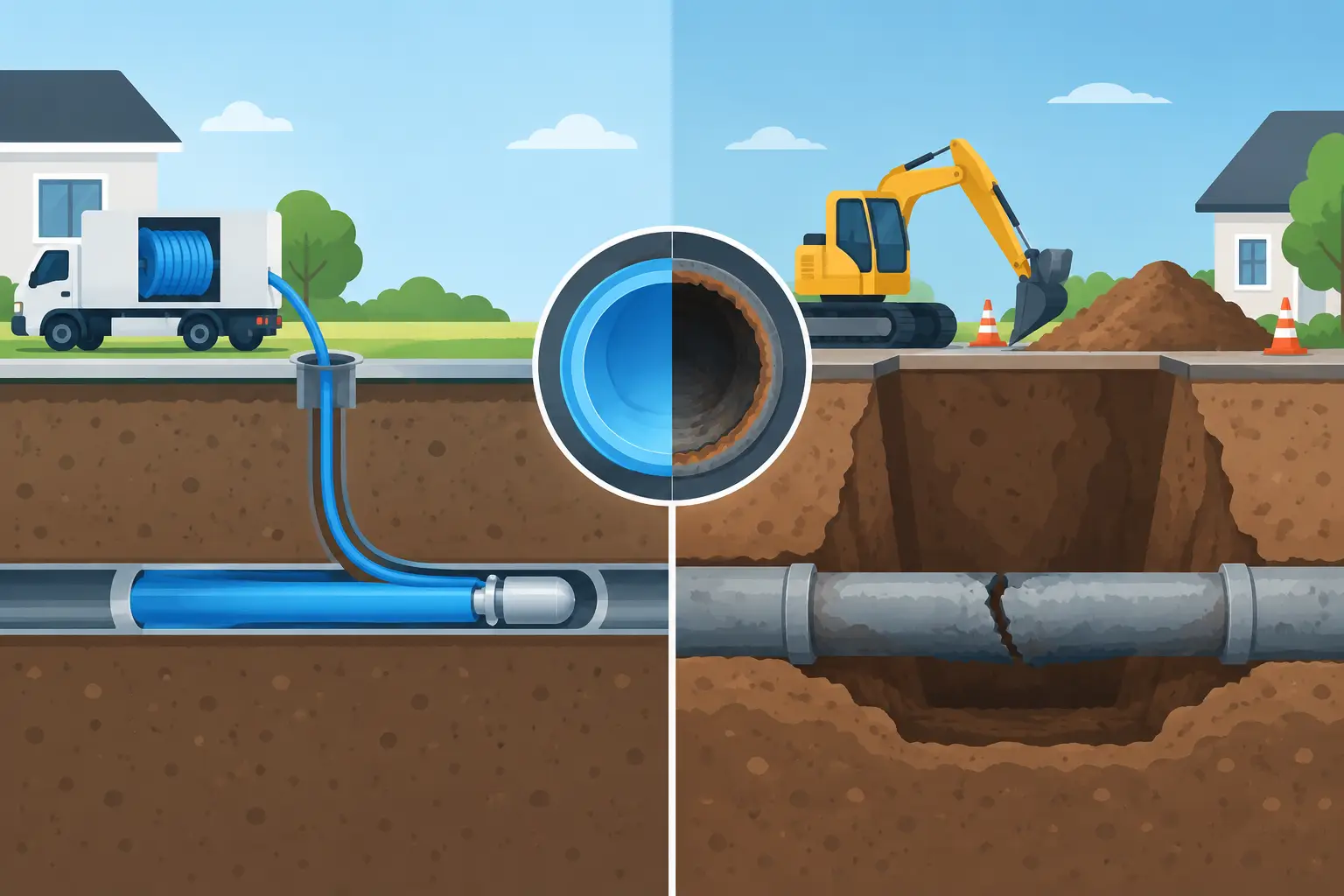
Excavated pipe repair is the traditional method. A plumbing crew digs down to expose the damaged section of pipe, removes the failed material, and installs a new section or a complete replacement line. The trench is then backfilled, and any affected surface – such as soil, landscaping, concrete, driveway, or flooring – is restored as needed.
Trenchless repair works from access points rather than an open trench along the full pipe route. Depending on the problem, the contractor may use pipe relining or pipe bursting. Relining creates a new pipe within the existing one using a resin-saturated liner. Pipe bursting pulls a new pipe through the ground while breaking apart the old one.
Both approaches can provide a durable repair. The better method is the one that addresses the actual failure without creating unnecessary damage to your yard, basement, driveway, or finished space.
When Trenchless Repair Makes Sense
Trenchless methods are often a strong option for pipes that are cracked, root-intruded, offset in limited areas, or worn from age but still generally holding their shape. They are especially valuable when the line runs below a landscaped yard, patio, garage floor, driveway, or finished basement. Instead of opening up the entire route, the crew may need only one or two access pits.
Pipe relining is commonly used when the existing line has enough structural integrity to support the liner. Once installed and cured, the liner forms a smooth, jointless pipe inside the old one. This can help prevent future root intrusion because roots typically enter through failed joints, cracks, and separated connections.
Pipe bursting may be the better trenchless choice when the existing pipe is too damaged for a liner but its route can still be followed. It can replace certain old clay, cast-iron, or other failing lines with new pipe while reducing the amount of excavation required.
For many GTA homeowners, the biggest advantage is disruption. A no-dig repair can protect mature landscaping, interlocking stone, and surfaces that would otherwise need expensive restoration. It can also shorten the active construction period, which matters when a rental property, business, or household needs its plumbing functioning as quickly as possible.
That said, trenchless does not mean zero excavation in every case. Access pits may still be necessary. Indoor access may also be required if the damaged line is beneath a basement floor. A reputable contractor will explain exactly where access is needed before work starts.
When Excavation Is the Smarter Repair
Excavation remains essential for some pipe failures. If a sewer line has fully collapsed, has severe bellies or sagging sections, is crushed, is installed at the wrong slope, or has major separation between pipe sections, lining may not correct the underlying problem. A new liner follows the shape of the host pipe. It cannot reliably fix a line that holds standing water because of a significant grade issue.
Open excavation also makes sense when several problems need to be addressed at once. For example, a property may have a broken sewer pipe near the foundation, damaged weeping tile, groundwater entering the basement, and deteriorated concrete. In that situation, exposing the area can allow the crew to repair the drain connection, improve drainage, waterproof the foundation wall, and restore the surface as part of one coordinated project.
Older homes can present another reason to excavate. Their buried lines may have undocumented routes, multiple past repairs, abandoned connections, or materials that no longer meet current needs. Once exposed, the plumbing team can verify the pipe depth, slope, condition, and connections rather than repairing only the visible symptom.
Excavation is more disruptive, but it is not automatically the expensive or inconvenient choice. If the damaged section is shallow, easy to access, and located in an open lawn, digging may be straightforward and more cost-effective than setting up specialized trenchless equipment.
Cost Is More Than the Pipe Repair Price
Homeowners often ask which method costs less. The honest answer is that either option can be the better value depending on the site.
Trenchless work can carry a higher per-foot repair cost because it requires specialized camera equipment, cleaning tools, liners, resin systems, or bursting equipment. But that figure does not tell the whole story. If traditional excavation means cutting a concrete driveway, removing a deck, lifting interlocking stone, opening a finished basement floor, or rebuilding landscaping, restoration can become a major part of the total project cost.
Excavation can be less expensive when the pipe is readily accessible and the repair area is small. It also gives direct access to correct issues that trenchless work cannot solve, including poor slope and severely collapsed pipe. The best estimate accounts for diagnosis, permits where required, repair method, access, cleanup, and restoration. Ask for the scope in plain language so you know what is included.
Why a Camera Inspection Should Decide the Method
A drain camera inspection is the starting point for a responsible recommendation. It shows the material of the pipe, root growth, crack locations, standing water, offsets, collapse, and approximate distance to the problem. The plumbing team can then locate the line from above and determine whether the issue is isolated or spread throughout the system.
Cleaning may be needed before the inspection tells the full story. Heavy roots, grease buildup, or debris can block the camera’s view. Hydro jetting or mechanical drain cleaning can clear the line, allowing the technician to assess the pipe wall instead of simply confirming that it is clogged.
Be cautious of any company that recommends a full replacement without showing you the condition of the line. A camera inspection does not eliminate every unknown underground, but it turns a stressful plumbing decision into an informed one.
Questions to Ask Before You Approve the Work
You do not need to become a plumbing expert to make a sound decision. Ask whether the pipe has enough structural integrity for relining, whether there is a belly or collapse, and whether trenchless equipment can safely access the route. Ask what surfaces could be affected, how the crew will protect the work area, and whether the estimate includes restoration.
It also helps to ask about the new pipe material, expected service life, testing after installation, permits, and warranty coverage. For a sewer repair near a basement, discuss whether a backwater valve, sump system, waterproofing repair, or drainage upgrade could reduce the chance of another water emergency. Sometimes the pipe is the immediate failure, but poor exterior drainage or sewer backflow is the bigger long-term risk.
Water Pro Master Corp uses camera diagnostics and licensed plumbing expertise to recommend the repair that fits the pipe and the property, not a one-size-fits-all solution. Whether the job calls for a clean no-dig repair or carefully planned excavation, the goal is the same: restore reliable flow and leave you with a repair that holds up.
If your drains are backing up, sewage is entering the basement, or a camera inspection has revealed damage, do not wait for a small defect to become a major excavation. Get the line assessed while there is still time to choose the repair method based on facts, not an emergency.