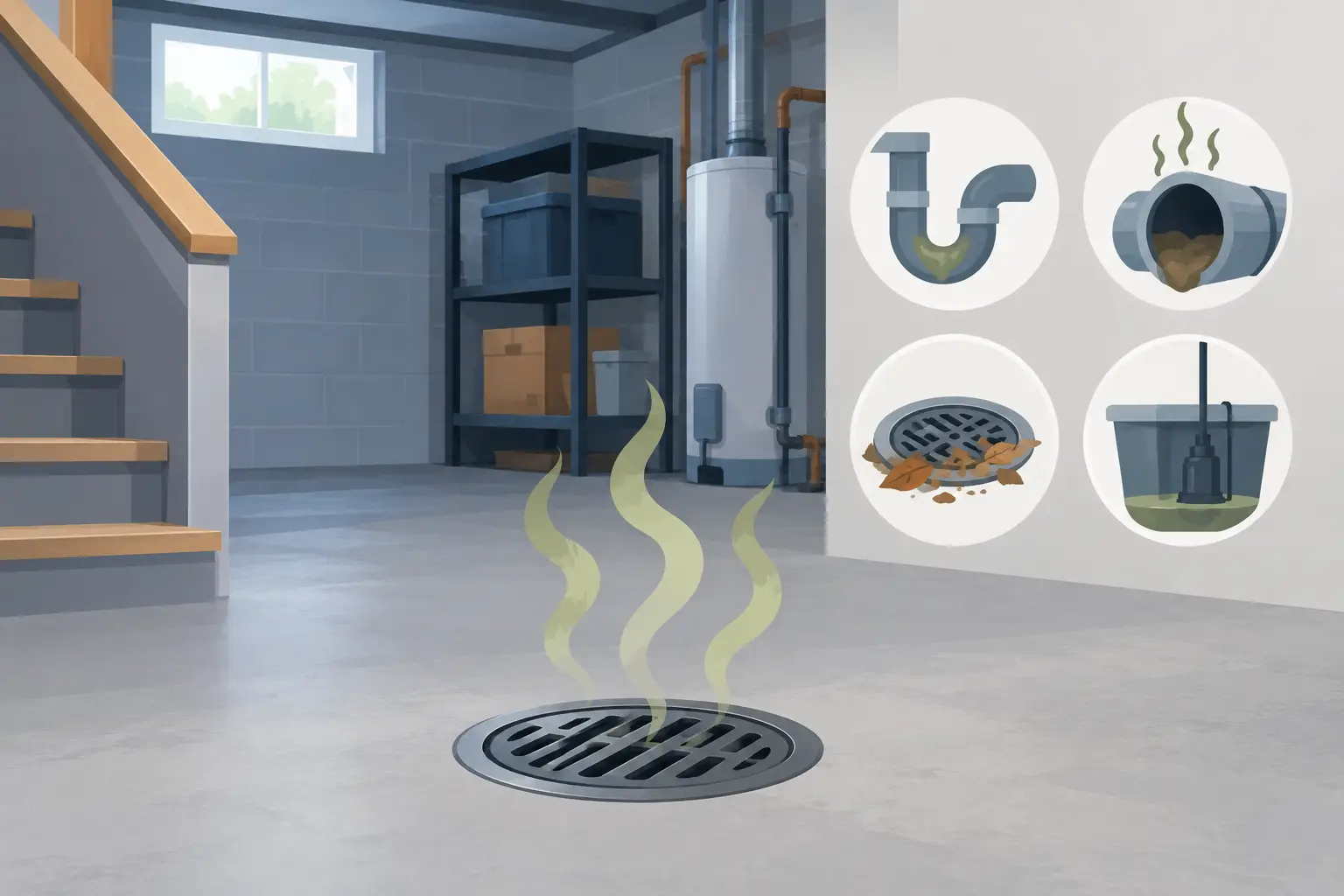



That sewer-like smell near a basement floor drain is not something to cover with air freshener and forget. Basement drain odors can be a simple dry-trap problem, but they can also point to a clogged line, a damaged pipe, sewage backup risk, or moisture entering areas where it should not. The difference matters, especially in a finished basement, rental property, or older home with aging drains.
A floor drain should quietly carry water away and block sewer gases from entering your home. When that system is not doing its job, the smell is often the first warning. Acting early can prevent a much bigger, messier repair later.
Why basement drain odors happen
Most basement floor drains have a P-trap beneath them. This curved section of pipe holds water, creating a seal between your home and the sewer system. If the basement drain is rarely used, that water can evaporate. Once the trap is dry, sewer gases can move up through the drain opening and into the basement.
A dry trap is common after a long vacation, during dry winter months, or in storage areas where the drain receives little water. It is usually easy to address, but it should not be assumed to be the cause if the odor returns quickly or is paired with slow drainage, gurgling, or damp spots.
Organic buildup is another frequent source. Hair, dirt, laundry lint, soap residue, and debris can settle in the drain cover, trap, or branch line. Bacteria feed on that buildup and create a musty or sour odor. In a utility room, a washing machine standpipe or condensate line may add moisture and residue that make the smell worse.
More serious causes include a partial sewer blockage, a cracked drain line, a failed cleanout cap, or a compromised plumbing vent. Tree roots, pipe scale, shifting soil, and old clay or cast-iron pipes can restrict flow underground. When wastewater cannot move freely, gases and odors may find their way through the lowest openings in the home – often the basement floor drain.
Start with a safe, simple check
If there is no active backup or standing sewage, remove the floor drain cover and look for visible debris. Gloves are a good idea. Clear away hair, sediment, and loose material from the cover and opening, then flush the drain with water.
Pour about a gallon of water into the drain slowly. If the trap was dry, this may restore the water seal and stop the odor within a short time. Some homeowners add a small amount of mineral oil afterward. Because it sits on top of the water, the oil can slow evaporation in an infrequently used drain.
Do not pour harsh chemical drain cleaners into a basement drain as a first response. They may not reach the actual blockage, can damage older pipes, and create a safety hazard for anyone who later services the line. Never mix bleach, ammonia, vinegar, or commercial drain products. If you want to clean light surface buildup, use a mild cleaner and a brush around the cover, then rinse thoroughly with water.
Pay attention to what happens next. A drain that accepts water normally and stays odor-free may only have needed a refill and cleaning. A drain that drains slowly, burps air, backs up, or begins smelling again has a problem worth diagnosing properly.
Signs the odor may be coming from a sewer problem
Sewer odors are often described as rotten eggs, stale sewage, or a sharp, unpleasant gas smell. The odor alone does not confirm the source, but certain symptoms raise the urgency. These include toilets bubbling when water runs elsewhere, multiple slow fixtures, wastewater around the floor drain, repeated clogs, or an odor that becomes stronger after heavy rain.
If sewage is visible, keep people and pets away from the area. Avoid running showers, toilets, dishwashers, or laundry until the cause is assessed. Wastewater can contain harmful bacteria, and continued water use can turn a small backup into a flooded basement.
A strong sewer-gas odor with headaches, nausea, or dizziness is also a reason to leave the immediate area and get help. Sewer gas can contain methane and hydrogen sulfide. While household exposure is often limited by ventilation, it should never be treated casually.
When water and odors show up together
Odor plus moisture is a different category of problem. If the floor around the drain is damp, water is seeping through wall joints, or the smell appears after rain, the issue may involve more than the drain itself. Groundwater pressure, failed weeping tile, foundation cracks, or poor exterior drainage can keep a basement humid and create conditions for moldy, earthy odors.
A sump pump problem can also contribute. When the pump pit is stagnant, the discharge line is blocked, or the pump is not cycling correctly, water may sit where it should be moving away from the home. That can create odors and leave the basement vulnerable during the next storm.
The right repair depends on the source. Drain cleaning will not solve a foundation leak. Waterproofing will not clear roots from a sewer lateral. This is why a clear diagnosis comes first, rather than guessing at the most visible symptom.
How professionals find the real cause
A licensed drain professional can inspect the floor drain, trap, cleanouts, connected fixtures, and plumbing venting. When the problem is inside an underground line, a camera inspection provides a direct view of what is happening. It can reveal grease buildup, root intrusion, standing water, separated joints, cracked pipe sections, and collapsed lines without opening up the floor just to investigate.
For a clogged line, drain snaking may remove a localized blockage. Hydro jetting can be a better option when heavy scale, sludge, or recurring buildup coats the pipe walls. The right method depends on the pipe material and condition. Aggressive cleaning is not always appropriate for fragile or badly deteriorated pipe.
If the camera shows structural damage, no-dig options such as pipe relining or pipe bursting may be possible in some situations. These repairs can reduce excavation, but access, pipe layout, and the extent of damage determine whether they are the best fit. A trustworthy contractor should explain what the camera found, outline the options, and provide a clear estimate before work begins.
Prevent basement drain odors from returning
A little routine attention goes a long way. Pour water into rarely used floor drains every month or two, especially before leaving home for an extended period. Keep the drain cover clear, and do not sweep construction debris, cat litter, paint residue, or grease into the drain.
For homes with a history of sewer backups, a backwater valve can provide an added layer of protection by helping stop municipal sewer flow from reversing into the home. It needs periodic inspection and cleaning to work properly. Properties with older drain lines or large trees nearby may also benefit from a preventive camera inspection before a recurring issue turns into an emergency.
If heavy rain regularly brings odors or water to the basement, look beyond the floor drain. Grading, downspout discharge, sump pump performance, foundation cracks, and weeping tile condition all affect how water behaves around your home.
Get help before the smell becomes a backup
A basement drain odor that disappears after adding water may be a quick fix. One that keeps returning, spreads through the basement, or comes with slow drainage and moisture deserves prompt attention. Water Pro Master Corp provides drain diagnostics, camera inspections, cleaning, sewer repair, waterproofing, and emergency response across the GTA, with straightforward communication and no surprises.
Your basement should smell like a basement at most – not like the sewer system beneath it. Addressing the warning early is usually cleaner, faster, and far less expensive than waiting for water or wastewater to come up through the drain.