
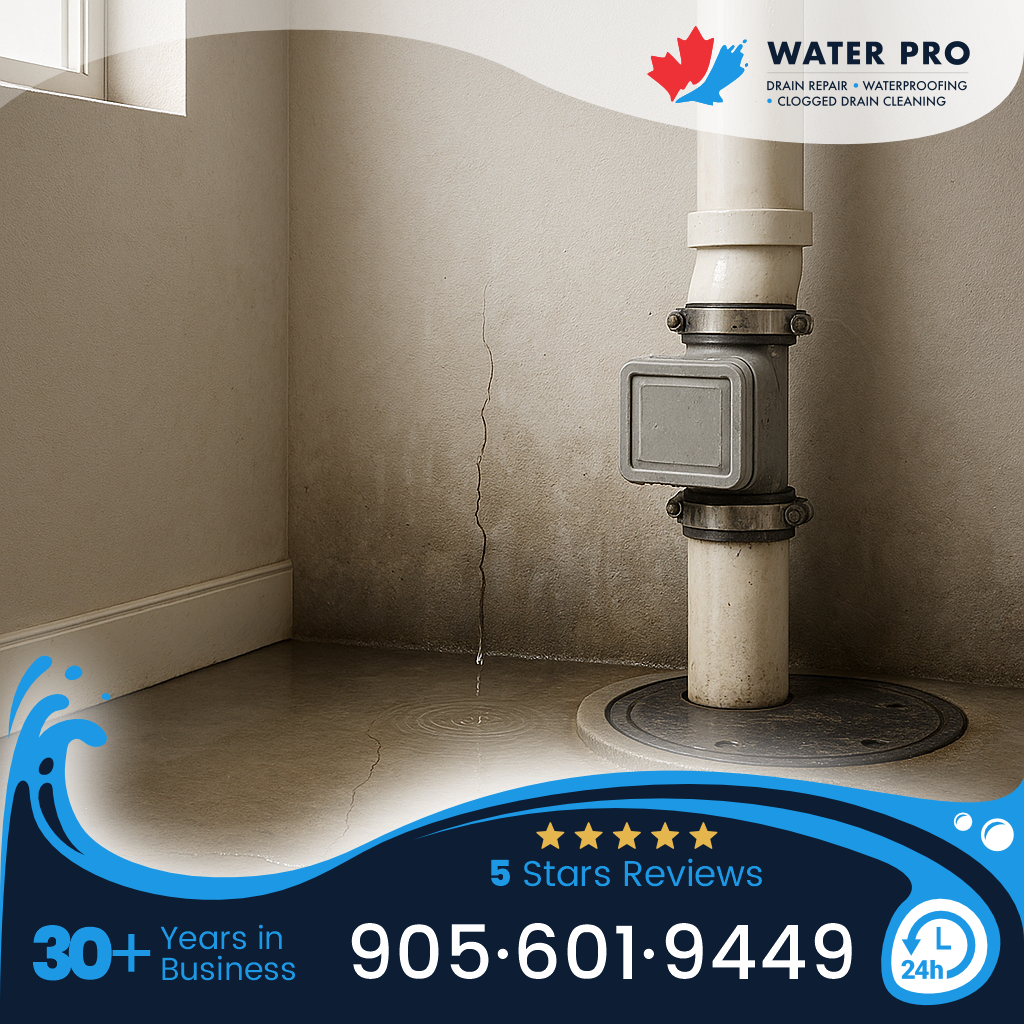


Backwater Valves and Sump Pumps: Essential Basement Protection is a practical approach for Toronto and GTA homeowners who want to reduce the chance of sewer backflow and manage rising groundwater. Some homes may see seepage during spring thaws or slow drains after heavy storms. Many homeowners first notice moisture at the floor–wall joint, a musty odour in finished rooms, or a slow-to-empty floor drain.
It’s helpful to know what professionals look for during an assessment and what a typical fix involves. We check grading, foundation details, and plumbing so the plan fits your home and local code. Before any work, we also review access, required permits, and whether a battery backup and alarm are appropriate for continuous protection during power outages.
If you would like a free estimate or a rapid response, contact us or call (905) 601-9449 for 24/7 support. Every property has nuances; we talk them through so you feel informed and comfortable about next steps.
How Backwater Valves And Sump Pumps Protect Your Basement
This section explains the basic function of each device and how they work together to reduce basement flooding risk in low lots or older sewer areas.
A backwater valve is a mechanical device installed in a building drain to block sewage from flowing back into basement fixtures during sewer surges. A sump pump sits in a pit and moves groundwater away from the foundation to a safe discharge point outside the house. Combined, they address two different sources of water: sewer backflow and rising groundwater.
- Backwater valve: installed on building sanitary lines to stop sewer backflow into floor drains and fixtures.
- Sump pump: collects groundwater from a sub-slab or perimeter drain and pumps it away from the foundation.
- Battery backup and alarm: recommended for sump pumps so the system operates during power outages and alerts you to a failure.
These systems are commonly paired with grading work, perimeter drains, or interior membranes depending on the cause of water entry. Typical installation for a single-family home can take a few hours to 1–2 days depending on access and complexity, and licensed, insured technicians will follow local code and inspection steps.
Typical Signs Of Risk And Who Should Consider Protection
This short guide helps homeowners spot common indicators and decide when to call a licensed pro for an on-site review in the Toronto and GTA area.
- Relatable signs: damp corners, a persistent musty odour, slow-draining floor drains, or visible staining near the floor–wall joint.
- Property risk factors: finished basements, low-lying lots, combined sewer neighbourhoods, and older sewer connections with clay or cast-iron pipe.
- History: any past basement flooding or repeated backups means a focused evaluation is helpful before finishing or renovating basement spaces.
During an assessment, a technician will inspect interior drains, review the sewer connection type, and check exterior grading and downspouts. Every property has nuances; we talk them through so you feel informed and comfortable about recommended options and timing for work. If you’d like a site visit, call (905) 601-9449 or request a free estimate online.
Installation, Permits, Subsidies, And Realistic Timelines
Before work begins, technicians follow a clear sequence so the job fits your home and local code. In Toronto and the GTA, some plumbing changes require a permit and an inspection before final enclosure.
Permit And Inspection Process
Licensed plumbers typically prepare permit documents and coordinate inspections with the municipality.
- Most backwater valve installations are classified as plumbing work and need a permit and an inspection by the local building division.
- An inspector often reviews the rough installation before any cover or enclosure is completed.
- Typical scheduling: permit submission and inspection booking commonly take 1–3 weeks, depending on municipal workload and completeness of documents.
- Installation time for a single-family home is often a few hours to 1–2 days for straightforward access; complex sewer connections or excavation can extend that timeline.
Licensed, insured crews follow local code and leave documentation for your records. For specific municipal steps, see Backwater Valve (Toronto Building).
For product and system selection, we commonly recommend a backwater valve combined with a sump pit and pump where both sewer backflow and groundwater are risks. For details on system options, see backwater valve & sump pumps.
Basement Flooding Protection Subsidy
Municipal subsidy programs may help offset part of installation costs for eligible properties.
- Programs vary by year and by municipality; subsidy amounts and eligibility are set by the city and may require pre-approval.
- Typical program notes: subsidies often cover only part of the cost and require proof of permit, paid invoices, and photographs of the completed work.
- Processing times can vary; homeowners commonly see subsidy decisions in about 8–10 weeks after application, though timelines change with demand.
If you’re considering a subsidy, we can help with documentation and timing so your application matches municipal requirements. Every program has nuances, and we review these with you during a site visit.
Maintenance, Testing, And Backup Strategies
Regular maintenance keeps systems ready when storms or sewer surges occur. Routine checks are simple and help reduce the chance of failure during critical times.
Simple Monthly Checks
Monthly checks are user-friendly and can alert you to early issues before a problem grows.
- Monthly: visually inspect the sump pit, clear debris, and test the alarm by pressing the test button.
- Monthly or quarterly: pour a bucket of water into the pit to confirm the pump activates and that discharge is flowing away from the foundation.
- Annually: schedule a professional plumbing inspection for valve servicing, float testing, and battery load testing on backup units.
- Battery backup: replace batteries as recommended by the manufacturer, commonly every 1–3 years, and test under load annually.
Common failure modes include power loss, a stuck float, or debris blocking the valve or pump. If any check shows an issue, contact a licensed technician so repairs or a replacement can be scoped and scheduled.
Cost Example, Checklist, And Next Steps For Toronto Homeowners
A short numeric example helps set realistic expectations about costs and timing for a typical Toronto home.
- Mini-case: backwater valve installation $1,200–$2,500; sump pump with battery backup $900–$3,000. Combined projects often range $2,000–$5,000 depending on access and pipe work.
- Timeline example: permit plus installation and inspection often fits into a 1–3 week window for straightforward jobs; subsidy processing may take about 8–10 weeks.
Homeowner checklist before booking work:
- Confirm the contractor is licensed and insured and that they provide warranty-backed work.
- Verify whether a municipal permit is required and who will apply for it.
- Keep photos and paid invoices if you plan to apply for a subsidy.
- Commit to monthly alarm and pump checks and annual professional servicing.
- Plan for a battery backup and alarm to keep protection active during power outages.
If you’d like an on-site review, free estimate, or fast response, contact us or call (905) 601-9449. Our teams are available 24/7, and we provide licensed, insured service with clean, careful job execution and warranty-backed work.
This article offers general information for homeowners and is not engineering, legal, or plumbing advice. Assessments and solutions are reviewed during an on-site visit by licensed professionals. If you’re considering waterproofing or drain work, feel free to contact us or call — we’ll discuss your goals and outline a plan that feels comfortable and right for your home.
🔗 Learn more: https://waterproofingdrain.com/
📞 Call us: 905 601-9449
✉️ Write us: info@waterproofingdrain.com
🕒 Open hours: Mon – Sat, 9:00am – 9:30pm