

A kitchen sink that will not drain is frustrating. A toilet that rises instead of flushes, a floor drain that gurgles, or sewage appearing in the basement is different – that is a property emergency. When you search for drain service near me, you need more than someone who can temporarily get water moving. You need a local team that can find the cause, protect your home, and explain the repair before the damage spreads.
For homeowners across Toronto, Mississauga, and the GTA, drain problems often start small and become expensive fast. Aging pipes, tree roots, grease buildup, heavy rain, and shifting soil can all affect the same drainage system. Fast action matters, but an accurate diagnosis matters just as much.
When to Call for Drain Service Near Me
Some clogs respond to a plunger or a careful cleaning of a sink trap. Others are warning signs that the blockage is farther down the line. If several fixtures drain slowly, water backs up when you run the washing machine, or you hear bubbling from a toilet after using the sink, the issue may be in a branch line or the main sewer line.
Call for professional drain service right away when there is sewage backup, standing water near a floor drain, repeated clogs in the same fixture, foul sewer odors, or water coming up through a bathtub or shower drain. These symptoms can point to a serious obstruction, root intrusion, a cracked pipe, or a sewer line that cannot carry wastewater away from the property.
A backed-up drain is not only inconvenient. Wastewater can damage drywall, flooring, furniture, insulation, and personal belongings. It can also create sanitation concerns in finished basements and rental units. Water damage does not wait – neither should the repair.
The Right Repair Starts With the Right Diagnosis
The quickest-looking fix is not always the best fix. A technician can clear an obstruction with a drain snake, but if roots have entered through a broken joint or the pipe has collapsed, the clog will return. That is why a professional visit should begin with questions about the symptoms, the age of the home, recent weather, and whether the problem has happened before.
For persistent or main-line problems, a sewer camera inspection provides the answers that guessing cannot. A camera travels through the pipe and shows where the blockage is located and what is causing it. It may reveal grease buildup, wipes, root growth, offset pipe sections, cracks, scale buildup, or a section of pipe that has sagged or failed.
This diagnostic step helps prevent unnecessary digging and gives property owners a clear basis for deciding what comes next. You should be able to see the condition of the line, understand the recommended work, and receive a transparent estimate. No surprises – just results.
Drain Snaking for Localized Blockages
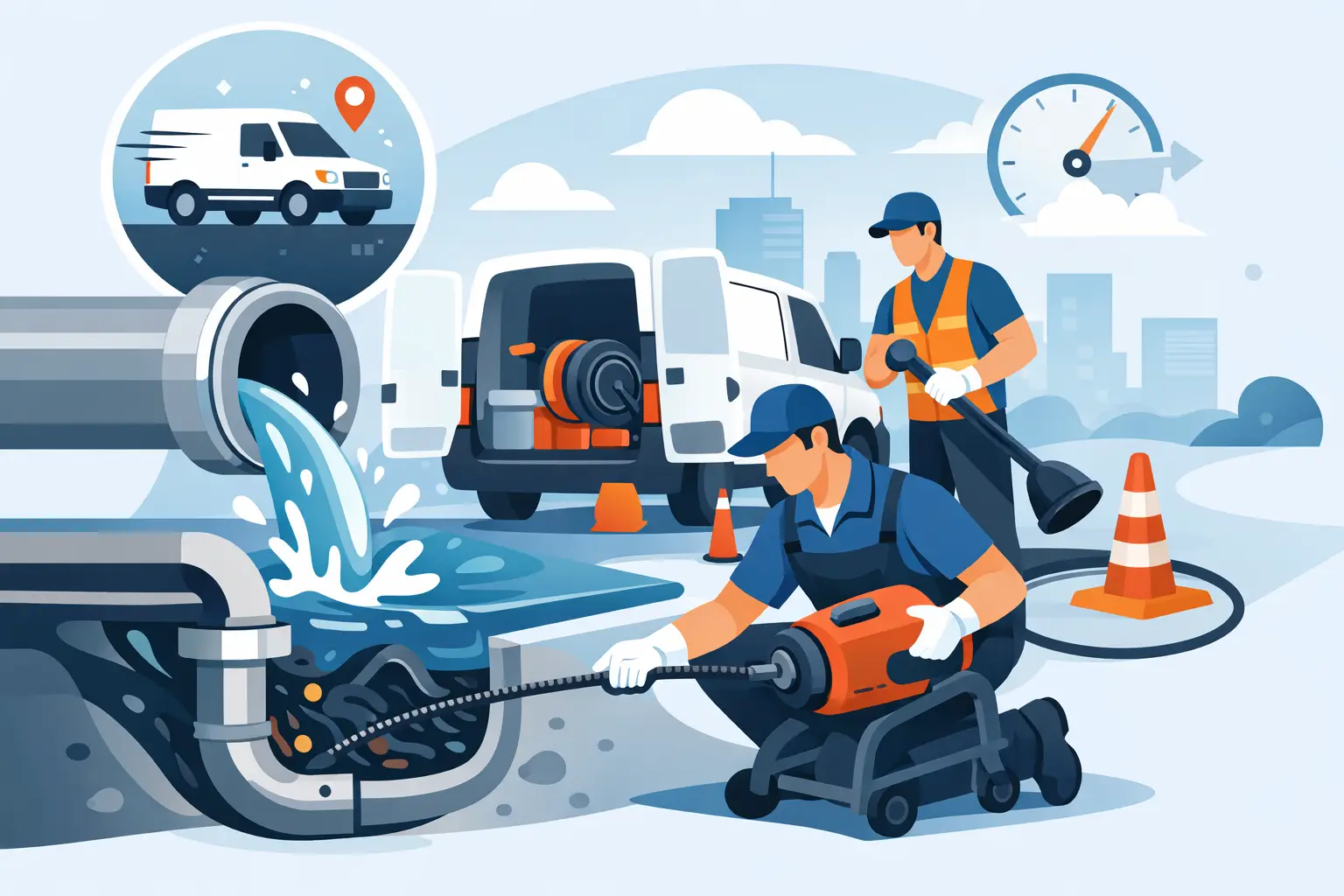
Drain snaking uses a flexible cable to break through or retrieve a blockage. It is often the appropriate choice for a clogged sink, shower, toilet, laundry drain, or a localized obstruction in a smaller line. It is fast, effective, and less disruptive than larger-scale work.
Still, snaking has limits. It may open a path through dense roots or heavy buildup without fully cleaning the pipe walls. If the clog returns soon after service, the line likely needs a closer inspection or a more thorough cleaning method.
Hydro Jetting for Heavy Buildup and Roots
Hydro jetting uses high-pressure water to scour grease, sludge, scale, and debris from the inside of a drain or sewer pipe. It can be an excellent solution for restaurant lines, older residential drains, recurring buildup, and certain root-related blockages.
Hydro jetting is not a one-size-fits-all service. A damaged, fragile, or collapsed pipe must be evaluated first. Camera diagnostics help determine whether the pipe can safely handle jetting and whether cleaning the line makes financial sense compared with repair or replacement.
Why DIY Drain Cleaners Can Make Things Worse
Store-bought chemical drain cleaners promise an easy answer, but they often create more trouble than they solve. Harsh chemicals may sit in a blocked pipe without reaching the clog, damage older plumbing materials, and create a safety risk for anyone who later opens the line. They are especially problematic when a drain has already backed up.
A homeowner can safely remove visible hair from a shower drain or clean a sink stopper, but avoid forcing tools deep into the pipe. Do not keep flushing a toilet that is rising, and do not run the dishwasher, washing machine, or multiple faucets when the main line may be blocked. Reducing water use can limit the backup until help arrives.
If sewage has reached the basement, keep children and pets away from the affected area. Move valuable items only if it is safe to do so, and avoid direct contact with contaminated water. Professional cleanup and repair should address both the drain failure and the conditions that allowed wastewater into the home.
Beyond the Clog: Repairs That Protect the Property
Sometimes cleaning the drain is the entire job. Other times, it only exposes the real problem. Older GTA homes may have clay, cast-iron, or deteriorating sewer lines that are vulnerable to roots, cracks, and movement. Traditional excavation can be necessary for severely damaged systems, but it is not always the first option.
Trenchless pipe relining can restore certain damaged pipes from within, creating a new durable lining with minimal disruption to landscaping, driveways, or finished spaces. Pipe bursting may be suitable when a failed line needs replacement and access conditions allow for it. The right solution depends on the pipe material, depth, damage, access, and local requirements.
Drain service can also lead to preventive upgrades. A backwater valve helps reduce the risk of municipal sewer water flowing back into the home during heavy storms. Sump pump systems, weeping tile work, and interior or exterior waterproofing can protect a basement where groundwater, surface runoff, or foundation cracks are part of the problem.
One provider that understands drains, sewer lines, basement water, and foundations can look beyond the immediate symptom. Water Pro Master Corp approaches the whole property, helping homeowners avoid a cycle of repeat clogs, wet basements, and costly patchwork repairs.
What Fast, Professional Service Should Feel Like
During an urgent drain call, clear communication matters. You should know when help is arriving, what the technician finds, what work is needed now, and what can be planned for later. A professional crew should protect the work area, use the appropriate diagnostic equipment, and leave the site clean when the job is complete.
Same-day and 24/7 emergency availability are especially valuable when there is sewage backup or active flooding. But speed should not mean pressure. A good contractor explains options when options exist. For example, a line may be cleared today to stop the backup, while a camera inspection and permanent repair plan are scheduled once the emergency is under control.
Ask whether the estimate includes diagnostic work, cleaning, repair, restoration requirements, and warranty coverage. For qualifying repair work, long-term warranty protection can provide welcome confidence, particularly when a sewer line or waterproofing system is involved.
Simple Habits That Reduce Future Drain Problems
No drain system is maintenance-free, but a few habits can lower the chance of trouble. Keep grease, coffee grounds, food scraps, wipes, paper towels, and hygiene products out of drains and toilets. Use sink strainers where appropriate, and have slow or recurring drains checked before they become a full backup.
For homes with mature trees, older sewer lines, or a history of backups, periodic camera inspections can catch root intrusion and deterioration early. After major storms, pay attention to floor drains, sump pump operation, and moisture near basement walls. A small change is easier and less expensive to address before it becomes an emergency.
When water is moving the wrong way, trust what you are seeing. Shut down unnecessary water use, protect the area, and call a qualified local drain specialist before a manageable problem reaches the walls, floors, and foundation of your home.