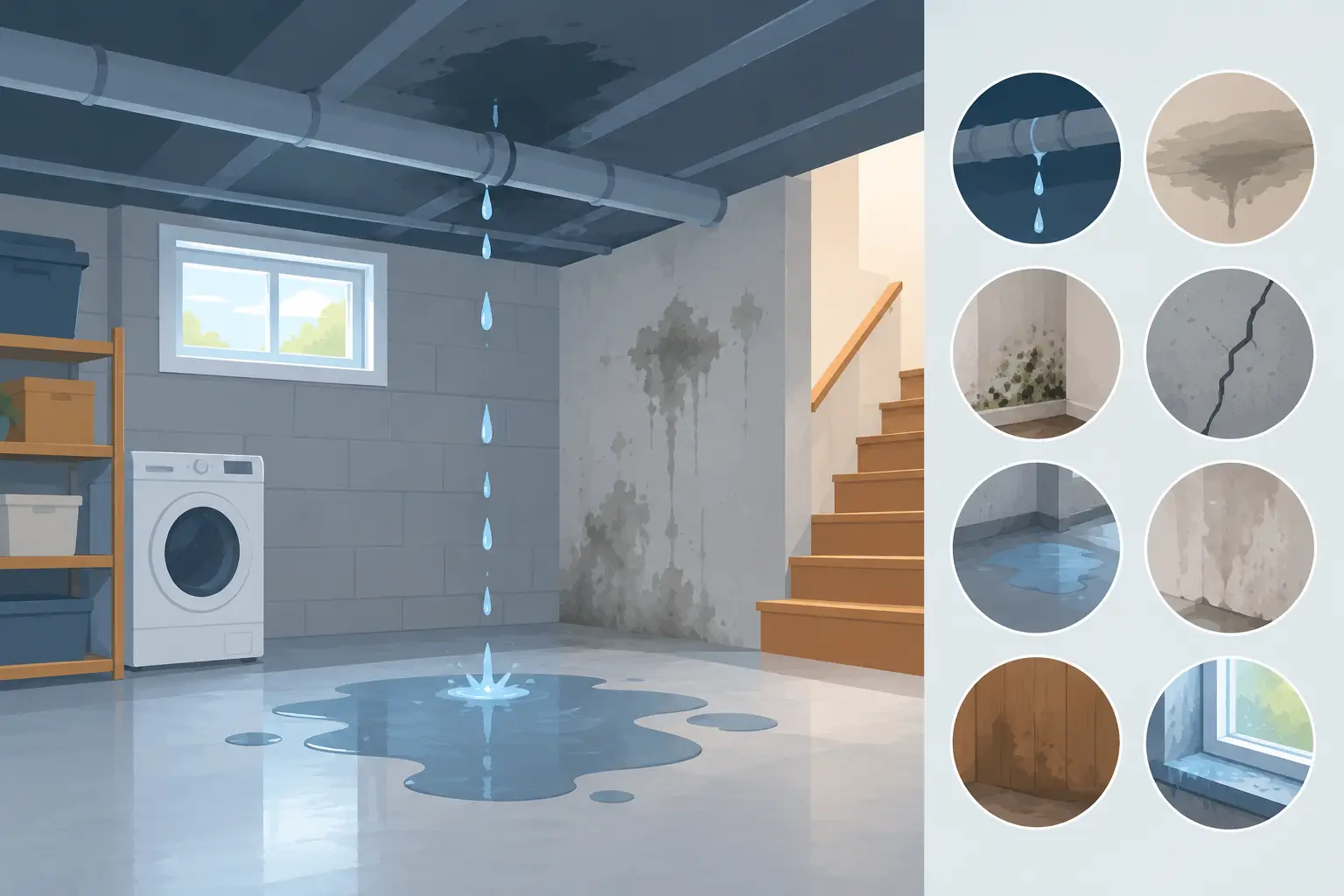


A basement rarely floods without giving you a warning first. The earliest basement leak signs can be easy to dismiss: a musty smell after rain, a faint stain along a wall, or damp carpet near a finished room’s baseboard. In Toronto, Mississauga, and across the GTA, small water problems can turn into expensive damage quickly when heavy rain, saturated soil, aging drains, or foundation cracks are involved.
The good news is that early action usually gives you more repair options. The key is knowing what you are seeing, where the water is coming from, and when the problem needs immediate professional attention.
1. A Musty Smell That Keeps Returning
A persistent damp or earthy odor is often one of the first signs of unwanted moisture below grade. Even if you cannot see standing water, humidity may be collecting behind drywall, beneath flooring, inside insulation, or around stored items.
Opening a window or using air freshener may cover the smell, but it will not fix the cause. Moisture trapped in a basement creates the conditions for mold growth, damaged building materials, and poor indoor air quality. If the odor becomes stronger after rainfall or snowmelt, groundwater intrusion or a drainage issue is more likely.
2. Water Stains on Walls, Floors, or Ceilings
Yellow-brown rings, dark patches, peeling paint, bubbling wall finishes, and white chalky residue all deserve attention. White residue, often called efflorescence, forms when moisture moves through concrete or masonry and leaves mineral salts behind as it evaporates.
Stains near the bottom of a foundation wall may point to seepage through cracks, failed exterior waterproofing, or overloaded weeping tiles. Stains on a basement ceiling can suggest an interior plumbing leak instead. The location matters. A proper inspection should identify whether the water is coming from outside, a supply line, a drain pipe, an appliance, or a bathroom above.
3. Damp Carpet, Soft Flooring, or Wet Baseboards
Finished basements can hide leaks until the damage is well underway. Carpet that feels damp around the edges, laminate flooring that starts to lift, soft vinyl, warped trim, or swollen baseboards can all indicate water beneath the finished surface.
Do not assume the leak is minor because the middle of the floor feels dry. Water follows the lowest path, collects under flooring, and can wick upward into drywall. If carpeting or drywall has been wet for more than a short period, drying it fast matters. Materials that stay damp can become a mold problem, even after the visible water is gone.
4. Cracks in Foundation Walls or the Basement Floor
Not every foundation crack leaks, and not every leak comes from a visible crack. Still, cracks should be evaluated, especially when they are damp, widening, or located where water appears after rain.
Hairline shrinkage cracks in concrete are common, but vertical, horizontal, diagonal, and stair-step cracks can have different causes and repair needs. A vertical crack may allow water to enter during wet weather. Horizontal cracking or bowing can signal pressure from saturated soil outside the foundation. That calls for a more urgent assessment because the issue may involve both water management and structural movement.
A quick patch on the inside can sometimes reduce visible seepage, but it may not address water pressure outside the wall. Depending on the diagnosis, the lasting solution could involve crack injection, interior drainage, exterior waterproofing, new weeping tile, or foundation repair.
5. Puddles or Seepage After Heavy Rain
Water that appears only during storms is still water damage. If a puddle forms along one wall, near a floor drain, around a sump pit, or in a basement corner after heavy rain, take photos before it dries and note the timing.
Rain-related seepage often points to grading problems, clogged or broken eavestrough downspouts, poor exterior drainage, failed waterproofing, or overwhelmed footing drains. In older GTA homes, clay drain pipes, root intrusion, and aging weeping tiles can add to the problem.
The trade-off is simple: a portable dehumidifier and towels may help manage a small event, but neither protects the foundation from repeated water pressure. Recurring storm leaks need a plan built around where the water is entering and how it should be redirected safely away from the home.
6. A Sump Pump That Runs Constantly or Does Not Run at All
A sump pump is supposed to remove groundwater before it reaches your basement floor. If it runs nonstop during ordinary weather, cycles frequently, makes unusual noises, or fails to start when water enters the pit, do not wait for the next major storm.
Check that the pump has power, the float can move freely, and the discharge line is not frozen, blocked, or sending water back toward the foundation. A backup system is worth considering where power outages and severe weather are a concern. It depends on the property and water table, but a battery backup or secondary pump can make a major difference during a heavy storm.
7. Rust, Rot, or Mold Around Basement Fixtures
Look closely around water heaters, laundry connections, utility sinks, toilets, windows, and exposed pipes. Rusted appliance legs, corroded pipe fittings, rotted wood framing, mold on drywall, and damp insulation are signs that moisture has been present longer than it may seem.
This is where source identification becomes critical. A leaking plumbing connection requires a plumbing repair. Water entering around a basement window may require window well drainage or exterior waterproofing. Water around a floor drain could be a blocked drain, sewer backup, or a grading issue. Treating every wet spot as a foundation leak can waste time and money.
8. Floor Drains That Gurgle, Smell, or Back Up
A basement leak is not always groundwater. If water rises from a floor drain, toilet, shower, or laundry drain, you may be dealing with a sewer or drain backup. Gurgling sounds, slow drainage throughout the house, sewage odor, and dirty water are urgent warning signs.
Keep people and pets away from contaminated water, avoid using toilets, showers, washing machines, and dishwashers, and call for help right away. Sewer water can carry harmful bacteria, and continued water use can make the backup worse. A camera inspection can locate blockage, root damage, cracks, or pipe collapse without guessing, while drain cleaning or trenchless repair may restore the line with less disruption than traditional excavation.
9. Higher Humidity and Condensation on Basement Surfaces
Condensation on pipes, windows, ductwork, or walls does not always mean water is entering through the foundation. Sometimes it is caused by warm humid air meeting cold basement surfaces. Still, consistently high basement humidity can point to a moisture problem that needs more than ventilation.
Use a hygrometer if you are unsure. Humidity that stays elevated, especially with odors or visible mold, calls for closer investigation. Dehumidifiers can be useful for controlling indoor moisture, but they are not a substitute for repairing leaks, improving drainage, or waterproofing a vulnerable foundation.
What to Do When You Notice Basement Leak Signs
Start by protecting people and property. Move boxes, furniture, electronics, and valuables away from wet areas. If water is close to outlets, electrical panels, or appliances, avoid the area until it can be assessed safely. Do not enter standing water if you suspect electrical risk or sewage contamination.
Next, document the problem. Take photos and video, record when it happened, note recent rainfall, and identify whether the water is clear, rusty, or dirty. This information helps separate a plumbing failure from groundwater seepage or a sewer backup.
Then arrange a professional diagnosis instead of relying on a one-size-fits-all repair. Water Pro Master Corp uses hands-on inspections and diagnostic equipment to trace the source, explain the options clearly, and recommend the repair that fits the property. That may mean drain cleaning, camera inspection, crack repair, sump pump work, interior waterproofing, exterior waterproofing, weeping tile installation, or a backwater valve for sewer-backup protection.
Do Not Wait for the Next Storm
A dry basement on a sunny day does not prove the problem is gone. Water can hide behind finished walls, under flooring, and outside the foundation until the next downpour exposes it again. Acting when the first signs appear can protect your finished space, your foundation, and the value of your home.
If you see water, smell moisture, or notice a drain acting differently, trust the warning. A clear diagnosis now is far easier than cleaning up after a flooded basement later.