A basement floor crack can look minor until the next heavy rain sends moisture through it, the edges begin to lift, or a musty smell reaches the finished room above. To repair cracked basement concrete floor damage properly, start by finding out why the crack formed. The right repair is not always the quickest patch. In Toronto and across the GTA, seasonal freeze-thaw cycles, high groundwater, aging homes, and drainage problems can all turn a small crack into a recurring basement water issue.
First, Identify What Kind of Crack You Have
Concrete naturally shrinks as it cures, and hairline cracks are common in basement slabs. A thin, dry crack that has not changed over time may be cosmetic. It can often be cleaned, filled, and sealed to keep dust, insects, and minor moisture from coming through.
A wider crack needs a closer look, especially if it is more than about 1/8 inch wide, has uneven edges, or continues across multiple areas of the floor. Cracks that are wet, rusty-looking, stained with white mineral deposits, or open after rain usually point to water pressure below or around the foundation. If one side of the crack sits higher than the other, the slab may be moving or settling.
Do not assume every crack means a foundation emergency. Basement slabs are typically not the main structural support for the house. Still, a crack can reveal a larger drainage, soil, or foundation concern. The cause determines whether a surface repair will last.
When a Simple Concrete Crack Repair Makes Sense
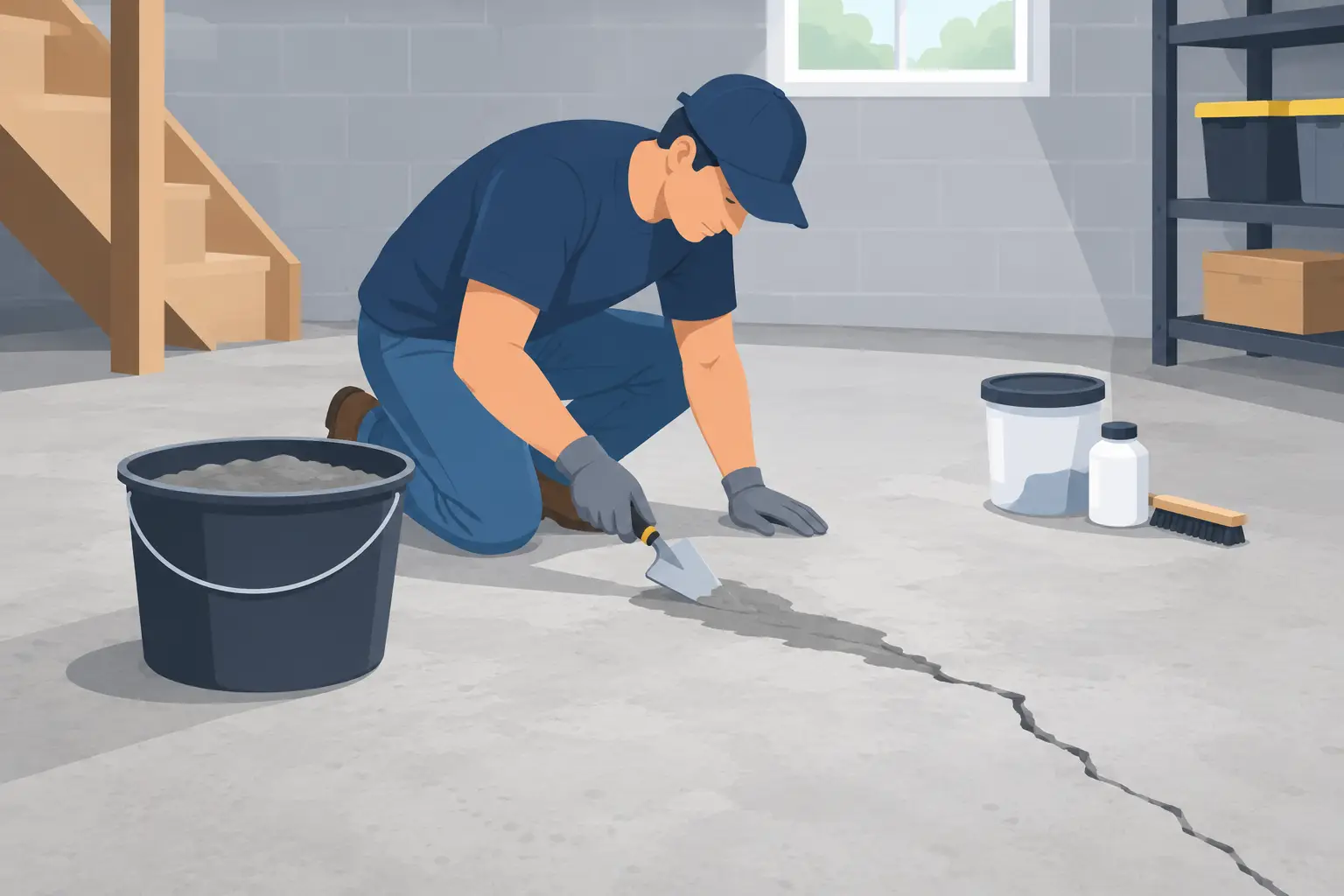
For a stable, dry hairline crack, a quality concrete crack filler or low-viscosity epoxy can be a practical solution. The floor must be clean, dry, and free of loose concrete before any material is applied. Vacuum out dust and debris, then follow the product instructions for crack width, cure time, and temperature.
Flexible polyurethane sealants are often a better choice where slight movement is expected. Epoxy creates a hard bond, while polyurethane remains more flexible. Neither product will solve active water intrusion, a sinking slab, or pressure pushing water up through the floor.
Once the repair has cured, a concrete floor coating or sealer can provide an added layer of protection. This can be worthwhile in an unfinished utility basement where the goal is easier cleaning and less concrete dust. In a finished basement, however, sealing the visible crack without addressing moisture below can trap a problem under flooring, insulation, or drywall.
Signs You Need More Than a Patch
Water does not enter a basement without a path and a source. If your floor crack is damp after storms, the water may be coming through the crack itself, rising through porous concrete, or finding its way in where the floor meets the wall. Each situation calls for a different repair plan.
Watch for these warning signs:
- Water or dampness returns after every rainfall or snowmelt.
- White powdery deposits appear along cracks or at the floor-wall joint.
- Vinyl, laminate, carpet, or engineered flooring feels damp or begins to lift.
- The crack widens, branches, or has one raised edge.
- You notice wall cracks, bowing, or doors that suddenly stick nearby.
- There is a persistent musty odor, mold growth, or damp insulation.
A floor crack accompanied by sewer odors or wastewater is a separate urgency. That may indicate a failed drain line, broken underground pipe, or sewer backup rather than groundwater. Keep people and pets away from contaminated water, avoid using drains unnecessarily, and arrange a professional inspection right away.
Why Basement Floor Cracks Keep Coming Back
The most frustrating repairs are the ones that look good for a few months and then split open again. That usually happens because the movement or water pressure beneath the slab was never corrected.
In older GTA homes, clay soils can expand when saturated and contract during dry periods. This movement places stress on concrete slabs and foundation walls. Poor grading, clogged eavestroughs, short downspouts, or damaged exterior drainage can keep too much water beside the foundation. During spring thaw or intense summer storms, groundwater pressure can build beneath the basement floor.
A damaged weeping tile system may also be part of the problem. These perimeter drainage pipes are designed to collect water around the foundation and direct it away. When they are blocked, crushed, or simply past their service life, water has fewer places to go. It may show up at floor cracks, at the cove joint, or through foundation wall cracks.
Settlement is another consideration. Minor slab settlement can occur without threatening the home’s structure, but significant movement should be evaluated. If the floor is sinking, heaving, or separating from the wall, a filler alone is not a durable repair.
The Right Repair Depends on the Water Source
A professional assessment should identify whether the issue is surface-level, drainage-related, plumbing-related, or structural. This avoids spending money on a repair that treats the symptom but misses the cause.
For isolated dry cracks, cleaning, routing the crack if needed, and applying an appropriate sealant may be enough. For active leaks through a crack, an injection repair may help in specific conditions, but the floor still needs to be assessed for hydrostatic pressure. Where water enters repeatedly at the perimeter, interior waterproofing with a drainage channel, new weeping tile, and a properly sized sump pump may be the more dependable solution.
If a camera inspection finds a broken drain pipe under the slab, the repair may involve targeted access or a no-dig pipe repair method, depending on the pipe condition and layout. This is why diagnosis matters. A wet basement floor does not automatically mean a foundation crack, and a visible crack does not automatically mean the concrete is the root cause.
What Not to Do Before Repairing a Cracked Basement Floor
Do not cover a damp crack with carpet, flooring underlayment, or a heavy storage shelf and hope it disappears. Moisture can travel beneath finished materials and create mold, odors, and costly damage that stays hidden until it is widespread.
Avoid applying rigid cement patch over a crack that is actively moving. It may look smooth at first, but it is likely to crack again. Also, do not use waterproof paint as a substitute for drainage correction. Coatings can be useful as part of a repair plan, but they cannot relieve groundwater pressure under the slab.
If you are planning a basement renovation, investigate cracks before framing walls or installing flooring. Access is simpler, repairs are cleaner, and you can protect the investment before water gets behind new finishes.
Get a Clear Plan Before Water Damage Spreads
A cracked concrete basement floor is manageable when the repair matches the cause. The key questions are straightforward: Is the crack dry or wet? Is it stable or moving? Is the water groundwater, plumbing water, or a sewer issue? A qualified inspection can answer those questions and lay out practical options without guesswork.
Water Pro Master Corp helps GTA property owners diagnose basement leaks, drainage failures, concrete floor concerns, and foundation-related water entry with clear recommendations and clean, durable work. If water is coming through your basement floor, do not wait for the next storm to make the decision for you. Address it while the problem is visible and the repair can stay focused.