
A small water stain under a sink can be a loose connection. A warm spot on the floor, a suddenly higher water bill, or a musty basement can point to something far more serious. The difference is not always visible at first. Knowing how to diagnose plumbing leaks helps you act before water damages drywall, flooring, insulation, belongings, or your home’s foundation.
For homeowners across Toronto, Mississauga, and the GTA, the biggest risk is often waiting for a leak to become obvious. Water can travel along pipes, framing, and concrete before it appears where you can see it. A careful check can narrow down the source, but active leaks and hidden pipe failures need a professional diagnosis quickly.
Start by Identifying the Type of Water Problem
Not every wet area is a plumbing leak. The location, timing, and appearance of the moisture help determine whether you are dealing with a supply line, drain line, appliance, roof, foundation, or groundwater problem.
A clean-water plumbing leak commonly appears even when no fixture is running. It may come from a pressurized water line serving a sink, toilet, shower, refrigerator, washing machine, or outdoor hose connection. These leaks can run continuously, which makes them especially damaging and expensive.
A drain leak usually shows up only when water is being used. For example, moisture under a bathroom sink after handwashing may indicate a loose trap or drain connection. A ceiling stain beneath an upstairs shower that gets worse after bathing could point to a failed drain seal, cracked shower pan, or leaking supply pipe.
In a basement, consider timing. Water that appears after heavy rain may be related to foundation cracks, poor exterior drainage, overwhelmed weeping tile, or a sump pump problem rather than indoor plumbing. Dirty water, sewage odor, or water rising from a floor drain should be treated as a possible sewer backup. Stop using water fixtures and get professional help right away.
How to Diagnose Plumbing Leaks With Your Water Meter
Your water meter is one of the most useful tools for finding a hidden pressurized leak. It can tell you whether water is moving through your plumbing when the house should be completely still.
First, make sure no one uses water. Turn off faucets, showers, dishwashers, washing machines, ice makers, irrigation systems, and any appliance that may refill automatically. Locate your water meter and note the reading or take a clear photo. Many meters have a small leak indicator that spins when water is flowing.
Wait at least 30 minutes, preferably one to two hours, without using any water. Check the meter again. If the reading changes or the leak indicator moves, water is likely escaping somewhere on the property.
This test does not tell you exactly where the leak is. A running toilet, dripping faucet, humidifier connection, or underground water line can all cause meter movement. Still, it is strong evidence that the problem needs closer attention.
If the meter moves, turn off the home’s main water shutoff valve and check the meter again. If movement stops, the leak is likely inside the home’s plumbing system. If it continues, the issue may be between the meter and shutoff valve or involve another connection that should be inspected by a licensed plumber.
Check the Places Leaks Usually Begin
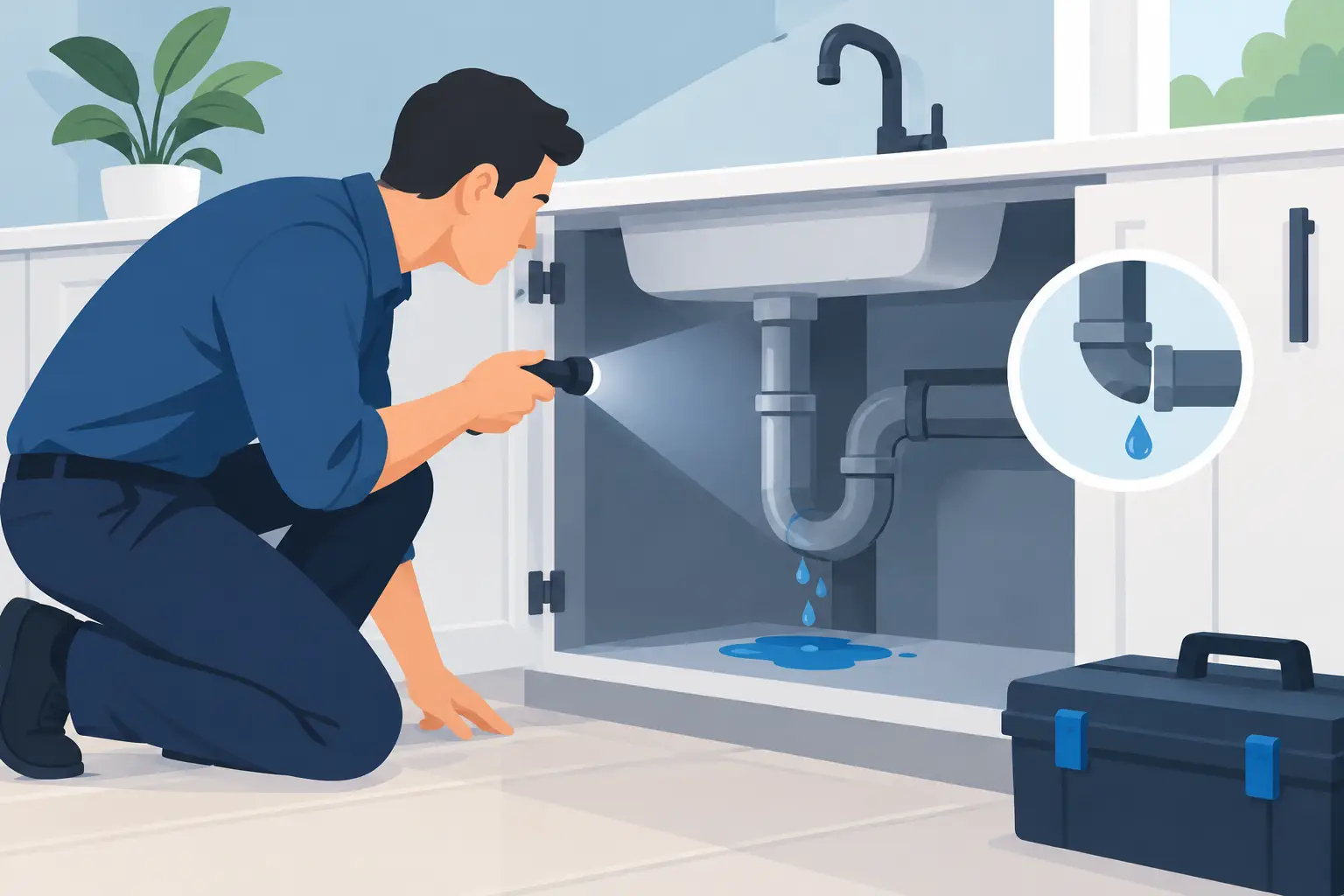
Start with accessible areas, using a flashlight and dry paper towel. Look and feel for moisture, but do not ignore subtle warning signs such as corrosion, mineral buildup, peeling cabinet material, or a persistent musty smell.
Under sinks, inspect shutoff valves, supply hoses, faucet connections, drain traps, and the bottom of the cabinet. A supply leak can leave white or green mineral deposits around fittings. A drain leak may leave moisture lower down, especially around the trap or where the pipe enters the wall.
At toilets, look for water at the base, around the supply valve, and beneath the tank. Food coloring placed in the tank can help identify a silent toilet leak. If color appears in the bowl without flushing, the flapper is not sealing properly. This is often a simple repair, but it can waste a surprising amount of water.
Check washing machine hoses, dishwasher supply lines, refrigerator water connections, water heaters, and humidifiers. These areas are easy to overlook because the leak may be slow and hidden behind an appliance. Water heater leaks deserve prompt attention, especially if water is pooling at the base, the pressure relief valve is discharging, or corrosion is visible.
For showers and tubs, inspect caulking, grout, fixture trim, and the ceiling below. Failed caulking can allow water behind walls, but do not assume surface sealing is the only issue. A leak that appears only during shower use may come from the valve, shower arm, drain, or a cracked enclosure.
Watch for Signs of a Hidden Leak
Hidden leaks rarely announce themselves with a steady drip. They often show up as changes in your home. A water bill that rises without an obvious increase in use is one of the clearest signals. So are recurring mildew, bubbling paint, warped baseboards, loose flooring, and stains that grow after you dry them.
Pay attention to floors and walls. A warm section of floor can indicate a hot-water line leak beneath a slab. Soft drywall, a damp carpet edge, or a stain on the ceiling below a bathroom should not be painted over until the moisture source is found. Covering the evidence may make the room look better temporarily while water keeps damaging material behind the surface.
Listen when the house is quiet. Hissing, faint rushing, or intermittent pipe noise can signal a pressurized leak. You may also notice your water pump cycling when no water is being used, if your property relies on a pump system.
Basements require a slightly different approach. White powdery residue on concrete, known as efflorescence, can show that moisture is moving through the wall or floor. That does not automatically mean a pipe is leaking. If dampness increases after rain, around foundation cracks, or near window wells, waterproofing and drainage may be the real solution.
Know When a Leak Is an Emergency
Turn off the main water supply if water is actively flowing, a pipe has burst, or you cannot control the leak at a fixture shutoff valve. If water is close to electrical outlets, panels, appliances, or wiring, stay clear of the area and contact an emergency professional.
Sewage water requires immediate action. Do not run sinks, flush toilets, use the dishwasher, or start laundry if wastewater is backing up through a drain. Keep children and pets away from the affected area. Sewer backups carry contamination risks and can become much worse when more water enters the drainage system.
A leak behind a wall or beneath a floor is also urgent when you see rapid staining, hear running water, smell sewage, or notice structural materials becoming soft. Fast response matters because drying alone is not a repair. The source must be located and corrected.
Why Professional Leak Detection Can Save More Than It Costs
A visible leak is sometimes straightforward. Tightening a fitting or replacing a toilet flapper may solve it. But opening walls, digging up floors, or guessing at underground pipes can create unnecessary damage and cost.
Professional plumbing diagnostics use tools that identify the source with more precision. Camera inspections can assess drain and sewer lines for cracks, root intrusion, offsets, or blockages. Pressure testing helps confirm supply-line problems. Depending on the situation, specialists may use moisture meters, thermal imaging, acoustic listening equipment, or targeted testing to locate a leak before repair work begins.
The repair method depends on the pipe, its location, and its condition. A localized fitting repair may be enough. Aging or damaged drain lines may need relining, pipe bursting, or another no-dig solution. If water is entering from outside, an interior or exterior waterproofing plan, sump pump system, weeping tile repair, or foundation crack repair may be the lasting answer.
Water Pro Master Corp approaches these problems with the full picture in mind. A wet basement is not always a plumbing issue, and a drain backup is not always fixed by snaking alone. Clear diagnosis helps avoid repeat damage, surprise costs, and repairs that only treat the symptom.
Do Not Wait for the Stain to Get Bigger
Take photos of the affected area, note when the problem occurs, and record whether your water meter moves while fixtures are off. Those details can speed up a professional assessment. Avoid using chemical drain cleaners to solve a suspected leak or backup, as they can damage pipes and make repair work more hazardous.
Water damage does not wait, especially in older GTA homes with aging pipes, finished basements, and buried drainage lines. If you have confirmed meter movement, recurring moisture, a sewer smell, or water where it should not be, arrange a licensed inspection promptly. The best next step is usually the one that finds the real source before a small warning turns into a major repair.