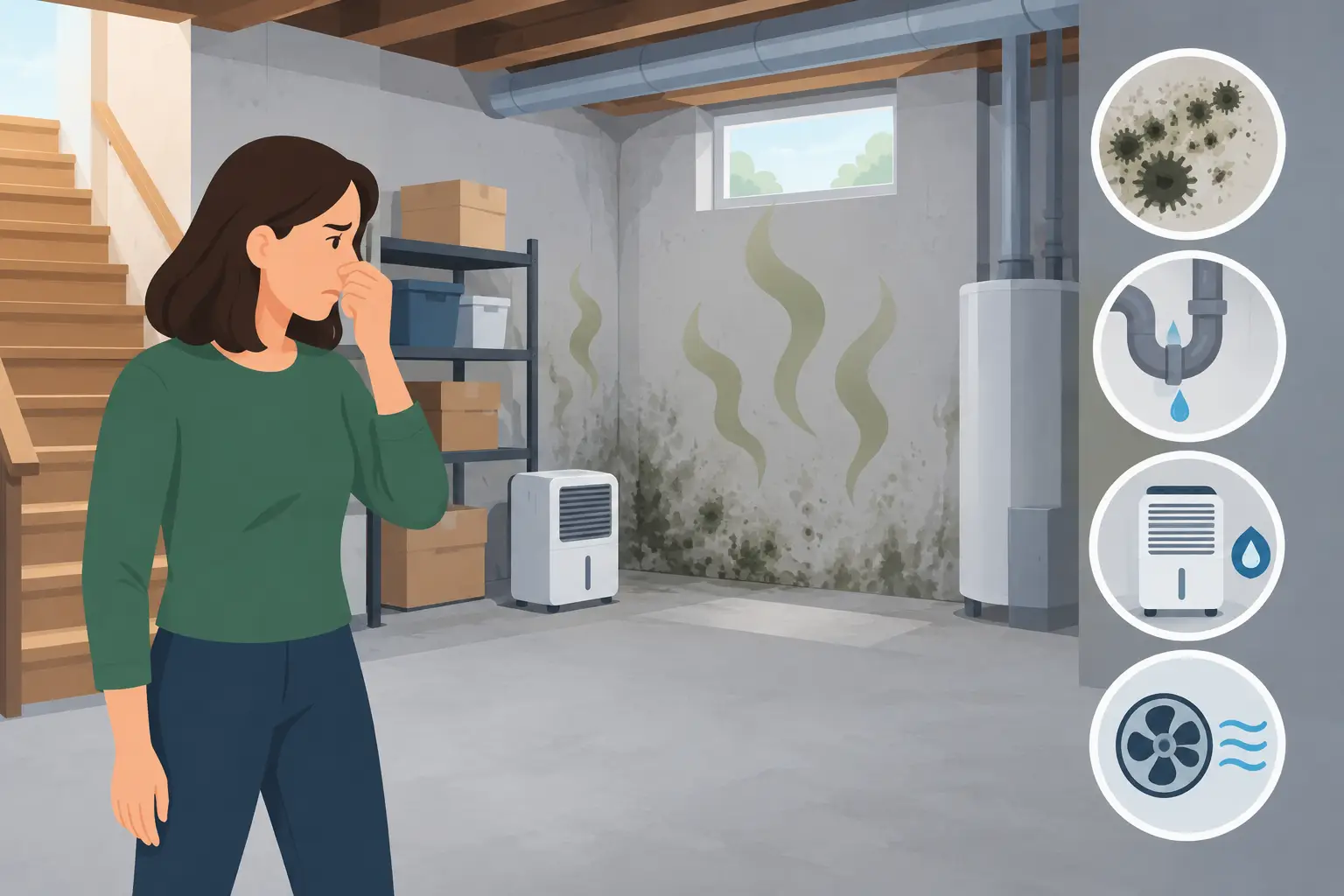



That stale, damp smell often hits the moment you open the basement door. It may seem like a minor annoyance, but if you are asking, “why does basement smell musty,” your home is usually telling you that moisture is collecting somewhere it should not. In many cases, the odor appears before you see a leak, water stain, or mold growth.
A musty basement is common in older homes across Toronto, Mississauga, and the GTA, especially after heavy rain, spring thaw, or long humid stretches. The good news is that the smell can often be traced to a specific problem. The key is to find the moisture source rather than covering the odor with air freshener or paint.
Why Does a Basement Smell Musty?
A musty odor is usually caused by excess moisture interacting with dust, wood, cardboard, fabrics, or building materials. Mold and mildew can produce the familiar earthy smell, but they are not the only possible cause. Damp concrete, a dry floor drain, a plumbing leak, or sewage gases can all create unpleasant odors below grade.
Basements are especially vulnerable because they sit against soil that can hold water after rain. Cool foundation walls can also create condensation when warm, humid air enters the space. A basement may look dry on the surface while moisture is moving through foundation cracks, floor-wall joints, or aging drainage systems behind finished walls.
The Most Common Causes of a Musty Basement
Water Seeping Through the Foundation
Hairline cracks in concrete, gaps around utility lines, and weak joints where the foundation wall meets the floor can let groundwater enter. Sometimes the water appears as a visible trickle during rain. Other times, it evaporates before you notice it, leaving only a damp smell, white mineral deposits, peeling paint, or soft drywall.
This is particularly common when exterior grading slopes toward the house, downspouts discharge too close to the foundation, or the weeping tile system is blocked or failing. If the odor gets noticeably stronger after rain, groundwater intrusion should be high on the list of suspects.
Humidity and Condensation
Not every wet basement has an active leak. During warm weather, humid outdoor air can enter a cool basement and condense on pipes, windows, walls, and concrete floors. Laundry rooms, bathrooms, and poorly vented finished basements can add even more moisture to the air.
A dehumidifier can help control seasonal humidity, but it is not a permanent repair for ongoing water entry. If you are emptying the unit constantly, seeing condensation repeatedly, or noticing damp carpet edges, the underlying moisture issue needs a closer inspection.
Mold or Mildew Behind Walls and Flooring
Mold does not always grow in obvious black patches. It can develop behind baseboards, beneath laminate flooring, under carpeting, inside insulation, or behind finished basement walls after a small leak or flood. Materials such as drywall, cardboard boxes, fabric furniture, and wood framing hold moisture and give mold a place to grow.
The trade-off is simple: cleaning visible mold may improve the smell, but it will not stop it from returning if the material remains damp. Wet or mold-damaged porous materials may need to be removed, and the water source must be corrected first.
A Dry Floor Drain or Plumbing Trap
Many basements have a floor drain that is rarely used. Beneath that drain is a trap designed to hold water and block sewer gases. When the water evaporates, odors from the drain system can enter the basement. These odors are often described as musty, sour, or sewage-like.
Pouring water into an unused floor drain can restore the trap seal. If the smell continues, the drain may be clogged, improperly vented, damaged, or connected to a larger plumbing issue. A licensed plumber can inspect the drain and use a camera to identify hidden problems without unnecessary demolition.
Leaking Pipes, Appliances, or Drain Lines
A slow leak under a sink, behind a washing machine, around a water heater, or from a drain line can keep one area damp for months. Because basements often contain exposed plumbing and mechanical equipment, leaks may be missed until the odor becomes persistent.
Check for rusted fittings, warped baseboards, water marks, damp insulation, or a higher-than-normal water bill. A small plumbing leak can create major mold and flooring damage when left alone.
Sewer Problems and Backups
A sewer odor is not something to ignore. A partially blocked drain, cracked sewer pipe, tree root intrusion, or backup can cause foul odors before wastewater becomes visible. If the basement smell is strongest near a floor drain, toilet, laundry area, or cleanout, it may be more than normal dampness.
Warning signs include slow drains throughout the home, gurgling toilets, bubbling water in a floor drain, or water appearing after laundry or shower use. These are situations where prompt drain diagnostics can prevent a messy and expensive sewage backup.
How to Find the Source Without Guesswork
Start by paying attention to when and where the smell is strongest. An odor that worsens after rain points toward foundation seepage, poor exterior drainage, or failed weeping tiles. A smell that increases after using plumbing fixtures may point to a drain, vent, or sewer issue. If it is strongest near stored boxes or a finished wall, inspect for hidden moisture and mold.
Look closely along foundation walls, around windows, under stairs, behind stored belongings, and near the furnace, water heater, washer, and floor drain. Move boxes away from exterior walls. Cardboard absorbs moisture quickly and can conceal mold growth. Check whether carpet feels cool or damp at the edges and whether baseboards are swollen or stained.
Do not rely on bleach or scented products as a diagnosis. Strong cleaners can temporarily mask odors while moisture continues to damage the structure. They can also make it harder to identify whether a sewer gas issue is present.
What You Can Do Right Away
Remove wet cardboard, rugs, or fabric items from the basement and dry affected areas as quickly as possible. Run a properly sized dehumidifier and keep basement humidity near 40 to 50 percent when conditions allow. Make sure the dehumidifier drains reliably, since a full reservoir will stop helping.
Outside, clear debris from gutters and extend downspouts away from the foundation. Soil should slope away from the home so rainwater does not collect against basement walls. These are useful first steps, but they cannot fix a cracked foundation, blocked drainage tile, broken sewer line, or active plumbing leak.
If you suspect a dry floor drain, add water slowly to the drain. If this improves the odor only briefly, or if you notice sewer smells, call a professional rather than trying to force chemicals through the line. Chemical drain cleaners can damage older pipes and do not solve root intrusion, pipe breaks, or drainage failures.
When a Musty Smell Needs Professional Help
Call for an inspection when the smell persists despite drying the space, returns after every rainstorm, or comes with visible staining, mold, flooding, cracks, or sewage odors. Homes with finished basements deserve especially fast attention because moisture can spread behind walls before the damage is visible.
Professional testing and camera inspections can separate a plumbing issue from a waterproofing issue. Depending on the diagnosis, the right repair may involve drain cleaning, pipe repair, foundation crack repair, interior or exterior waterproofing, a sump pump, new weeping tile, or a backwater valve. The right solution depends on where the water is coming from, not on which repair sounds biggest.
Water Pro Master Corp helps GTA property owners identify the actual source and complete clean, durable repairs with no surprises. Water damage does not wait, and neither should the inspection when a basement odor keeps coming back.
A dry basement should smell like nothing at all. If yours smells musty, treat that odor as an early warning and act before hidden moisture turns into damaged finishes, mold growth, or a full basement emergency.