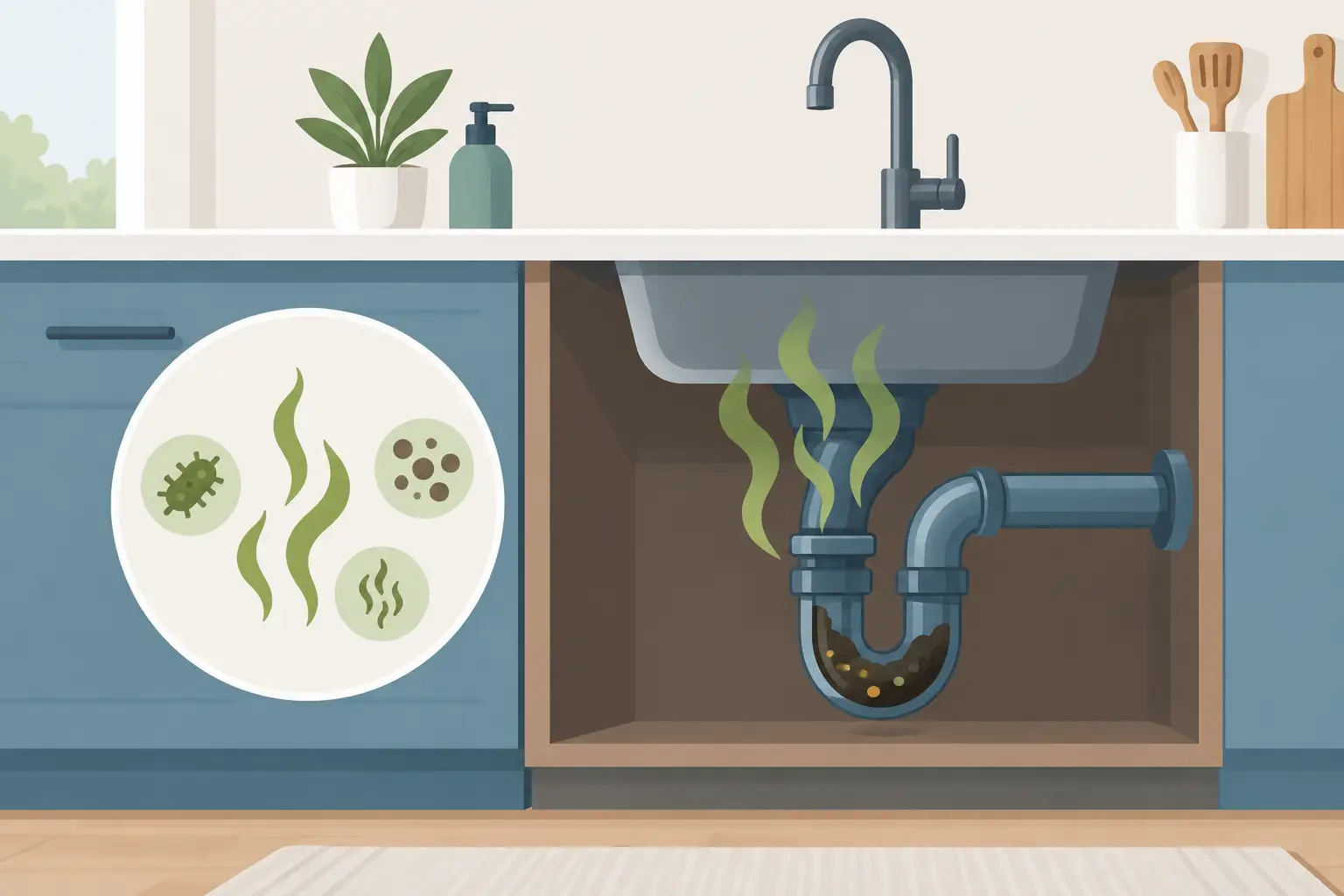



A bad smell from the sink is easy to ignore for a day or two. But drain odors are not always a cleaning issue. In a Toronto-area home, a sewer-like, musty, or rotten-egg smell can point to a dry plumbing trap, buildup inside the pipe, a blocked vent, or a developing sewer problem. The right fix depends on where the odor starts, when it appears, and whether other plumbing fixtures are acting differently.
If the smell is strong, keeps returning, or comes with slow drains, gurgling, water backup, or a wet basement, treat it as a warning sign. Water damage and sewer issues do not wait, and neither should the response.
What Different Drain Odors Can Tell You
The smell itself offers useful clues, although it cannot replace a proper diagnosis. A sour or musty odor often comes from soap scum, grease, hair, food waste, and bacteria coating the inside of a kitchen, bathroom, or laundry drain. This is common in frequently used homes and rental properties, especially where a partial clog lets organic debris sit in the pipe.
A sewage or rotten-egg smell is more concerning. It can happen when the P-trap under a sink, shower, floor drain, or laundry standpipe dries out. That curved section of pipe is designed to hold water and block sewer gas from entering the home. If a basement bathroom, utility sink, or floor drain is rarely used, the water seal can evaporate and allow odors through.
A persistent sewer-gas smell may also point to a cracked drain line, loose seal, failed toilet wax ring, blocked plumbing vent, or a problem in the main sewer line. Older homes across the GTA can have aging clay, cast-iron, or deteriorating underground pipes. Tree roots, shifting soil, and years of buildup can create openings or restrictions that allow odors and wastewater problems to develop.
When an odor becomes noticeably worse after heavy rain, do not assume it is simply humidity. Rain can expose drainage weaknesses, overload a municipal sewer, or reveal a backup issue in a property’s private line. A smell combined with water around a basement floor drain or visible sewage requires fast professional attention.
Start With Safe, Simple Checks
For a lightly used drain, the first step is simple: run water for a minute or two. Pouring water into an unused floor drain, shower drain, or sink may refill the trap and stop sewer gas from entering the room. For a floor drain that dries out repeatedly, a small amount of mineral oil added after the water can slow evaporation.
If the odor appears to come from a kitchen or bathroom sink, remove visible debris from the stopper or drain cover. Clean the area with hot water and a mild soap-based cleaner. Kitchen drains often collect grease and food particles near the opening, while bathroom drains trap hair, soap residue, and skin oils.
Avoid treating every smell with harsh chemical drain cleaners. These products may not reach the actual cause, can damage certain older pipes or seals, and may create a safety hazard if they remain in the line before a plumber services it. They are also not a solution for roots, broken pipe, sewer-line blockage, or venting problems.
A baking soda and vinegar mixture is sometimes suggested for drain cleaning, but it has limited value against serious buildup. It may freshen a lightly dirty drain, but it will not clear a deep clog or correct a damaged pipe. If the smell returns within days, the underlying issue likely needs more than a surface treatment.
When Drain Odors Mean You Need a Plumber
A single smelly sink can be minor. Multiple fixtures with odors or drainage problems are different. When more than one sink, tub, toilet, or floor drain is slow, gurgling, or backing up, the issue may be in a shared branch line or the main sewer connection.
Call for professional drain service promptly if you notice any of the following:
- Sewage smell that does not go away after refilling unused traps
- Gurgling sounds from toilets, tubs, or sinks
- Water backing up into a tub, shower, or basement floor drain
- Repeated clogs in the same fixture
- Odors that become worse after rainfall or when appliances drain
- Wet spots, sewage, or discoloration near basement drains
These symptoms can indicate a blocked or damaged sewer line. Waiting can turn a drain odor into a backup, contaminated water cleanup, damaged flooring, or a flooded finished basement.
A professional diagnosis should begin with the source of the problem, not guesswork. For a localized blockage, drain snaking may be enough to remove hair, debris, or a compacted clog. For grease-heavy lines, scale buildup, or more substantial buildup in larger pipes, hydro jetting can clean the pipe walls more thoroughly. The correct method depends on pipe material, pipe condition, and what a camera inspection finds.
Why a Camera Inspection Can Save Time and Money
When odors keep coming back, a drain camera inspection can show what is happening inside the line without opening walls, floors, or landscaping. A plumber can identify root intrusion, a shifted joint, pipe cracks, collapsed sections, heavy buildup, or standing water caused by poor slope.
This matters because a drain can appear clear after a temporary snaking but still have a structural issue underneath. If roots are growing through an older sewer pipe, for example, removing them may restore flow for a while, but the opening in the pipe remains. The long-term repair may involve trenchless pipe relining, pipe bursting, or targeted replacement, depending on the damage and access conditions.
For property owners, the benefit is clarity. You should know whether the problem is a simple maintenance issue or a repair that needs planning. A clear explanation and transparent estimate make it easier to choose the right next step without surprises.
Basement Drain Smells Deserve Extra Attention
Basement drain odors can be especially stressful because they may be connected to the home’s sewer system, groundwater conditions, or a rarely used floor drain. Start by adding water to the floor drain trap if it has been dry. If the smell stops and does not return, evaporation was likely the cause.
If odor remains, or if there is dampness, slow drainage, staining, or water after storms, arrange an inspection. A blocked floor drain, sewer backup risk, failed weeping tile, or drainage issue around the foundation can all affect below-grade spaces. Homes with finished basements should be particularly cautious. Moisture and sewer odors can travel behind walls and under flooring before visible damage becomes obvious.
Preventive measures may include maintaining a sump pump, ensuring downspouts discharge away from the foundation, repairing foundation cracks, improving exterior drainage, or installing a backwater valve where appropriate. These are different solutions for different problems. A backwater valve helps protect against municipal sewer backflow, while waterproofing and drainage work address water entering from outside the foundation.
Preventing Odors From Returning
Regular use and simple maintenance go a long way. Run water in seldom-used sinks, showers, and floor drains every few weeks. Keep grease, coffee grounds, wipes, and food scraps out of kitchen drains. Use a drain screen in showers to catch hair before it enters the pipe.
For older homes, recurring odors are a good reason to schedule a camera inspection before an emergency develops. This is particularly true if large trees are near the sewer route, drainage has been unreliable, or the property has a history of backups. Early diagnosis gives you more repair options and more control over timing.
Water Pro Master Corp helps GTA homeowners identify the real cause of drain and sewer odors with licensed plumbing expertise, camera diagnostics, drain cleaning, and no-dig repair options when needed. Whether the issue is a dry floor drain or a damaged sewer line, the goal is the same: fast, clean work and a repair that lasts.
A drain should move water quietly and keep sewer gas where it belongs – inside the plumbing system. If yours is sending a message through an odor, listen early. A quick inspection now can protect your home from a much bigger mess later.