
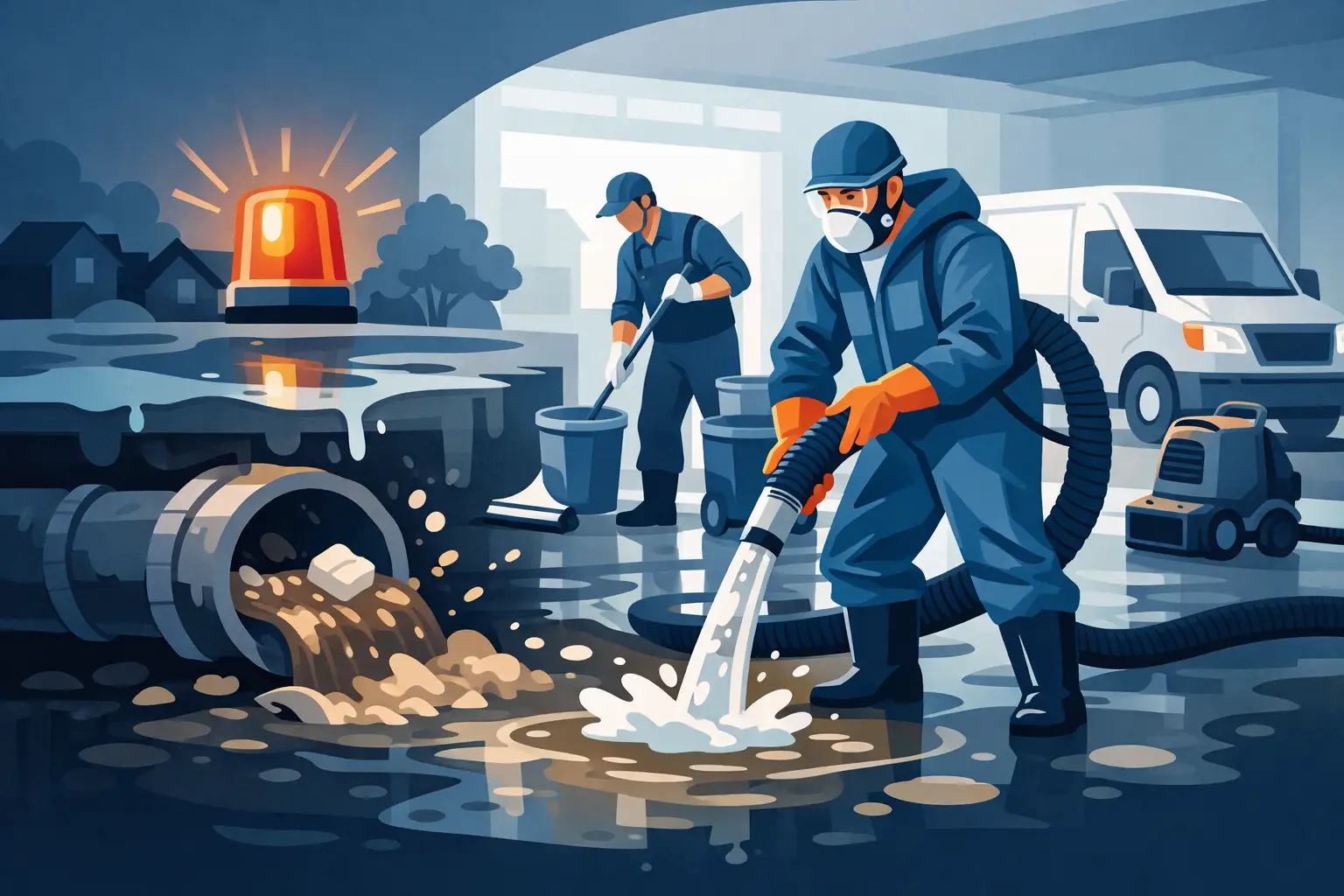



A sewer backup is not ordinary basement water. It can contain bacteria, viruses, chemicals, and contaminated waste that can spread through flooring, drywall, furniture, and HVAC systems. Emergency sewer backup cleanup needs to begin with safety, containment, and a clear diagnosis of why the backup happened – not just a quick mop-up.
For homeowners and property owners, the first few hours matter. The right response can limit damage, support an insurance claim, and help prevent sewage from returning the next time a heavy storm hits or a drain line clogs.
First Steps During an Emergency Sewer Backup Cleanup
If sewage is rising from a basement floor drain, toilet, shower, or laundry sink, stop using water throughout the property immediately. Do not flush toilets, run the dishwasher, take a shower, or start a load of laundry. Every gallon sent into the plumbing system can add to the overflow when the main drain line cannot move wastewater away.
Keep children, pets, and anyone without proper protective equipment away from the affected area. Sewage-contaminated water is often called black water because of the health risks it carries. Do not walk through it unless absolutely necessary, and never attempt cleanup in sandals or open footwear.
If it is safe to do so, turn off electrical power to the affected basement area from a dry location. Do not touch outlets, extension cords, appliances, or electrical panels that may have been exposed to water. If you cannot safely isolate the power, leave it alone and wait for qualified help.
Take clear photos and video before moving damaged belongings. Document water levels, affected rooms, visible sewage, and any damage to finished walls, flooring, appliances, or stored possessions. This record may be useful when you contact your insurer.
Then call for emergency plumbing service. The immediate goal is to stop the source of the backup, clear the obstruction where possible, and determine whether the problem is inside your private drain line or coming from the municipal sewer system.
Why Sewer Backups Happen
A backup is a symptom, not a diagnosis. In many older homes, tree roots enter small cracks or failed joints in underground sewer pipes. Roots catch paper and debris, narrowing the pipe until wastewater has nowhere to go. Grease buildup, flushed wipes, broken pipe sections, shifted soil, and aging clay or cast-iron lines can create the same result.
Heavy rain is another common trigger across the Greater Toronto Area. During intense storms, municipal sewer systems can become overloaded. If your home does not have a working backwater valve, wastewater may be pushed backward through the lowest openings in your plumbing system, often a basement floor drain or shower.
A professional camera inspection separates guesswork from evidence. It can show whether the line has roots, a blockage, cracks, a belly where the pipe has sagged, separated joints, or a larger sewer issue outside the property. That distinction matters because the correct repair depends on the cause.
What Not to Do With Sewage-Contaminated Water
It is understandable to want the mess gone fast. But some common reactions create a larger cleanup problem or expose people to unnecessary risk.
Do not use a household shop vacuum on sewage water. The vacuum can become contaminated, and it is not designed to safely manage black water. Do not use fans until contaminated materials have been removed and the source has been stopped. Air movement can spread contaminants to other areas.
Avoid pouring chemical drain cleaners into the system. They rarely solve a main sewer blockage and can damage pipes or create a hazard for the technician who must clear the line. Do not pressure wash contaminated flooring indoors, either. It can aerosolize contaminants and drive sewage into walls, trim, and cracks.
Porous materials that were soaked with sewage often cannot be safely saved. That can include carpeting, carpet padding, cardboard boxes, insulation, upholstered furniture, unfinished drywall, and some wood-based materials. Hard, nonporous surfaces may be cleaned and disinfected after contaminated water is extracted, but the condition of the material and how long it was exposed both matter.
The Right Order of Professional Cleanup
Emergency sewer backup cleanup should follow a controlled sequence. Stopping the overflow comes first. A licensed plumbing team may snake the drain, use hydro jetting to clear buildup, or inspect the line with a camera to find the obstruction or damage.
Once the plumbing issue is under control, contaminated water and affected materials must be removed. The area is then cleaned, disinfected, and dried with equipment appropriate for the size and conditions of the loss. Moisture left behind can lead to mold growth, wood damage, odors, and deterioration of finished basement materials.
Drying is not simply about making the floor feel dry. Moisture can remain behind baseboards, under flooring, inside wall cavities, and beneath cabinets. Depending on the extent of the overflow, parts of finished walls or flooring may need to be opened so hidden contamination and moisture can be addressed properly.
A clean job site also means protecting unaffected areas. Professionals should contain the work zone, remove damaged debris carefully, and explain what is being removed, why it is necessary, and what repair options are available. No surprises – just a clear plan for getting the space safe and usable again.
Repairing the Cause So It Does Not Return
Cleanup restores the space. Drain repair protects it from the next backup.
For root intrusion or heavy internal buildup, drain snaking or hydro jetting may restore flow. Snaking can break through a localized blockage, while hydro jetting can scour grease, sludge, and root debris from pipe walls. The better option depends on the pipe material, the condition of the line, and what a camera inspection reveals.
If the camera shows cracks, offsets, corroded pipe, or repeated root entry, cleaning alone may only buy time. Trenchless pipe relining can create a new pipe inside the damaged one with minimal excavation. Pipe bursting may be appropriate when a severely failed line needs replacement. In some cases, conventional excavation remains the right choice, especially when the pipe has collapsed or the slope needs correction.
When sewer water is backing up during storms, a properly installed backwater valve is often one of the strongest preventive upgrades. It is designed to close when wastewater tries to flow back toward the home. It does need periodic inspection and maintenance, and it will not solve a private drain blockage, but it can be a critical defense against municipal sewer surcharge.
Basement Protection Beyond the Sewer Line
Not every wet basement is caused by a sewer backup. Groundwater intrusion, failed weeping tile, foundation cracks, sump pump failure, and surface drainage problems can all bring water into a below-grade space. The water may look cleaner, but it can still damage finishes and create a mold risk.
This is why diagnosis matters. A floor drain backup after several loads of laundry points in a different direction than water entering through a foundation wall during rain. Some homes need drain repair, while others need interior or exterior waterproofing, a new sump pump system, foundation crack repair, or improved grading. The best solution is the one that addresses the actual path of the water.
For Toronto, Mississauga, and GTA property owners, Water Pro Master Corp can assess both sides of the problem: the plumbing system that carries wastewater away and the waterproofing systems that keep outside water from getting in. That combined approach is especially useful in older homes and finished basements where more than one water issue may be present.
When to Call for Immediate Help
Call for emergency service when sewage is actively entering the home, drains are backing up in more than one fixture, a basement floor drain is overflowing, or you smell sewage with no visible source. A backup that seems to clear on its own is still worth investigating. Repeated slow drains, gurgling toilets, and water appearing around a floor drain are early warnings that a larger failure may be building.
Water damage does not wait, and sewer contamination should not be treated like a routine clogged sink. Act quickly, keep people out of the affected area, stop using water, document the damage, and get a qualified professional to find the cause. A fast, clean response today can protect your basement, your health, and the value of your property tomorrow.