
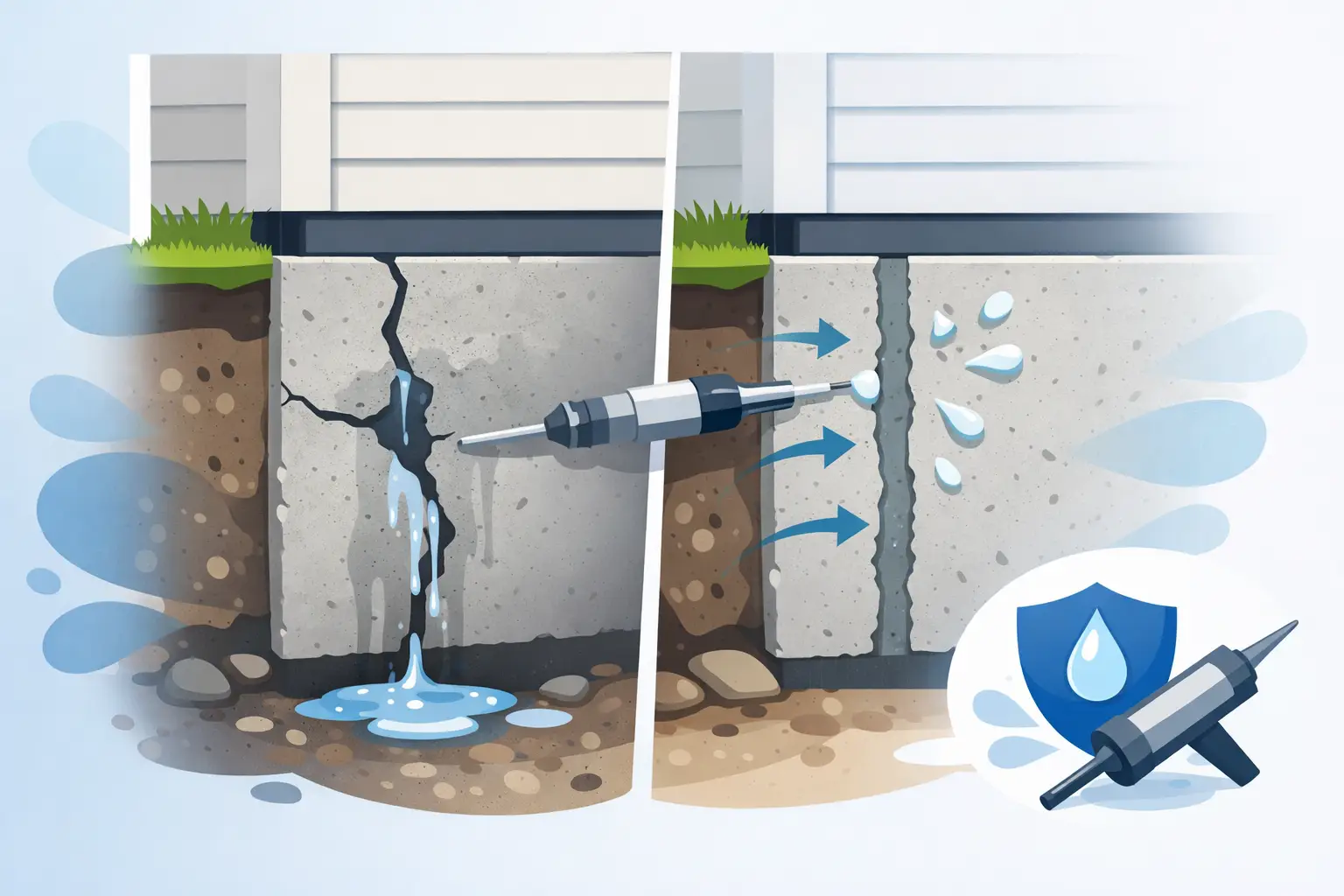



A wet line running down a basement wall after rain is not a cosmetic issue to watch for another season. Water can travel through a hairline opening, soak finished walls and flooring, feed mold growth, and gradually worsen freeze-thaw damage around the foundation. Foundation crack leaking water repair works best when the source of the water is diagnosed first, then repaired with a method that matches the crack, soil conditions, and condition of the drainage system.
For homeowners across the Greater Toronto Area, fast action matters. Our heavy rain, snowmelt, high groundwater, and older drainage infrastructure can turn a small foundation leak into a recurring basement problem. The right repair should stop the current leak and reduce the chance that the same wall leaks again during the next storm.
Why foundation cracks start leaking
Concrete is strong, but it is not flexible. Foundations move slightly over time as soil settles, moisture levels change, and seasonal temperatures shift. Small cracks are common, especially in older homes, but not every crack behaves the same way.
Vertical cracks are often caused by settling or concrete shrinkage. They may stay dry for years, then begin leaking when water builds up in the soil outside the wall. Diagonal cracks can point to uneven settlement and should be assessed carefully. Horizontal cracks, bowing walls, or cracks that are widening can signal soil pressure or a structural concern that needs prompt professional attention.
The crack itself is only part of the story. A leaking wall often means water is pooling beside the foundation because of poor grading, short downspouts, blocked gutters, clogged weeping tile, or high groundwater. Sealing the inside surface without addressing that pressure may hide the symptom temporarily, but it does not always provide a lasting fix.
Foundation crack leaking water repair starts with diagnosis
A proper inspection looks beyond the visible water mark. The goal is to determine whether water is entering through the crack, coming up through the floor-wall joint, backing up through a drain, or traveling along a pipe penetration.
A technician should examine the crack’s direction, width, and location, as well as signs of movement such as displacement or crumbling concrete. They should also check exterior drainage conditions, gutter discharge, grading, sump pump performance, and the condition of the weeping tile where applicable. In a finished basement, moisture readings and a careful review of stains, peeling paint, or musty odors can help identify how far the water has traveled.
This is where a quick patch can become expensive. A basement can appear dry after a surface seal, while water continues accumulating behind the wall. That moisture may damage insulation, framing, and finishes before it becomes visible again.
Choosing the right repair method
There is no single repair for every foundation crack. The best option depends on whether the crack is actively leaking, whether the wall is accessible from outside, and whether water pressure is building in the surrounding soil.
Interior crack injection
For many narrow, non-structural vertical cracks, interior injection is an effective and minimally disruptive option. A flexible polyurethane injection can expand into the crack and react to moisture, creating a watertight seal. Epoxy injection may be used when structural bonding is required, but it is less flexible if future movement is expected.
Interior injection is often faster and avoids excavation. It can be an excellent repair when the crack is clearly identified and exterior drainage is functioning properly. The trade-off is that it treats the entry point from inside. If hydrostatic pressure remains high outside the wall, other drainage improvements may still be necessary.
Exterior waterproofing and crack repair
Exterior repair addresses water before it reaches the foundation wall. This typically involves excavating to the footing, cleaning and repairing the wall, applying a waterproof membrane, and installing or restoring drainage protection.
It is more involved than an interior injection, but it is often the strongest long-term approach for recurring leaks, multiple cracks, deteriorated exterior waterproofing, or water entering along a large section of wall. If the weeping tile is clogged, damaged, or missing, exterior work may include new drainage pipe and clear stone to direct groundwater away from the home.
A clean work area and a clear scope matter here. Homeowners should know what will be excavated, how landscaping or walkways will be handled, what drainage materials are being installed, and what warranty applies to qualifying work. No surprises, just results.
Interior drainage systems
Sometimes exterior excavation is not practical because of access limitations, adjacent structures, decks, or the layout of the property. An interior drainage system can collect water at the foundation perimeter and direct it to a sump pit and pump.
This solution does not seal every exterior wall surface, but it controls groundwater that reaches the basement area. It is especially useful where hydrostatic pressure is persistent or where water is entering at the floor-wall joint. A reliable sump pump, properly sized discharge line, and battery backup can make the difference during a power outage and heavy storm.
Structural repair and reinforcement
If a crack is accompanied by wall movement, widening gaps, horizontal fractures, or bowing, waterproofing alone is not enough. The foundation may need structural repair, reinforcement, or underpinning. These conditions deserve a timely assessment because delaying can increase repair scope and affect the safety and value of the property.
What not to do when a basement wall is leaking
Do not paint over a damp wall and assume the problem is solved. Waterproof paint may improve appearance, but it cannot reliably withstand active water pressure behind a crack. Avoid filling an actively wet crack with hardware-store caulk or cement patch as a permanent repair. These materials can separate when the foundation moves or when water pressure rises.
It is also risky to ignore recurring dampness because the puddle is small. Moisture does not need to flood a basement to cause damage. Wet drywall, insulation, carpet backing, and wood framing can create a much bigger restoration project than the original crack repair.
If water is close to electrical outlets, appliances, or a finished living space, keep people away from the affected area and seek help right away. If there is sewage odor, dark contaminated water, or a drain backup, treat it as a separate urgent plumbing issue rather than assuming it is a foundation crack.
Reduce water pressure around the foundation
A repaired crack lasts longer when water is kept away from the house. Start by making sure the soil slopes away from the foundation and that gutters are clean. Downspouts should carry roof runoff well away from the wall, not dump it beside the basement.
Check that window wells are clear and properly drained. Watch for pooling water after storms, especially near corners, steps, driveways, and additions. If your sump pump runs often, test it before wet weather arrives and confirm that its discharge line is not frozen, blocked, or sending water back toward the home.
Older GTA properties can also benefit from a drainage assessment when leaks repeat. Aging weeping tile, tree-root intrusion, and damaged underground pipes may be contributing to groundwater problems that a visible crack alone cannot explain.
When to call for professional help
Call for an inspection when a crack leaks more than once, a basement smells damp, paint or drywall is bubbling, or water appears after heavy rain or snowmelt. Act quickly if the crack is widening, the wall is bowing, the floor is heaving, or water is affecting a finished basement.
Water Pro Master Corp provides foundation and waterproofing diagnostics for property owners who need a clear answer, not a guess. A qualified team can identify the entry point, explain whether injection, exterior waterproofing, drainage work, or structural repair makes sense, and provide a transparent estimate before work begins.
A foundation leak rarely gets more convenient with time. Getting the right diagnosis now can protect your basement, your belongings, and the structure beneath your home before the next storm puts that crack to the test.