



A basement floor drain is easy to ignore until rainwater starts pooling around it, the air smells like sewage, or a laundry load sends dirty water across the floor. Knowing how to clean basement drain clogs can prevent a small maintenance issue from turning into damaged flooring, mold growth, or a sewer backup. The key is knowing what you can safely clear yourself and when the blockage is deeper than the drain opening.
Start by identifying what is in the drain
Most basement drains are floor drains connected to the home’s drainage system. They collect water from leaks, appliances, utility sinks, or minor flooding and send it into a drain line. In older Toronto and GTA homes, that line may be affected by decades of buildup, tree roots, cracked clay pipe, or a partial collapse farther underground.
A slow drain is often caused by lint, dust, pet hair, soap residue, or sediment trapped near the grate. A completely blocked drain, recurring backup, or water that rises when you flush a toilet is more serious. That can point to a clogged main sewer line, a damaged pipe, or sewer water pushing back toward the house.
Before touching the drain, look at the water. Clear or slightly dirty water from a spill is one situation. Gray, brown, foul-smelling water, or water containing toilet waste is another. Treat suspected sewage as contaminated. Keep children and pets away, wear protective equipment, and do not use the home’s plumbing until the cause is diagnosed.
What you need to clean a basement drain
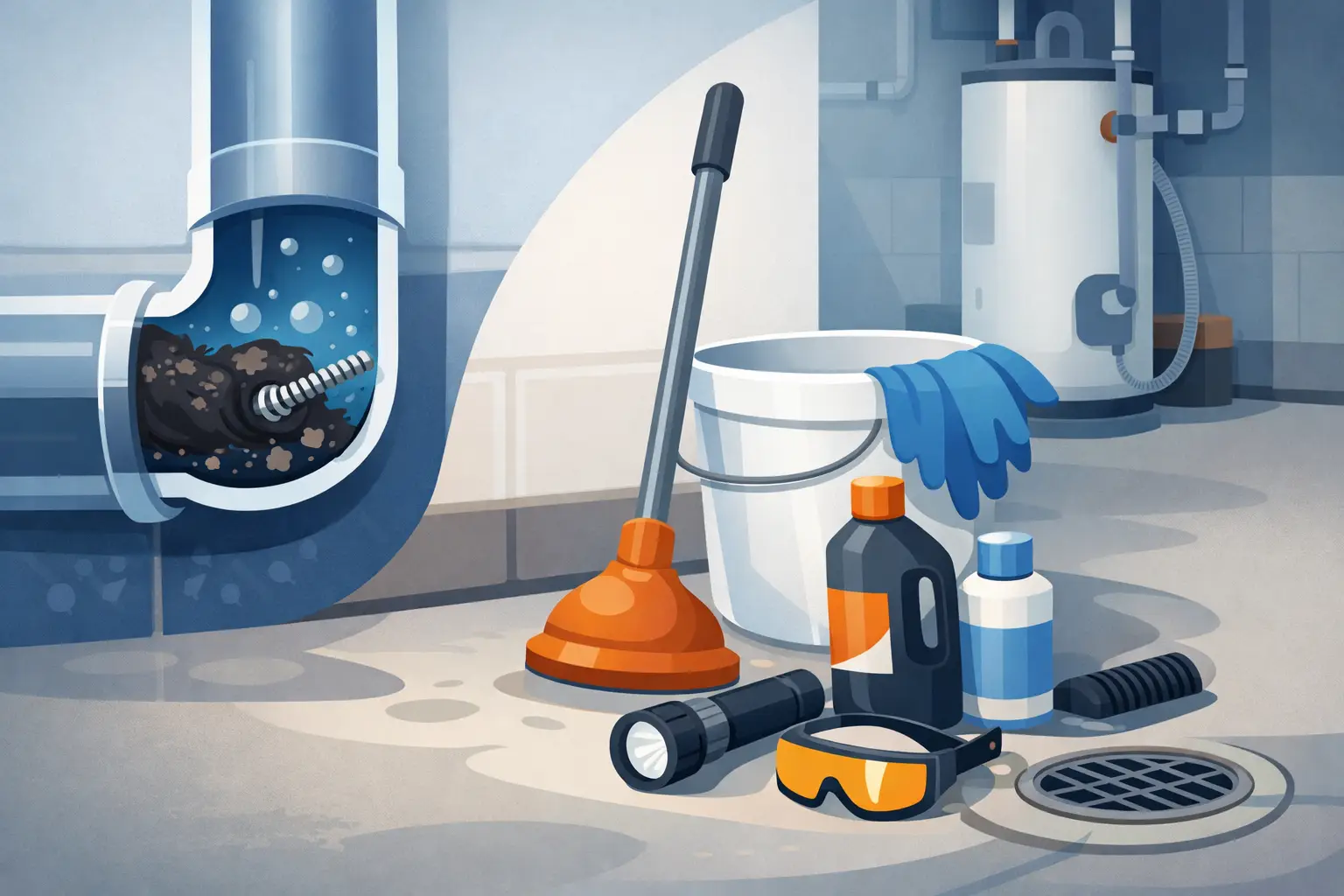
For a basic surface-level clog, gather a few simple supplies before you start. Avoid pouring harsh chemical drain cleaners into a basement floor drain. They can damage older pipes, create dangerous fumes, and make professional repair more hazardous if the clog remains.
- Rubber gloves, eye protection, and old clothes
- A flashlight and flat screwdriver
- A wet/dry vacuum, if standing water is present
- A small hand auger or drain snake
- A bucket, stiff brush, and warm water
If the drain cover is rusted, stuck, or surrounded by cracked concrete, do not force it. A damaged drain body or floor can allow water to bypass the pipe and seep beneath the slab.
How to clean a basement drain step by step
Remove standing water and debris
If water is sitting over the drain, use a wet/dry vacuum to remove as much as possible. Do not use a household vacuum. Once you can see the grate, remove loose dirt, leaves, lint, and other debris from the surface.
Use a screwdriver to lift the grate carefully. Set it aside in a bucket and scrub it with warm water and a stiff brush. You may find a surprising amount of compacted dust and hair immediately below the cover.
Check and clean the drain trap
Many floor drains have a trap below the opening. Like the P-trap under a sink, it holds water to block sewer gas from entering the basement. If the drain is rarely used, that water can evaporate and leave a sewer smell even when there is no clog.
Shine a flashlight into the drain. Remove reachable debris with gloved fingers, a small scoop, or the vacuum attachment. Do not reach deeply into the pipe, especially if you cannot see what you are touching. If the trap is dry and the drain otherwise appears open, slowly pour a few cups of clean water into it. That may restore the water seal and stop the odor.
Use a hand snake for a nearby clog
Feed a hand auger gently into the drain opening. Turn the handle as you advance the cable, but do not force it. If you meet resistance, pull the cable back slightly, rotate it, and work through the material in small movements.
When you retrieve the cable, clean off the debris into a bucket. Repeat if necessary, then flush the drain with a small amount of warm water. The water should disappear steadily without rising around the opening.
A hand snake works well for a clog close to the drain. It is not designed to cut through tree roots, break up heavy scale, or clear a blockage dozens of feet down the line. Pushing harder can snag the cable, damage fragile pipe, or compact the blockage more tightly.
Test the drain slowly
Do not test a newly cleared drain by dumping a large bucket of water into it all at once. Start with one or two cups, then increase to a gallon if the water flows normally. Watch for gurgling, slow drainage, or water backing up around the drain.
If your basement has a utility sink, washing machine, or condensate line nearby, run a small amount of water through those fixtures after the floor drain test. If the floor drain bubbles or overflows when another fixture drains, the problem may be in a shared branch line or the main sewer connection.
When a basement drain clog is not a DIY job
Stop working and arrange professional drain service if water backs up again immediately, the drain does not respond to a hand snake, or multiple fixtures are draining slowly. Those signs often mean the blockage is beyond the floor drain itself.
You should also call for help if you notice sewage, repeated sewer odors, water entering after heavy rain, or dampness around the foundation wall and floor joint. A drain cleaning alone will not solve groundwater intrusion, failed weeping tile, a broken sewer lateral, or a missing backwater valve.
A professional camera inspection takes the guesswork out of the next step. It can show whether the line contains roots, grease buildup, construction debris, separated joints, cracks, or standing water from a collapsed section. Depending on what the camera finds, the right solution may be drain snaking, hydro jetting, pipe relining, trenchless repair, or a targeted excavation. The right repair depends on the condition and location of the pipe, not just how quickly water starts moving again.
For active sewage backup or basement flooding, avoid using toilets, showers, dishwashers, and laundry equipment. If it is safe to do so, move valuables off the floor and keep clear of electrical outlets or appliances near standing water. Water damage does not wait, and sewage exposure should never be treated as a routine cleanup project.
Prevent the next floor drain backup
A clean floor drain needs occasional attention, especially in a finished basement, laundry room, or utility area. Check the grate every few months and remove lint and debris before it compacts. Pour water into rarely used floor drains several times a year to keep the trap full and reduce sewer gas odors.
After major storms, inspect the basement for pooling water, damp wall edges, or a drain that is slow to recover. Homes with mature trees, older sewer pipes, or a history of backups may benefit from periodic camera inspections and preventive cleaning. If municipal sewer backup is a concern, a properly installed backwater valve can help stop wastewater from reversing into the home.
Keep gutters, downspouts, and grading working away from the foundation as well. A floor drain is a useful safety point, but it should not be the only plan for managing groundwater. Sump pumps, interior or exterior waterproofing, and functioning weeping tile may be needed when water is repeatedly entering below grade.
Water Pro Master Corp helps GTA property owners diagnose stubborn basement drain problems with camera inspections, professional drain cleaning, hydro jetting, and long-term waterproofing solutions when the issue goes beyond the pipe. A clean-looking drain is reassuring, but a drain that keeps backing up is asking for a proper diagnosis before the next storm puts it to the test.