
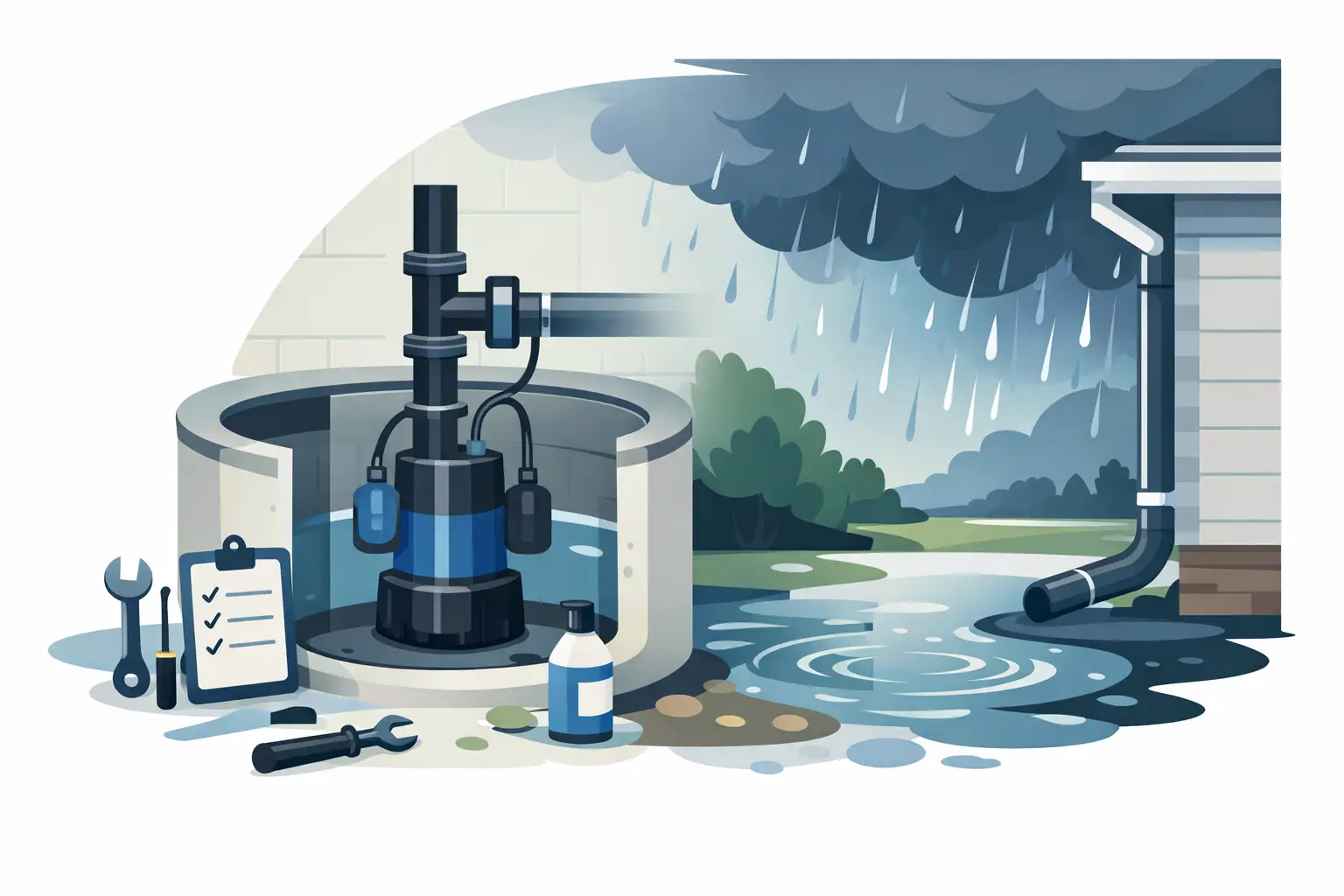


A sump pump can sit quietly for months, then become the one piece of equipment standing between your finished basement and several inches of stormwater. Knowing how to maintain a sump pump before the next heavy rain gives you a chance to find small problems – a stuck float, clogged discharge pipe, weak backup battery, or failed check valve – before they become a flooded-basement emergency.
For homeowners across the Greater Toronto Area, this matters most during spring thaw, summer downpours, and any period when saturated ground pushes water toward the foundation. A few routine checks are simple, but they need to be done consistently and safely.
Why Sump Pump Maintenance Cannot Wait
Your sump pump removes groundwater collected by the drainage system around your home. Water enters the sump pit, raises a float switch, and activates the pump. The pump then sends water outside through a discharge line, ideally far enough from the foundation that it cannot flow back toward the house.
If any part of that sequence fails, water can rise in the pit and spill onto the basement floor. Damage can spread quickly through drywall, flooring, stored belongings, insulation, and electrical systems. A pump may also fail without obvious warning, especially if it has not run for months or has been working hard during prolonged rain.
Maintenance is not a substitute for exterior drainage, weeping tile, foundation waterproofing, or a properly designed discharge system. But it is one of the fastest ways to reduce risk when those systems are already in place.
How to Maintain a Sump Pump Month by Month
A quick monthly check takes only a few minutes. Start by looking at the area around the sump pit. The pump should be upright, the lid should fit securely, and the electrical cord should not be frayed, pinched, or sitting in water. Keep boxes, furniture, and stored items away from the pit so you can access it quickly during an emergency.
Next, test the pump by slowly pouring water into the pit. Use enough water to lift the float and trigger the pump. Watch for the pump to turn on, remove water efficiently, and shut off once the level drops. Do not reach into the pit while the pump is plugged in, and do not force the float by hand if you are unsure of the setup.
Listen while it runs. A steady motor sound is normal. Grinding, rattling, loud humming, repeated clicking, or a pump that runs but does not move water are signs that need attention. Check outside as well, if conditions allow, to confirm that water is leaving through the discharge outlet.
Clean the Sump Pit and Pump Screen
Sediment, small stones, dirt, and debris can collect in the pit over time. That buildup can interfere with the pump intake or prevent the float from moving freely. Before cleaning, unplug the pump and make sure the area is dry and safe to work around.
Remove loose debris from the basin and wipe dirt from the pump exterior. If your pump has an intake screen, clear visible buildup according to the manufacturer’s instructions. Avoid using harsh chemicals in the pit. They can damage equipment and may be discharged into areas where they do not belong.
If the pit is filling with mud, sand, or heavy sediment regularly, the issue may go beyond basic maintenance. It can point to a damaged drainage system, a failing sump liner, or groundwater carrying material into the basin.
Check the Float Switch
The float switch tells the pump when to start and stop. It is one of the most common failure points because it can become tangled, blocked by debris, or worn out after repeated use.
During your water test, make sure the float rises without catching on the basin wall, pump cord, or discharge pipe. The pump should start when the water reaches the intended level and stop after the water is removed. If the pump short-cycles, runs continuously, or does not start until water is near the top of the pit, arrange a professional inspection.
Inspect the Discharge Line Before Every Rainy Season
A working pump still cannot protect your basement if it has nowhere to send water. Follow the discharge pipe from the sump pump to its outdoor outlet. Look for loose connections, cracks, leaks, disconnected extensions, and obvious blockages.
The discharge point should direct water away from the foundation. If water empties beside the house, it can soak back into the soil and return to the weeping tile system, making your pump work harder and increasing pressure around the basement walls. The exact discharge distance and setup depend on grading, property layout, and local requirements, so do not assume a one-size-fits-all extension is the right answer.
In colder weather, inspect the outdoor section more often. Frozen discharge lines are a common cause of winter sump pump failure. Water may be running inside the pit while the line outside is blocked by ice. If the pump runs continuously but the water level does not drop, shut it down only if it is safe to do so and call for help right away.
Test the Check Valve and Power Supply
The check valve is installed on the discharge pipe above the pump. Its job is to stop water from flowing back into the pit after the pump shuts off. Without it, the same water can drop back into the basin, forcing the pump to run again and again.
A failing check valve may create repeated cycling, a noticeable thud, or slow drainage after the pump turns off. Some noise is normal, but persistent problems should not be ignored. Replacing a check valve is often straightforward for a qualified technician, while leaving a bad one in place can shorten the life of the pump.
Your sump pump also needs reliable power. Confirm that it is plugged directly into a properly grounded outlet and that the outlet is working. Avoid extension cords and overloaded circuits. If the outlet is protected by a ground-fault circuit interrupter, test it only if you know how to reset it safely.
Power outages often happen during the same storms that create the highest groundwater levels. That is why a battery backup sump pump or a water-powered backup system can be worth considering, particularly for homes with finished basements, frequent outages, or a history of water intrusion.
Maintain Your Battery Backup System
A backup pump is only useful if its battery is charged and the system can activate. Check the battery status indicator monthly and test the unit according to its instructions. Some systems provide alarms for a low battery, failed pump, high water level, or lost power. Do not silence recurring alarms without finding the cause.
Battery life depends on the type of battery, its age, temperature, charging system, and how often the primary pump runs. A backup battery may look fine but have limited capacity during a long outage. Replace it based on the manufacturer’s recommended schedule rather than waiting for a storm to reveal that it is weak.
Warning Signs Your Sump Pump Needs Professional Service
Routine testing can catch many issues, but some symptoms call for a closer diagnosis. Arrange service promptly if you notice any of the following:
- The pump does not turn on during a water test, or it runs without lowering the water level.
- The pump cycles constantly, shuts off too quickly, or makes grinding, banging, or unusually loud noises.
- Water is pooling around the foundation, backing up from the discharge outlet, or returning into the sump pit.
- The pit has strong odors, heavy sediment, visible cracks, or water rising close to the basement floor.
- Your basement has become damp, humid, or musty even though the pump appears to be operating.
These signs can involve more than the pump itself. A blocked discharge line, damaged weeping tile, foundation crack, poor grading, or overwhelmed drainage system can create the same symptoms. Guessing at the cause can waste time when water is already threatening the home.
Schedule Seasonal Maintenance, Not Just Emergency Checks
The best time to service a sump pump is before you need it. Test it in early spring before thaw and heavy rain, again before the summer storm season, and once more before winter freeze-ups. If your area has experienced major rainfall, check the pit and discharge line afterward, especially if the pump ran for hours.
Older pumps deserve closer attention. Many primary pumps last roughly seven to 10 years, but actual service life depends on usage, water quality, installation quality, and maintenance. A pump that has protected the home through multiple wet seasons may still work today while being close to failure tomorrow.
When a pump is undersized, poorly installed, or connected to a drainage system with a larger issue, replacing the pump alone may not solve the problem. A professional assessment can identify whether the right fix is a new pump, backup system, discharge correction, drain repair, interior waterproofing, or foundation work.
Water damage does not wait for a convenient time. If your sump pump is showing warning signs or your basement has water where it should not, Water Pro Master Corp can inspect the system, explain the cause clearly, and recommend the right repair without surprises. A tested pump and a clear drainage path give your basement a far better chance when the next storm arrives.