
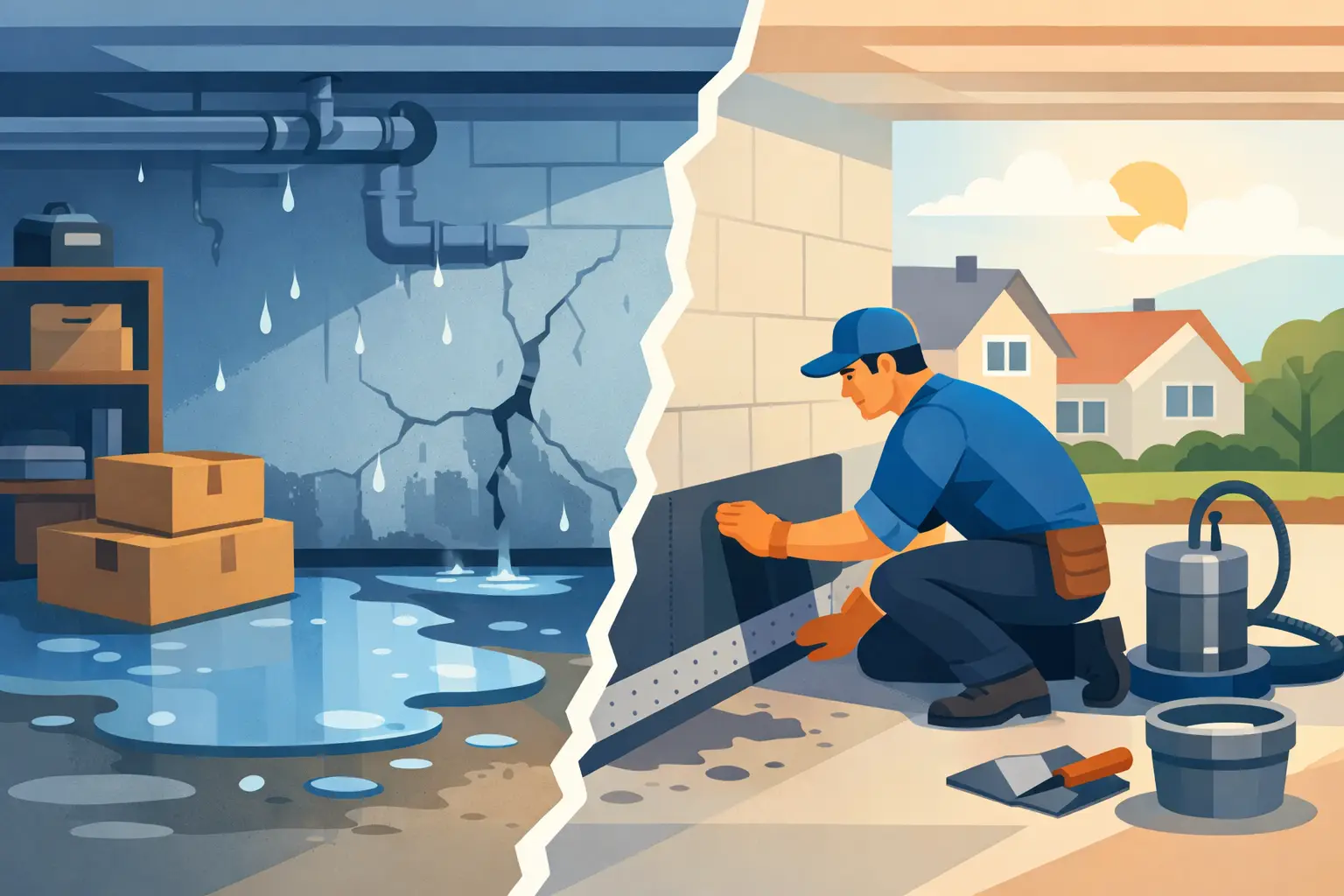
A wet basement is rarely just a cleanup problem. That damp carpet edge, puddle near the wall, or musty smell can point to failing drainage, groundwater pressure, a foundation crack, or a sewer issue that will get worse with the next storm. Knowing how to fix a wet basement starts with finding where the water is coming from – not simply mopping it up.
For homeowners across Toronto, Mississauga, and the GTA, acting early can protect finished spaces, stored belongings, indoor air quality, and the foundation itself. Water damage does not wait, and neither should the diagnosis.
Start Safe, Then Stop More Water From Entering
If water is actively rising, reaches electrical outlets, or may contain sewage, stay out of the basement. Turn off power only if you can do so safely from a dry location. Do not walk through standing water to reach a panel, appliance, or sump pump.
Clean rainwater and a small leak may be manageable at first, but sewage backup requires professional handling. Wastewater can carry bacteria and contaminants, and porous materials such as carpet, drywall, insulation, and cardboard may need to be removed. If a drain is backing up or water appears when fixtures are used, treat it as a plumbing or sewer emergency rather than a waterproofing problem.
Once it is safe, move furniture, boxes, and valuables away from wet areas. Use a wet vacuum or pump for limited clean water, then run fans and a dehumidifier. Drying matters, but do not let the cleanup distract from the source. A basement that dries out without a repair will simply get wet again.
Find Out Why Your Basement Is Wet
The right repair depends on the type of water, its location, and when it appears. A professional inspection may include moisture testing, plumbing checks, drain assessment, and a camera inspection of underground sewer lines. This separates a foundation problem from a broken pipe or blocked drain before anyone starts digging.
Water appears after heavy rain
Water that arrives during or shortly after rain commonly points to surface drainage or groundwater pressure. Clogged eavestroughs, short downspouts, poor grading, blocked weeping tiles, and overwhelmed sump systems can all force water toward the foundation instead of away from it.
Look outside for downspouts emptying beside the house, soil that slopes toward the walls, and low spots where water pools. Downspouts should carry water well away from the foundation. Extending them can help, but it will not solve an exterior drainage system that has failed below grade.
Water comes through a wall or floor crack
A narrow crack can allow water into a basement when wet soil presses against the foundation. The crack itself may be the visible path, but the real force is hydrostatic pressure – groundwater pushing against the wall and floor.
Hairline cracks are not always structural emergencies, but recurring moisture, white mineral deposits, peeling paint, or widening cracks deserve attention. Depending on the crack and its location, a specialist may recommend injection repair, exterior waterproofing, or foundation work. Caulking a crack from the inside is usually a temporary cosmetic fix, not a long-term water barrier.
Water is near a drain, toilet, or laundry area
This pattern can signal a blocked sewer line, root intrusion, a damaged pipe, or municipal sewer backflow during heavy rain. If the water is dark, foul-smelling, or carries debris, do not attempt to snake the line yourself.
A drain camera inspection can show whether the issue is a clog, a collapsed pipe, offset joints, or roots growing into an older line. The repair might involve drain cleaning, hydro jetting, trenchless pipe relining, or pipe replacement. A backwater valve can also help protect eligible homes from sewer water reversing into the basement during major storms.
Water is gathering around the sump pit
A sump pump is part of a drainage system, not a guarantee on its own. It can fail because of a power outage, stuck float switch, clogged discharge pipe, undersized pump, or a pit that fills faster than the pump can remove water.
Test the pump by slowly adding water to the pit. It should activate, move water outside, and shut off properly. If it runs constantly, makes unusual noise, or cannot keep up during storms, arrange an inspection. A properly installed backup system is often worth considering in neighborhoods that lose power during severe weather.
How to Fix a Wet Basement for Good
Effective basement repair usually combines one or more solutions. The goal is to manage water before it reaches the foundation, relieve pressure around the structure, and create a dependable path for water to drain away.
Correct the drainage above ground
Start with the straightforward exterior issues. Clean gutters, repair leaking eavestroughs, extend downspouts, and regrade soil so it slopes away from the home. Keep mulch, soil, and landscaping from covering siding or sitting too high against the foundation.
These improvements are affordable and necessary, but they have limits. If water still enters after the grading and downspouts are corrected, the problem may be below ground. That is where weeping tiles, exterior waterproofing, or an interior drainage system may be needed.
Repair cracks with the right method
For a stable, isolated foundation crack, professional crack injection can create a sealed barrier from inside the basement. This approach is less disruptive than excavation and may be appropriate when the surrounding drainage is functioning well.
If the wall is deteriorating, water enters in multiple places, or there is serious pressure outside the foundation, exterior waterproofing is often the stronger solution. The wall is excavated, cleaned, repaired, coated with a waterproof membrane, and paired with drainage material so water is directed away instead of trapped against the foundation.
Restore weeping tiles and foundation drainage
Weeping tiles are perforated pipes installed around the foundation to collect groundwater. In older properties, they may be clogged with sediment, crushed, disconnected, or simply past their service life. When they cannot move water away, pressure builds around the basement walls and floor.
Replacing or repairing weeping tiles can be done from the exterior, and in some situations an interior drainage system is a practical alternative. Interior systems collect water that reaches the foundation perimeter and guide it to a sump pit for removal. The best choice depends on access, landscaping, the condition of the foundation, and whether exterior excavation is realistic for the property.
Address sewer and plumbing leaks separately
Not every wet basement needs waterproofing. A leaking water line, cracked drain pipe, failed floor drain, or sewer backup needs a plumbing diagnosis first. Waterproofing a wall will not stop a broken pipe from leaking behind it.
Camera technology helps avoid guesswork and unnecessary excavation. For damaged underground pipes, trenchless repair methods can sometimes restore the line with less disruption to floors, landscaping, and driveways. The right solution should be explained clearly, with the source of the problem and the expected scope of work laid out before repairs begin.
Avoid the Quick Fixes That Create Bigger Bills
Paint-on waterproof coatings, household caulk, and portable dehumidifiers have a place, but they are not cures for active water entry. A dehumidifier can control humidity. It cannot relieve groundwater pressure. Waterproof paint may improve appearance, but it can blister or fail when water continues pushing from the outside.
Be cautious about finishing a basement before the water issue is resolved. Installing new drywall, flooring, or insulation over a damp wall can hide damage and create the conditions mold needs to spread. Dry, diagnose, repair, then rebuild.
When to Call for Wet Basement Repair
Call for an assessment promptly if water returns after each rainstorm, there is a musty odor that will not go away, cracks are expanding, the sump pump cannot keep up, or any sign of sewage appears. These are not problems to monitor through another season.
Water Pro Master Corp helps GTA property owners identify whether the cause is drainage, a foundation crack, failed weeping tiles, a sump issue, or a damaged sewer line. The focus should be fast diagnosis, clean work, and a repair plan that matches the actual problem – no surprises, just results.
Your basement should be usable space, not a place you check anxiously every time the forecast calls for rain. The sooner the source is identified, the more choices you have to protect your home before a small wet spot becomes major damage.