
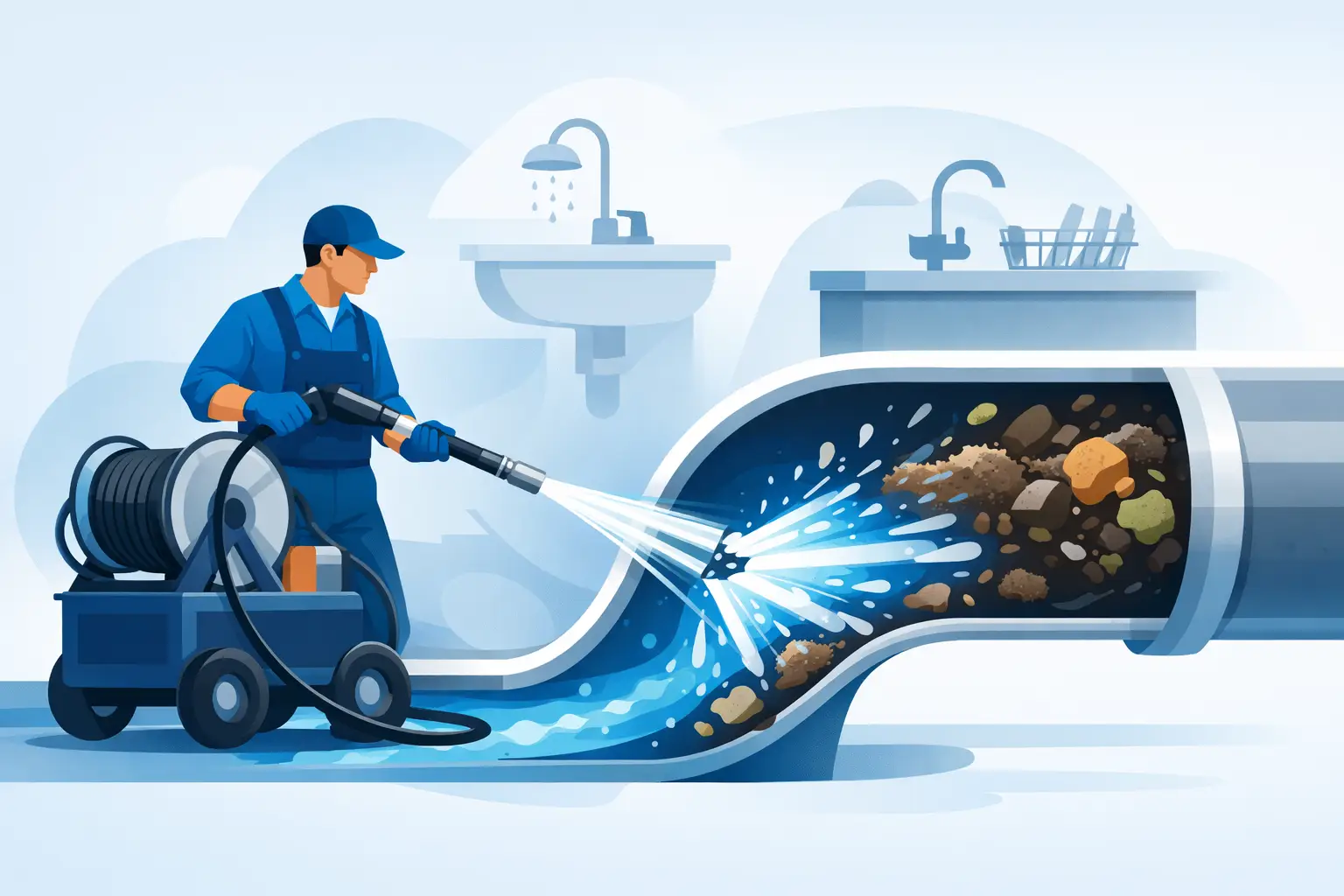


A kitchen sink that keeps backing up, a basement floor drain that gurgles after laundry, or sewage odors near a fixture can point to more than a simple clog. Hydro jetting for clogged drains uses highly pressurized water to scour buildup from the inside of a pipe, not just punch a small opening through it. For many Greater Toronto Area homes, especially older properties with long drain runs or recurring backups, that difference matters.
A drain snake can be the right first tool for a localized blockage. But when grease, soap residue, scale, sludge, or tree roots have coated the pipe walls, the drain may clog again soon after snaking. Hydro jetting is designed to clean the line more thoroughly so wastewater has room to move again.
What Hydro Jetting Actually Does
Hydro jetting uses a specialized hose and nozzle connected to professional equipment. The nozzle travels through the drain line while directing controlled streams of water forward and backward. The forward action helps break through the obstruction. The backward jets wash debris off the pipe walls and pull it toward the sewer system for removal.
This is not the same as attaching a pressure washer to a household hose. Professional hydro jetting equipment must be matched to the pipe size, pipe material, and condition of the drainage system. Too little pressure may leave heavy buildup behind. Too much pressure in a damaged or deteriorated pipe can make an existing problem worse.
That is why a camera inspection is often the smart first step. A drain camera lets a licensed plumber see whether the problem is grease, roots, a collapsed section, a shifted joint, or a foreign object. It takes the guesswork out of a stressful backup and helps prevent paying for a cleaning method that cannot solve a structural failure.
When Hydro Jetting for Clogged Drains Is a Good Fit
Hydro jetting is especially useful when a drain keeps clogging after previous cleaning. In homes and rental properties, kitchen lines commonly collect cooking grease, food residue, and detergent film over time. Bathroom drains can develop dense soap and hair buildup. Main sewer lines can collect silt, scale, and roots entering through small openings in aging pipe joints.
It can also be a practical option for commercial properties. Restaurants, multi-unit buildings, retail spaces, and busy workplaces often put more demand on their drain systems than a typical single-family home. A partial clearing may get operations moving for a day or two, while a thorough cleaning can reduce disruptive repeat calls.
For GTA homeowners, hydro jetting may be recommended when a camera inspection shows a pipe that is still structurally sound but heavily restricted. It is often used before trenchless pipe relining as well, since the line needs to be properly cleaned before a liner is installed.
Signs that the line may need more than a basic snake include slow drains in multiple fixtures, recurring sewage smells, toilet bubbling, water coming up through a basement floor drain, or backups that return after heavy use. If water or sewage is already entering the basement, treat it as urgent. Stop using water fixtures where possible and arrange professional service quickly to limit contamination and property damage.
When Jetting Is Not the Right Answer
Hydro jetting is powerful, but it is not a cure for every drain issue. If a camera inspection reveals a collapsed pipe, severe cracking, a major offset, or a section crushed by soil movement, cleaning the inside of the line will not restore its shape. The same is true when roots have caused extensive damage at joints or when an old pipe has deteriorated beyond safe cleaning.
In those situations, the right repair may be pipe relining, pipe bursting, or targeted excavation. A no-dig repair can be an excellent choice when the pipe layout and damage allow it, but it depends on what the inspection reveals. A trustworthy recommendation explains the condition of the line, the available options, and why one method makes more sense than another.
Jetting also requires care with very old or fragile pipes. Older Toronto-area homes may have clay, cast iron, or aging galvanized components. These materials are not automatically unsuitable for hydro jetting, but they do need a proper assessment. No responsible contractor should treat every drain line as if it were new PVC.
Why a Camera Inspection Comes First
A drain camera inspection turns a vague symptom into a clear diagnosis. The technician feeds a small waterproof camera through an access point and views the condition of the line in real time. The footage can show where the blockage sits, how much buildup is present, whether roots are involved, and whether there is damage that changes the repair plan.
This step protects both the property and the budget. Without it, a drain may be snaked repeatedly while the underlying issue remains hidden. A camera can also identify bellies in the pipe, where a low section collects water and waste, or a broken connection that allows groundwater and soil to enter the line.
After jetting, a follow-up camera view can confirm that the buildup has been removed and expose any defects that were hidden behind it. That gives property owners a more honest picture of what comes next. Sometimes the answer is simply to monitor the line and maintain it. Other times, the inspection catches a repair need before it becomes a flooded-basement emergency.
What to Expect During Professional Drain Jetting
The work begins with an assessment of the backup and the affected fixtures. The crew identifies the best access point, such as a cleanout, then uses the camera findings to select the appropriate nozzle and water pressure. The goal is controlled cleaning, not force for its own sake.
As the nozzle moves through the line, it breaks apart restrictions and flushes loosened material away. Heavy grease, sludge, and roots may require more than one pass. The time needed depends on the length of the line, the severity of the blockage, and whether the pipe has bends or difficult access.
A clean job site matters when drains are involved. Professional crews should protect the work area, explain what they find, and leave the space tidy when the work is complete. If repairs are needed, you should receive a clear explanation before additional work begins – no surprises, just results.
How to Help Prevent the Next Backup
Even a thoroughly cleaned drain benefits from better habits afterward. Keep cooking grease out of the sink, use strainers where food scraps and hair are common, and avoid flushing wipes labeled as flushable. They often do not break down quickly enough to move safely through older drain systems.
For properties with known root intrusion or a history of main-line backups, planned camera inspections and cleaning can be cheaper and less stressful than waiting for a sewer backup. The right schedule depends on the pipe condition, nearby trees, household use, and past service history. There is no one-size-fits-all interval, which is why inspection results should guide the plan.
If storms have caused water to enter a basement, remember that a drain clog may be only part of the issue. A backwater valve, sump pump, weeping tile work, or waterproofing may be needed to protect the property from future water intrusion. Drain cleaning addresses what is inside the pipe. Water management protects the space around it.
When a stubborn clog keeps coming back, do not settle for a temporary opening and hope for the best. Water Pro Master Corp can inspect the line, explain what the camera shows, and recommend the cleanest, most practical path forward. A properly diagnosed drain problem is easier to fix today and far less likely to become tomorrow’s basement emergency.