
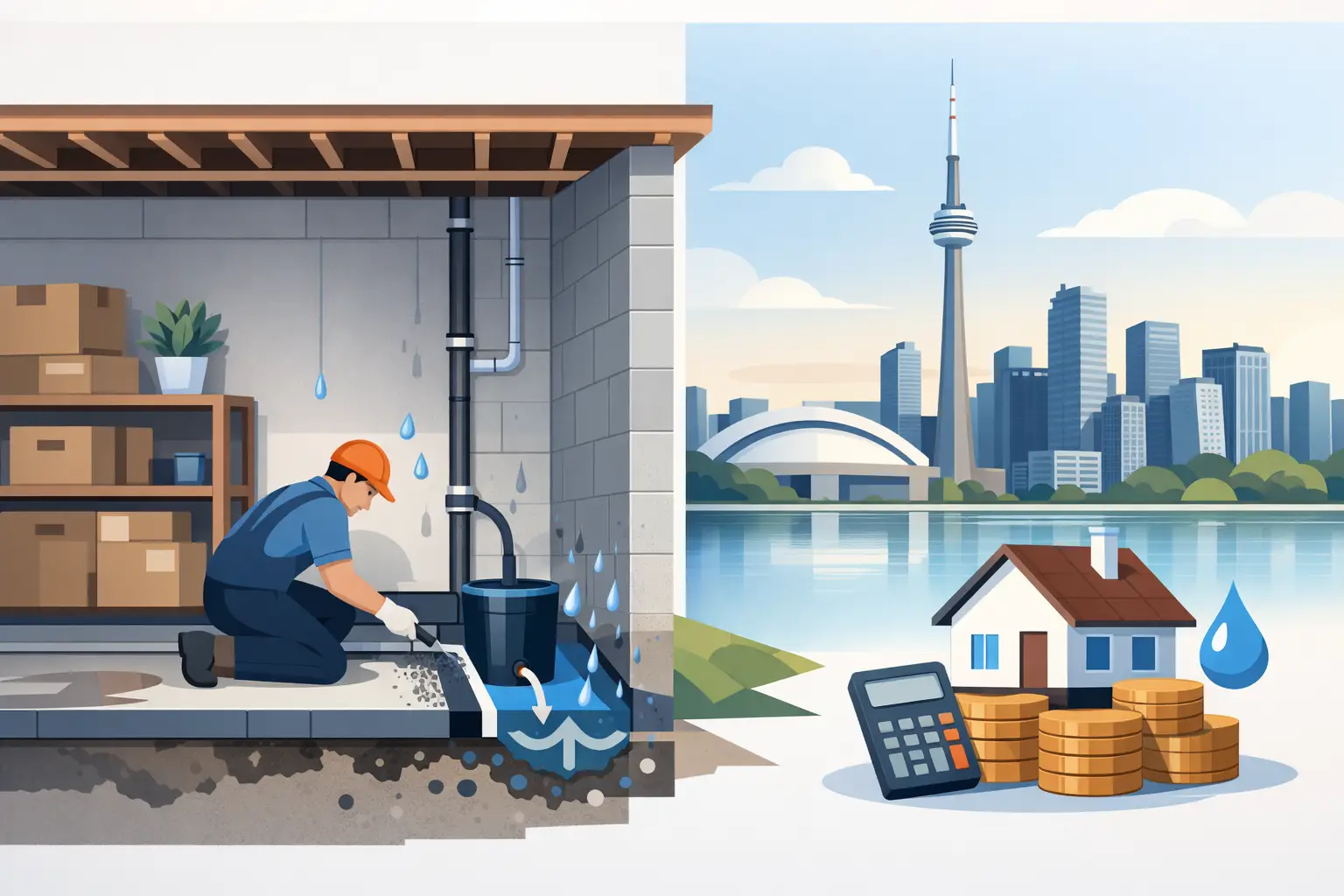

A wet basement rarely starts as a major project. It may begin with a damp carpet edge after a storm, a white powdery stain on concrete, or a small puddle near the wall. But once groundwater has a path inside, waiting can mean damaged finishes, mold growth, and a repair that costs more than it should. Understanding interior basement waterproofing cost helps Toronto-area property owners act early, compare estimates fairly, and choose a repair that addresses the actual source of water.
For homes across the GTA, interior waterproofing is often the practical answer when exterior excavation is not possible, landscaping would be disrupted, or water is entering below grade through the wall-floor joint. The right price depends on the diagnosis, not just the square footage of the basement.
What does interior basement waterproofing cost?
In the Greater Toronto Area, a small interior waterproofing repair may start around $1,000 to $3,000 CAD. A full interior drainage system along one or more foundation walls commonly falls between $6,000 and $15,000 CAD or more. Larger homes, finished basements, deep excavation requirements, structural issues, or a new sump pump system can push the investment higher.
These are planning ranges, not a substitute for an on-site estimate. Two basements with the same visible leak can need completely different repairs. One may only require crack injection and a localized floor repair. The other may have saturated soil, failed footing drainage, hydrostatic pressure, and water collecting along the entire perimeter.
| Interior repair | Typical planning range in the GTA | What it may include | | — | — | — | | Crack injection or localized leak repair | $1,000-$3,000 CAD | Access, polyurethane or epoxy injection, sealing, and minor concrete repair | | Sump pump installation or replacement | $1,500-$4,000 CAD | Basin, pump, discharge routing, check valve, and electrical coordination | | Interior weeping tile or drainage on one wall | $3,000-$7,000 CAD | Concrete removal, drainage pipe, clear stone, membrane, and concrete restoration | | Full-perimeter interior drainage system | $6,000-$15,000+ CAD | Perimeter drainage, wall membrane, sump connection, and floor restoration |
If a contractor gives a price without identifying where the water is coming from, what happens to it after collection, and whether the existing sump discharge works, the number alone does not tell you much. A lower quote can leave out the steps that prevent the next flood.
The factors that change the price
The source and extent of the water problem
Interior systems are designed to manage water that reaches the foundation. Before recommending one, a qualified contractor should determine whether the problem is groundwater, a foundation crack, surface drainage, a plumbing leak, a sewer backup, or a combination.
Water entering at one isolated crack may be solved with a targeted repair. Water appearing along multiple walls or through the floor-wall joint usually points to pressure around the foundation and a need for interior drainage. The more linear feet of wall involved, the more concrete must be opened, pipe installed, and floor restored.
Access to the basement
An unfinished basement with open concrete floors is faster and less expensive to work in than a finished rental unit, recreation room, or basement apartment. Flooring, framing, drywall, cabinets, built-ins, and stored belongings may need removal or protection before waterproofing begins.
A professional estimate should clearly separate waterproofing work from restoration work. Replacing finished flooring, repainting walls, or rebuilding a bathroom can be necessary after access work, but those costs are not the same as the drainage repair itself. Clear scope prevents surprises.
Sump pump and discharge requirements
An interior drainage system needs a reliable destination for collected water. In many homes, that means a sump basin and pump. The pump must be correctly sized, connected to a proper discharge route, and fitted with a check valve so water does not flow back into the pit.
Battery backup protection can add cost but is worth discussing in areas that lose power during heavy storms. A sump pump cannot protect the basement if the power fails just when rain and groundwater are at their highest. The condition and location of the discharge line also matter. A discharge that freezes, clogs, or drains too close to the foundation can create the same problem again.
Foundation condition and related repairs
Waterproofing controls water, but it does not repair every foundation issue. If walls are bowed, cracks are widening, concrete is deteriorating, or settlement is present, foundation repair may need to happen alongside drainage work. This can increase the project cost, yet treating drainage and structural concerns together is often safer than covering up the symptoms.
Likewise, a wet basement caused by a broken underground drain, root intrusion, or a sewer issue may require camera inspection and plumbing repair before waterproofing begins. The best repair sequence depends on the diagnostic findings.
What a complete interior waterproofing system should include
A properly designed interior system does more than apply a coating to a wall. Interior sealants can help with minor dampness in some situations, but they are rarely a dependable stand-alone fix for active groundwater pressure. Water behind the wall still needs a controlled path.
For a drainage-based installation, contractors typically open a narrow section of concrete along the affected foundation wall. They install a drainage pipe in clean stone, direct it toward a sump basin or approved outlet, and place a wall membrane that guides water down into the drainage channel. The concrete floor is then restored for a clean, stable finish.
The details matter. The pipe needs correct slope and connection points. The stone needs to remain clear enough to drain. The membrane should be installed continuously where needed, not stopped above the problem area. The sump basin must be accessible for future service. Good waterproofing is not about making a basement look dry on the day of installation. It is about giving water a controlled route during the next severe storm.
Interior vs. exterior waterproofing: which costs less?
Interior waterproofing is often less disruptive and can cost less than exterior excavation, particularly where there are decks, driveways, landscaping, tight side yards, or utilities around the house. It also allows work to continue in many weather conditions and directly addresses water after it reaches the foundation level.
Exterior waterproofing has a different purpose. It stops water from contacting the foundation wall by excavating outside, repairing the wall surface, applying waterproof membrane, and improving exterior drainage. It can be the right long-term approach when outside access is practical and the foundation wall itself needs protection.
Neither option is automatically better. An exterior membrane may not solve an interior plumbing leak or a failed sump system. An interior drainage system may be the smarter solution when excavation would damage expensive hardscaping. A thorough inspection should explain the trade-off in plain language before work starts.
How to compare waterproofing estimates without getting burned
Do not compare estimates by the final number alone. Ask each contractor whether the price is based on linear feet, which walls are included, how the water will be discharged, and whether concrete restoration is included. You should also know who handles permits or electrical work if required, what cleanup looks like, and what warranty applies to the specific repair.
Be cautious of proposals that promise a permanent fix with only paint, surface caulking, or a vague “waterproofing treatment” when there is active water under pressure. Also be careful with unusually low prices that do not include a sump pump, discharge line, wall membrane, or restoration of the opened concrete.
At Water Pro Master Corp, the goal is to diagnose first and recommend only the work the basement needs. That means looking beyond the wet spot, explaining the repair path, and providing a clear estimate before the job begins. No mess left behind and no surprises are not extras when your home has water in it. They are part of doing the work properly.
When waiting costs more than repairing
A damp basement does not always require a full drainage system right away. Still, certain warning signs deserve prompt attention: water returning after every major rain, a sump pump running constantly, musty odors in a finished basement, peeling wall finishes, or water at the floor-wall joint. If sewage is involved, treat it as an urgent health and property-damage issue and keep people out of the affected area until it is professionally assessed.
The most useful next step is a site-specific inspection while the evidence is still visible. Take photos, note when the water appears, and check whether it follows rain, snowmelt, plumbing use, or a sewer backup. A clear diagnosis can turn a stressful basement problem into a focused repair plan that protects the home before the next storm tests it.