
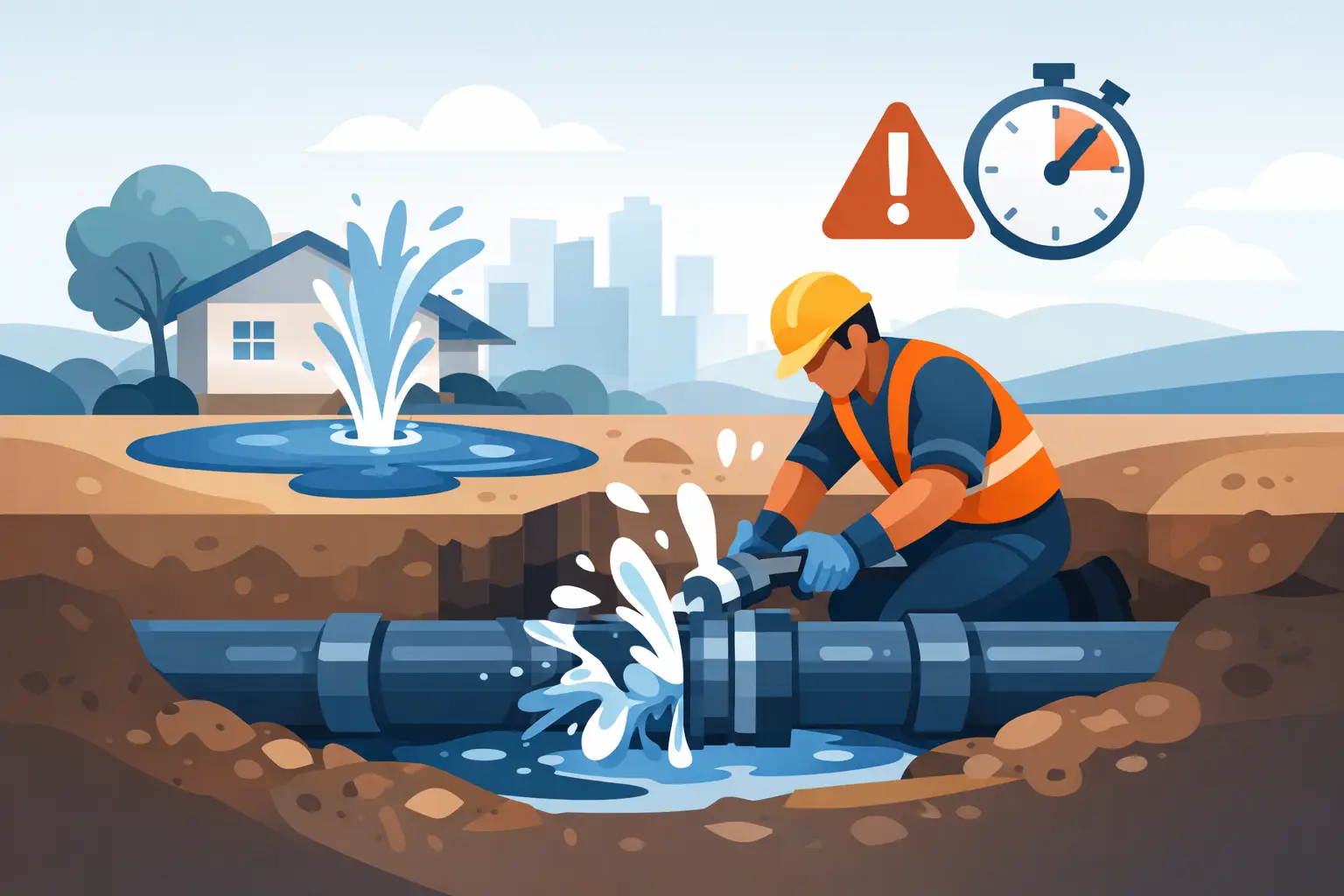
A wet patch spreading across the front lawn, brown water from the tap, or a sudden drop in pressure can point to one problem outside the house: the pipe bringing fresh water into your property may be failing. Main waterline repair is not a job to put off. A damaged service line can waste thousands of gallons, undermine soil near the foundation, damage landscaping, and leave your household without reliable water.
For homeowners across Toronto, Mississauga, and the GTA, the challenge is knowing whether the issue is a minor plumbing repair or a failing underground water line. The right diagnosis protects your home and helps avoid unnecessary digging, disruption, and cost.
What Is the Main Waterline?
Your main waterline, also called a water service line, is the underground pipe that carries clean water from the municipal supply to your home’s plumbing system. In many properties, the municipality is responsible for the public line up to a defined connection point, while the homeowner is responsible for the private section running from that point to the house. Responsibility can vary by location, so it should be confirmed before work begins.
This line is under pressure every day. Older homes may have galvanized steel, copper, lead, or aging plastic piping underground. Over time, corrosion, mineral buildup, shifting soil, freezing temperatures, poor past installations, and tree roots can weaken the pipe. Even a small crack can grow into a serious leak.
Signs You May Need Main Waterline Repair
A waterline problem is often hidden until it becomes disruptive. Watch for changes that do not have an obvious explanation, especially if they happen suddenly.
Low water pressure throughout the entire home is one of the most common warning signs. If one faucet has weak flow, the issue may be local. If showers, sinks, and appliances all have reduced pressure, the supply line deserves a professional inspection.
An unexplained increase in your water bill is another red flag. Compare current usage with the same season last year if possible. A leak below ground can run continuously without creating a visible puddle inside the home.
You may also notice wet, soft, or unusually green areas in the yard during dry weather. Water escaping under pressure can saturate soil, wash away material around the pipe, and create low spots. In more serious cases, water may seep into a basement or collect near the foundation.
Discolored water, rust particles, or a metallic taste may indicate corrosion inside an older pipe. This does not always mean the entire line has failed, but it warrants testing and inspection. Water that is cloudy, dirty, or smells unusual should be addressed quickly, particularly when the change is sudden.
Other signs include the sound of water moving when no fixtures are running, air sputtering from faucets, recurring pipe leaks near where the line enters the house, or a water meter that continues to move after all water use has stopped.
Why Fast Diagnosis Matters
The most expensive waterline failures rarely begin as dramatic emergencies. They start with pinhole leaks, corrosion, loose joints, or small cracks that allow water to escape into the ground. Left alone, the leaking water can soften soil around your home and put added stress on the area near the foundation.
A broken main line can also create a health and safety concern. If a pressure loss allows contaminated groundwater to enter a damaged pipe, clean water quality may be affected. A licensed plumber can isolate the issue, assess the condition of the line, and explain whether a repair, partial replacement, or full replacement makes sense.
Before anyone starts digging, the line should be properly diagnosed. Guesswork leads to torn-up lawns, missed leaks, and repairs that do not solve the real problem. Professional leak detection, pressure testing, and camera inspection where accessible can identify the location and condition of the pipe with far greater accuracy.
Main Waterline Repair Options
The best repair method depends on the pipe material, depth, location of the damage, access to the property, and whether the line has failed in one place or is deteriorating throughout. There is no one-size-fits-all answer, and a clear estimate should explain why a specific option is recommended.
Localized Repair
If the pipe is otherwise in good condition and damage is limited to one accessible area, a localized repair may be the most cost-effective choice. The contractor excavates only where needed, removes the damaged section, and installs a secure new connection.
This approach can be practical for a single break caused by ground movement, accidental damage, or a failed fitting. The trade-off is that repairing one area will not reverse corrosion or deterioration elsewhere along an aging pipe.
Trenchless Pipe Replacement
Trenchless methods are often a strong option when the line runs beneath driveways, walkways, mature landscaping, or finished outdoor spaces. Depending on conditions, pipe bursting can pull a new pipe through the path of the old line while breaking apart the damaged pipe. This reduces the amount of excavation compared with opening the entire route.
Trenchless work is not suitable for every property. Severe pipe collapse, tight access, underground obstructions, and certain line configurations may require a different approach. A qualified inspection helps determine whether a no-dig solution is realistic rather than simply appealing on paper.
Conventional Excavation and Replacement
When a waterline is badly corroded, undersized, repeatedly repaired, or damaged along several sections, full replacement is often the more durable decision. Conventional excavation gives the plumber direct access to install a new line and address problems in the trench, including poor bedding, damaged connections, or sections affected by roots.
It involves more disturbance than trenchless work, but it can be the right long-term investment for older homes. A responsible contractor will discuss restoration needs, permits, utility locates, and the expected work area before the project begins. No surprises – just a clear plan.
What to Do if You Suspect a Waterline Leak
Start by limiting water use if you see active flooding, water near electrical equipment, or a major pressure loss. If water is entering the home, move valuables away from the area and avoid standing water near outlets or appliances.
Check whether the issue affects only your home or nearby properties as well. A neighborhood-wide interruption may be related to municipal work or a public main problem. If it is isolated to your property, arrange a plumbing inspection promptly. Do not attempt to dig around a suspected underground line yourself. Utility lines may be nearby, and the visible wet area is not always directly above the break.
For a suspected leak, collect useful details before the technician arrives: when the pressure changed, whether the water meter moves while fixtures are off, the location of wet ground, and any recent construction or landscaping work. These details can speed up diagnosis, but they should not replace professional testing.
How to Prevent Future Waterline Problems
Not every failure can be prevented, especially in older underground piping, but early attention makes a major difference. Have persistent low pressure, rusty water, or unexplained water use investigated rather than waiting for a complete break. If you are buying an older property or planning a major renovation, ask about the age and material of the water service line.
Keep large trees and aggressive root systems in mind when planning landscaping near known utility routes. Avoid heavy equipment traffic over shallow service lines where possible. During cold weather, protect exposed plumbing and address poor drainage around the foundation so freeze-thaw movement does not add stress to buried connections.
A professional assessment is particularly valuable after repeated leaks. Paying for several small repairs on an old corroded line can cost more over time than replacing the section that is truly at the end of its service life.
Water Pro Master Corp helps property owners identify waterline issues with licensed plumbing expertise, advanced diagnostics, and repair options that fit the property instead of forcing a one-method solution. From urgent leaks to planned replacement, the goal is fast, clean work and a repair you can rely on.
If your water pressure has changed, your bill is climbing, or the ground around your home is staying wet, act before a hidden leak turns into a damaged yard or a flooded basement. A prompt inspection gives you facts, options, and a clear path forward.