
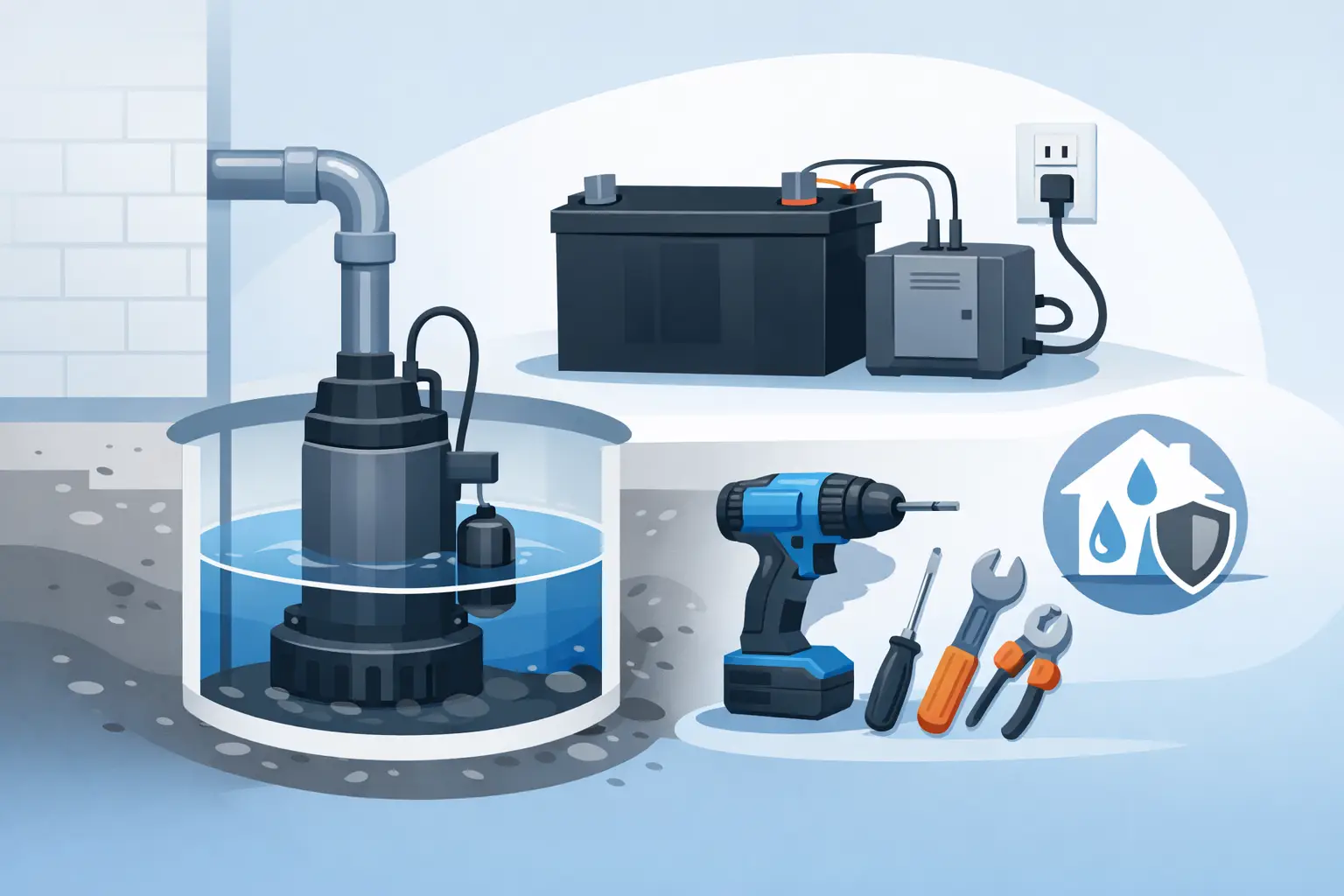



A heavy storm can fill a sump pit fast, and the same storm can knock out the power your primary pump needs. That is exactly when a sump pump battery backup installation earns its place in your home. It gives your basement a second line of defense when the main pump fails, the electrical supply goes out, or groundwater rises faster than expected.
For homeowners with finished basements, older drainage systems, or properties prone to high water tables, a backup pump is not a luxury add-on. It is a practical way to reduce the risk of soaked flooring, damaged drywall, mold growth, and expensive cleanup. The right system must be matched to your pit, drainage setup, discharge line, and expected water volume. No surprises – just reliable protection when the weather turns.
What a Battery Backup Sump Pump Does
A battery backup system is a secondary sump pump that operates on battery power. It typically sits in the same sump pit as the primary electric pump, with a separate float switch that activates when water reaches a higher level.
If the power goes out, the backup takes over. If the main pump motor fails, gets overwhelmed, or its float switch sticks, the backup can also begin pumping before water reaches the basement floor. Many systems include an alarm that alerts you to power loss, a low battery, pump activation, or high water in the pit.
A backup pump is not designed to hide a larger drainage problem. If water is constantly entering the basement, the pit is undersized, the discharge line is blocked, or weeping tile has failed, the system may still struggle. It is one layer of protection within a complete waterproofing and drainage plan.
Choosing the Right Backup System
The best battery backup is not always the one with the biggest battery or highest horsepower label. Pump performance depends on how high it must lift water, how far it must move water, and whether the discharge pipe has restrictions, bends, or a frozen outlet.
Start by looking at your existing sump pump system. A properly sized primary pump should handle normal groundwater conditions. The battery unit should provide enough pumping capacity to manage water during an outage, especially during the first hours of a storm when the risk is highest.
Battery capacity matters
Most backup systems use a dedicated deep-cycle battery, commonly an AGM battery. These batteries are built to discharge slowly and supply power over time. An automotive battery is not a good substitute. It is designed to deliver a short burst of power to start a vehicle, not to run a pump repeatedly during an outage.
Run time depends on several factors: battery capacity, pump draw, how often the pump cycles, and how much water is entering the pit. A backup may run for several hours under moderate conditions, but frequent cycling can reduce that window quickly. Homes with significant groundwater flow may benefit from a higher-capacity battery system, a second battery, or a water-powered backup where local plumbing conditions allow it.
Combination units versus separate pumps
Some systems combine a primary AC pump and a DC battery backup in one package. These can be a good fit when replacing an aging primary pump and building a complete new setup.
Other homes are better served by adding a separate backup pump above the existing primary pump. This approach can work well when the main pump is newer and correctly sized. The key is proper placement. The backup float needs enough room to activate before water overflows, without interfering with the primary pump float or check valve.
Do not overlook the alarm
An alarm is one of the most valuable features in the system. You may not know the power is out while you are asleep, away from home, or dealing with a storm elsewhere. Choose a system that provides clear audible alerts and, if appropriate for your property, remote notifications through a connected monitoring feature.
Sump Pump Battery Backup Installation: What Must Be Done Right
A dependable installation begins with inspection, not simply placing a new pump in the pit. The technician should check the pit size and condition, existing pump operation, float movement, discharge piping, check valves, electrical connection, and the exterior discharge point.
The backup pump must be mounted securely and positioned above the primary pump. This allows the primary unit to handle everyday water while the battery unit remains ready for a power outage or primary failure. If both pumps are sitting at the same height, they may cycle unnecessarily or compete for the same water.
The discharge arrangement also matters. In many setups, the primary and backup pumps connect to a common discharge pipe using properly installed check valves. A check valve prevents water from flowing back into the pit after the pump stops. Without it, the system can short-cycle, wear out faster, and leave more water in the basin than expected.
The battery and control unit should be installed in a clean, dry, accessible area near the sump pit. They should not be placed where floodwater can reach them. The charger needs a properly supplied electrical outlet, and the wiring should be protected from damage. Avoid extension cords, improvised connections, and crowded outlet setups around basement water equipment.
A professional installation also includes testing. The primary pump is tested first, then the backup system is activated by raising its float or adding water to the pit. The installer should confirm that the alarm works, the pump discharges outdoors properly, and no water returns to the pit through the pipe.
Common Problems That Can Defeat a Backup Pump
A battery backup can be installed correctly and still fail to protect the basement if the rest of the system is neglected. The most common issue is a blocked or frozen discharge line. During winter, water may freeze at the exterior outlet, leaving the pump with nowhere to send water.
A damaged check valve, worn float switch, or clogged sump pit can cause similar trouble. Dirt and debris can restrict pump intake. A float caught against the pit wall may not rise. A discharge pipe that sends water too close to the foundation can allow the same water to return to the weeping tile and sump pit.
Watch for these warning signs:
- The sump pump runs continuously or cycles every few minutes.
- The alarm sounds during normal weather or after brief pumping cycles.
- The pit fills higher than usual before the pump starts.
- Water appears around the foundation, near the discharge outlet, or on the basement floor.
- The battery controller shows a fault, low charge, or replacement warning.
These problems call for diagnosis, not guesswork. A quick inspection can reveal whether the issue is the pump, battery, float, drainage system, or discharge routing.
Testing and Maintaining Your System
Battery backup equipment should be tested before storm season, not during a flood. Check the battery status lights or display monthly, and follow the manufacturer’s replacement schedule. Even batteries that appear fine can lose capacity with age.
Every few months, pour water into the sump pit slowly enough to watch the float and pumping cycle. Confirm the primary pump starts, shuts off, and sends water out through the discharge line. Then test the backup function according to the system instructions. Listen for the alarm and make sure the battery pump activates independently.
Keep the pit clear of loose gravel, sediment, and debris. Check that the discharge outlet remains open and directs water away from the house. Before winter, inspect exposed exterior piping and make sure ice will not block the outlet.
When to Call a Professional
Some homeowners can replace a battery or perform a basic test, but installation is not always a simple weekend project. Call a licensed plumbing and waterproofing professional if the sump pit is too small, the discharge piping needs to be changed, the primary pump is failing, the basement has flooded, or the system has no reliable electrical connection.
Professional help is especially worthwhile when your property has recurring groundwater issues. The solution may require more than a backup pump. Interior waterproofing, weeping tile repair, a larger sump basin, improved exterior grading, or a new discharge route may be needed to control the water at its source.
For homeowners across Toronto, Mississauga, and the GTA, Water Pro Master Corp can inspect the full system, explain the options clearly, and install protection that fits the property. Fast, clean work matters when basement water is involved.
A battery backup should be quiet most of the year. That is the point. When rain is pounding, the power is out, and water is rising below the floor, you should hear it working – not wish you had installed it sooner.