
A basement wall crack can look minor on Monday and become the path for a serious water problem after the next heavy rain. Knowing the warning signs of foundation settlement helps homeowners act before shifting soil, poor drainage, or water pressure turns a repairable issue into structural damage, mold, and a wet basement.
Settlement does not always mean a foundation is failing. Concrete can develop small shrinkage cracks as it cures, and older homes naturally move over decades. The concern is movement that is active, uneven, widening, or paired with water intrusion and changes inside the house. That is when a prompt professional assessment can save time, disruption, and money.
Warning Signs of Foundation Settlement to Watch For
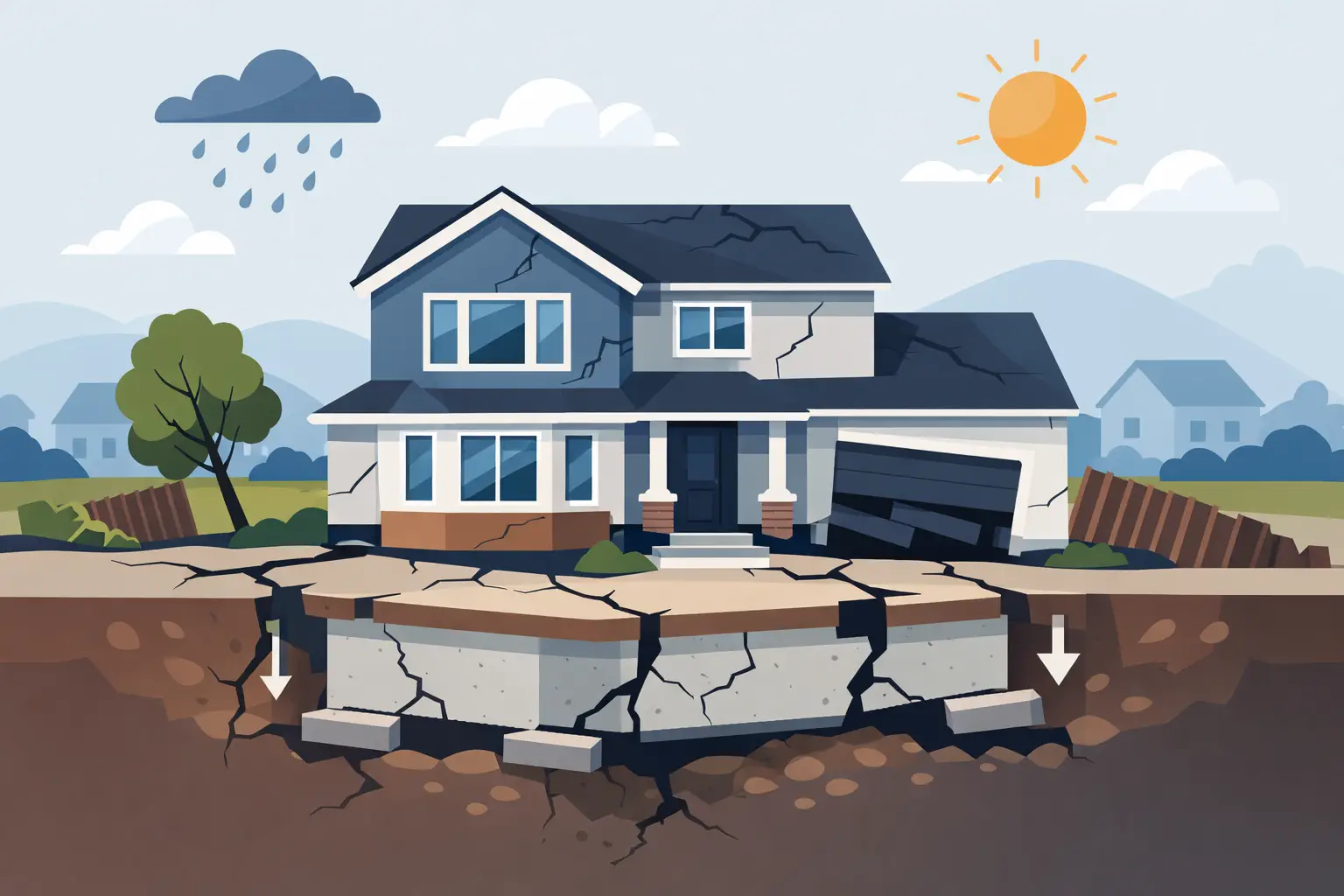
Foundation settlement happens when the soil beneath part of a home shifts, compresses, washes away, or loses its ability to support the structure evenly. One section of the home moves more than another, placing stress on concrete walls, floors, framing, doors, windows, and underground plumbing.
The most telling clues often appear in more than one place. A crack by itself may be cosmetic. A crack combined with sticking doors, sloping floors, and dampness in the basement deserves fast attention.
Stair-step cracks in brick or block walls
On brick veneer, block foundation walls, or exterior masonry, cracks that follow mortar joints in a stair-step pattern can point to differential movement. They are especially concerning when they widen over time, appear near corners, or run from a window or door opening toward the foundation.
Horizontal cracks in basement walls are different but equally urgent. They often relate to pressure from saturated soil outside the wall rather than settlement alone. Either way, horizontal cracking should be inspected quickly because it can indicate that the wall is bowing or losing strength.
Diagonal cracks around doors and windows
Cracks extending diagonally from the corners of windows and doors are common warning signs of foundation settlement. As the frame shifts out of square, drywall and plaster often crack at these stress points.
Look beyond the crack itself. If the same door begins rubbing the frame, will not latch, or swings open on its own, movement may be affecting the opening. Seasonal humidity can make a wood door stick, so one sticky door is not proof of settlement. Several affected doors or windows, especially alongside cracking, paint a clearer picture.
Uneven, sloping, or bouncy floors
A floor that suddenly feels tilted, dips toward one wall, or develops a noticeable ridge can signal movement below. In an older home, some unevenness may have been there for years. What matters is whether it is new, worsening, or accompanied by gaps between the floor and baseboards.
Finished basements can hide early foundation issues. Watch for separated vinyl planks, cracked tile, a concrete floor crack that is widening, or water seeping through the slab after rain. These details may reveal both settlement and a drainage problem beneath or beside the home.
Gaps where surfaces should meet
Settlement can create small but meaningful separations between walls and ceilings, trim and drywall, cabinets and walls, or exterior siding and window frames. Outdoors, look for gaps at the garage door frame, a leaning chimney, or a porch that is pulling away from the house.
A gap that is growing, uneven from one side to the other, or large enough to admit water or pests should not be sealed and forgotten. Caulk may improve appearance, but it does not correct the movement that caused the gap.
Cracks in the foundation, floor, or exterior concrete
Vertical foundation cracks are often less serious than horizontal cracks, but they still give water a direct route into the basement. Diagonal cracks, cracks wider at one end, displaced crack edges, and cracks that continue from the wall onto the floor can suggest active movement.
Pay attention after freeze-thaw cycles and heavy storms. Water entering a crack can worsen it through freezing, while saturated soil increases pressure around basement walls. In the GTA, those seasonal conditions make drainage and waterproofing part of the larger foundation conversation.
When Water Is Making Settlement Worse
Water does not cause every foundation problem, but it is one of the most common reasons a manageable issue gets worse. Soil that repeatedly becomes saturated can expand, lose stability, or press heavily against basement walls. Water flowing toward the home can also erode supporting soil or find its way through cracks.
Warning signs include a damp basement odor, white mineral deposits on concrete, peeling paint, wet carpeting near exterior walls, and puddles near the foundation after rain. A sump pump that runs constantly, a downspout that empties beside the house, or overflowing eavestroughs can all add to the problem.
Poor drainage can also affect underground pipes. A broken drain line, sewer leak, or damaged weeping tile system may saturate soil close to the foundation. This is why a proper diagnosis may include a camera inspection, drainage assessment, and review of both the inside and outside of the home. Treating only the visible crack can leave the source of the movement in place.
What to Do When You Notice Movement
Start by documenting what you see. Take clear photos of cracks with a ruler or tape measure beside them, note the date, and check whether doors, floors, or wall gaps change over the following weeks. Avoid filling significant cracks before they are assessed, since that can hide useful evidence of movement.
Next, control obvious water sources. Keep gutters clear, extend downspouts away from the foundation, and make sure the ground slopes away from the home. Do not direct sump pump discharge right beside the wall. These steps can reduce surface water, but they are not a substitute for drainage repair, waterproofing, or structural work when those are needed.
If there is active leaking, a bowed wall, a widening horizontal crack, sewage backup, or water entering the basement, treat it as urgent. Move valuables away from the affected area, avoid using electrical equipment near standing water, and arrange a professional inspection right away. Water damage does not wait, and neither should a problem that may be affecting the structure.
The Right Repair Depends on the Cause
There is no single repair for foundation settlement. The right solution depends on what is moving, why it is moving, how severe the damage is, and whether water is involved.
For a stable vertical crack that leaks, professional crack repair and interior or exterior waterproofing may be enough. If rainwater is collecting at the foundation, correcting grading, replacing weeping tile, installing a French drain, or upgrading a sump pump system may protect the home from further moisture pressure.
When a foundation has settled because the supporting soil is unstable or the home needs additional structural support, underpinning may be considered. Underpinning strengthens and extends the foundation support below the existing footing. It is more involved than crack repair, but it can be the right long-term answer for significant settlement, planned basement lowering, or a foundation that needs to carry greater loads.
The trade-off is straightforward: a quick patch may cost less today, but it can fail if drainage, soil conditions, or structural movement are not addressed. A clear diagnosis helps separate a cosmetic crack from a repair that needs waterproofing, drainage work, or structural reinforcement.
Do Not Wait for a Major Basement Leak
Homeowners sometimes wait because the crack is small, the basement is unfinished, or the door only sticks occasionally. That can be reasonable when the condition is old and stable, but waiting is risky when symptoms are changing. Foundation movement rarely announces itself with one dramatic event. More often, it leaves a trail of small changes that get easier to recognize once water, cracking, and interior shifting are viewed together.
Water Pro Master Corp helps GTA property owners identify the source of basement moisture, drainage failure, and foundation concerns with practical on-site assessments and clear repair options. The goal is not to sell the biggest job. It is to find the cause, explain what needs attention, and complete clean, durable work with no surprises.
If a crack is growing, water is entering your basement, or your home is showing several warning signs at once, have it checked before the next storm puts more pressure on the problem.