
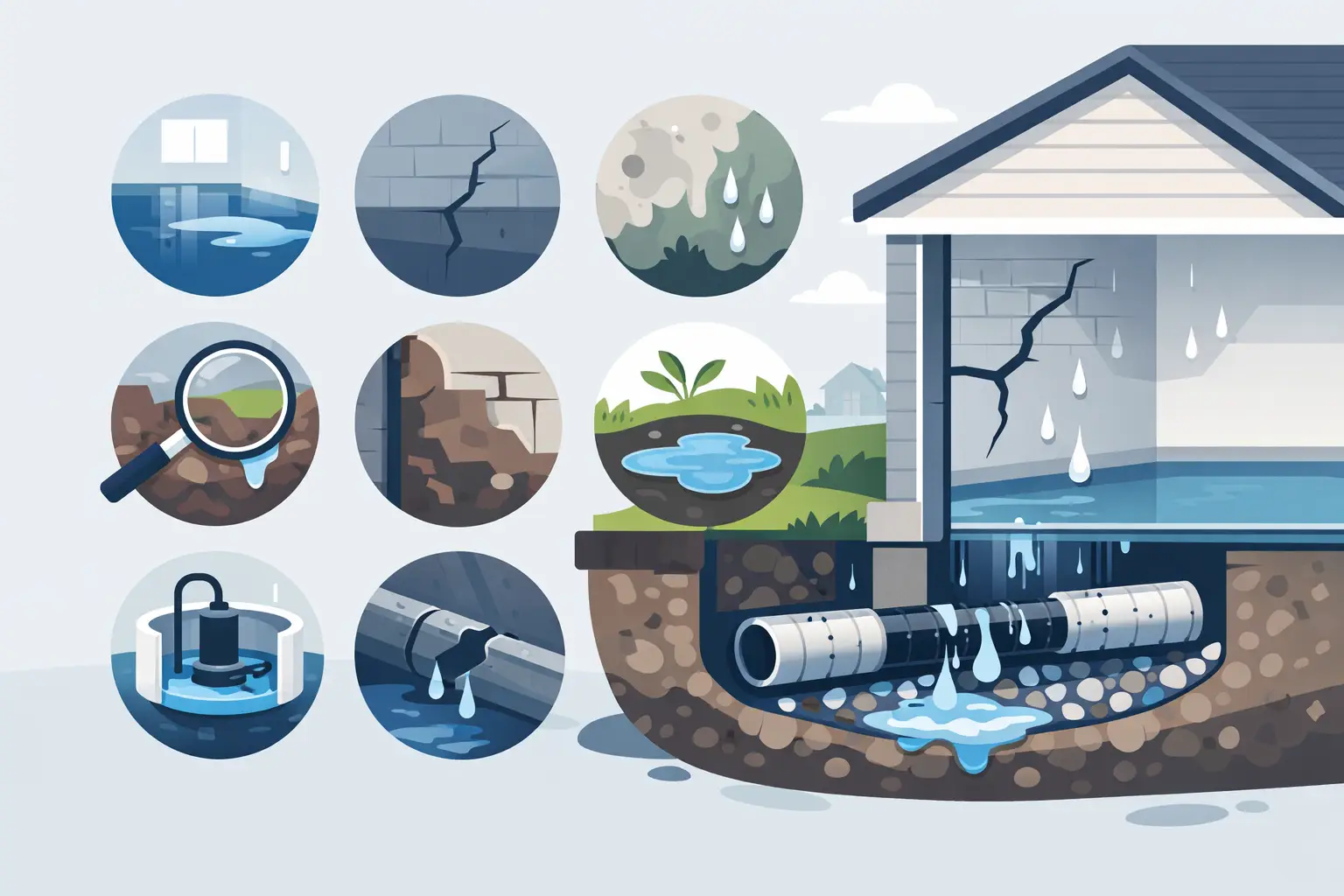


A basement can stay dry for years, then suddenly take on water after one hard GTA rainstorm. The problem is not always a visible foundation crack. Often, the issue is outside the foundation wall, where an aging weeping tile system can no longer move groundwater away from the home. Knowing the weeping tile replacement signs gives you a chance to act before dampness turns into mold, damaged finishes, or a flooded basement.
Weeping tile is a perforated drainage pipe installed around the foundation footing. It collects groundwater and directs it toward a sump pit, storm connection, or other approved drainage outlet. When that pipe becomes blocked, crushed, separated, or overwhelmed, water pressure builds against the foundation. That is when a small warning sign can become an expensive repair.
1. Water enters the basement after rain
Water appearing along the bottom of a basement wall after heavy rain is one of the clearest drainage warnings. You may see a wet line where the wall meets the floor, puddles near corners, or moisture coming through tiny cracks that never seemed serious before.
A crack may need repair, but the crack is not always the root cause. If groundwater is collecting around the foundation because the weeping tile has failed, it will keep pressing against the wall. Sealing the visible opening alone may offer temporary relief while the water pressure remains.
Pay attention to timing. A plumbing leak can happen at any time, while failed exterior drainage usually becomes obvious during snowmelt, long rain events, or when the ground is already saturated.
2. Your sump pump runs constantly or cannot keep up
A working sump pump is an important part of a basement drainage system, but it cannot compensate forever for a restricted or failed weeping tile. If the pump runs repeatedly during ordinary rain, keeps cycling after rainfall has stopped, or cannot prevent the pit from rising, the system needs to be checked.
The problem may be the pump, float switch, discharge line, or check valve. It may also be a sign that groundwater is not reaching the sump pit properly or that too much water is collecting around the house because the drainage pipe is blocked.
Do not wait until the pump burns out. A professional inspection can determine whether the issue is mechanical, drainage-related, or both. In many homes, the best repair includes a properly sized sump pump and backup protection along with drainage work.
3. Musty odors and recurring basement humidity
A persistent musty smell is not simply a basement problem to cover up with air freshener. It often means moisture is entering or lingering in the space. Even when you cannot see standing water, damp concrete, wet framing, and soaked insulation can create conditions for mold growth.
Dehumidifiers can make a basement feel more comfortable, but they do not stop groundwater from reaching the foundation. If the odor returns each spring or after rain, look beyond the interior air quality issue. Exterior drainage, foundation seepage, and hidden leaks all need to be ruled out.
This matters even more in finished basements and rental properties. Water can travel behind drywall, under flooring, and into wall cavities long before the damage becomes visible.
4. White stains or peeling finishes on foundation walls
White, chalky residue on concrete or block walls is called efflorescence. It forms when water moves through masonry, then evaporates and leaves mineral salts behind. Efflorescence is not harmful by itself, but it is evidence that moisture has been moving through the wall.
Other warning signs include peeling paint, bubbling wall finishes, crumbling mortar, rusting metal posts, and warped baseboards. These conditions can result from condensation, but repeated staining on below-grade walls is more likely tied to water intrusion.
A drainage specialist should assess where the water is coming from before recommending a repair. The right solution depends on the foundation condition, soil, grading, drainage outlet, and whether the water is entering from outside or through an internal plumbing issue.
5. Wet spots keep returning in the same area
A basement floor that becomes wet in the same corner every year is sending a message. Repeated water in one location may point to a localized break, blockage, or poor drainage connection around that part of the foundation.
Roots are a common concern in older GTA neighborhoods with mature trees. Tree roots can enter joints, catch debris, and reduce the pipe’s ability to carry water. Older clay tile systems may also shift, crack, or collapse as surrounding soil settles over decades.
A camera inspection is often the fastest way to get clear answers. Rather than guessing or excavating the entire property without evidence, a technician can inspect accessible drain lines and identify obstructions, root intrusion, separated joints, or damaged pipe sections.
6. Soil stays soggy near the foundation
Walk around the outside of your home after a rainstorm. If the soil near the foundation stays wet much longer than the rest of the yard, or if water pools beside the house, address it promptly. Surface grading may be directing water toward the home, downspouts may be discharging too close to the wall, or the weeping tile may no longer be carrying water away.
Correcting grading and extending downspouts can reduce the volume of water reaching the foundation. Those are worthwhile improvements, but they will not repair a crushed or blocked weeping tile. A proper diagnosis prevents money from being spent on surface fixes when the underground drainage system has already failed.
7. You have an older home with original drainage pipes
Age alone does not prove that a weeping tile needs replacement. Some systems last for decades when the soil, installation, and outlet conditions are favorable. Still, homes with original clay, concrete, or older corrugated drainage materials deserve closer attention, especially if basement moisture has started appearing.
Older systems may lack proper filter fabric, have undersized piping, or drain into connections that no longer perform as intended. Renovations can also change how water moves around a property. New landscaping, patios, additions, and changed grades can put extra strain on a drainage system that was installed for a very different yard.
If you are planning a basement renovation, it is smart to evaluate drainage first. Replacing flooring and drywall without addressing recurring moisture can mean paying for the same work twice.
8. Foundation cracks are getting worse
Small foundation cracks are common, but cracks that widen, leak, or return after repair should never be ignored. Excess groundwater pressure can force water through even narrow openings and contribute to long-term deterioration around the foundation.
Not every crack means structural damage, and not every drainage problem requires full exterior excavation. Sometimes targeted crack injection, interior waterproofing, or a sump system is appropriate. In other cases, exterior waterproofing and weeping tile replacement are the durable answer because they relieve water pressure before it reaches the wall.
What a proper weeping tile assessment should include
The right recommendation should be based on the home, not a one-size-fits-all sales pitch. A thorough assessment looks at the pattern of water entry, foundation condition, sump pump operation, visible grading, downspout discharge, and the age of the drainage system. Camera diagnostics may be used where access allows.
When replacement is needed, the work typically involves excavating to the footing, cleaning and waterproofing the exterior foundation wall, repairing visible cracks, installing new perforated drainage pipe with clean drainage stone and protective fabric, then connecting the system to an appropriate outlet. The area should be restored cleanly, with no surprises about what the work includes.
Interior drainage can be a practical alternative when exterior access is limited by decks, neighboring structures, tight property lines, or extensive hardscaping. It can also be the right choice for certain active seepage problems. The trade-off is that interior systems manage water after it reaches the foundation area, while exterior waterproofing and weeping tile address water before it builds pressure against the wall.
Do not wait for the next flood
Basement water rarely improves on its own. If you are seeing recurring dampness, sump pump trouble, wall staining, or any of these weeping tile replacement signs, arrange a professional inspection before the next major rainfall. Water Pro Master Corp helps GTA property owners find the actual source of water problems and complete clean, durable drainage and waterproofing repairs.
A dry basement starts with a clear diagnosis. Address the warning signs while they are still manageable, and you can protect the space beneath your home before water makes the decision for you.