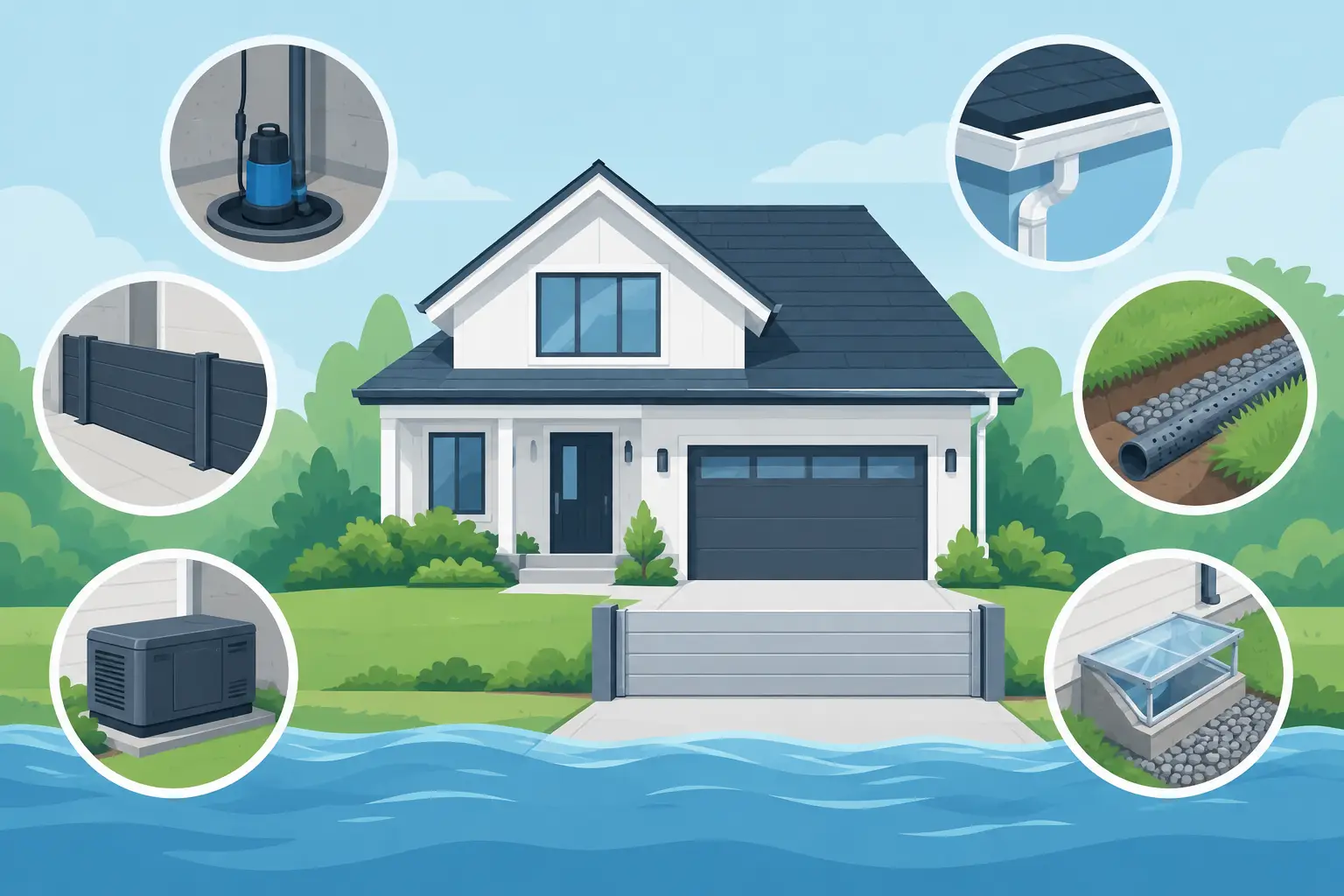

A finished basement can be damaged in a single heavy storm, but rain is not always the real problem. Water may be entering through foundation cracks, rising beside clogged weeping tile, or backing up through an overloaded sewer line. The best flood prevention upgrades address the specific path water takes into your home – before it becomes an emergency.
For homeowners across Toronto, Mississauga, and the GTA, prevention starts with a proper diagnosis. A sump pump will not stop sewage from coming up through a floor drain. Exterior waterproofing will not solve a cracked sewer lateral. The right upgrade depends on the age of the home, the condition of the drainage system, the grade of the property, and whether the water is clean groundwater, stormwater, or wastewater.
1. Install a Backwater Valve to Stop Sewer Backups
A backwater valve is one of the most valuable protections for homes connected to a municipal sewer system. During intense rainfall, city sewers can become overloaded. Instead of wastewater flowing away from your home, it can reverse direction and enter through basement drains, toilets, showers, or laundry connections.
The valve allows wastewater to leave the house but closes when flow attempts to return from the public sewer. It is a targeted defense against one of the most destructive types of flooding: sewage backup. Sewage cleanup is not just expensive. It can damage finishes, create sanitation concerns, and leave a basement unusable until it is professionally restored.
A licensed plumber should inspect the drain layout before installation. Some properties need a mainline backwater valve, while others may need additional protection for lower fixtures. The valve also needs an accessible cleanout and periodic inspection. A good installation is not simply about fitting the device into a pipe – it is about making sure the whole drainage system can work around it properly.
2. Add a Reliable Sump Pump System
Homes with groundwater pressure, low-lying lots, or recurring water at the basement floor perimeter often benefit from a sump pump system. Water collected by interior drainage tile flows into a sump pit, where the pump sends it safely away from the foundation.
The pump itself matters, but so does the full system around it. A properly sized sump pit, secure lid, check valve, discharge pipe, and outdoor discharge location all affect performance. If the discharge empties too close to the house, water can cycle back toward the foundation and force the system to work harder.
Power outages are the trade-off homeowners cannot ignore. Major storms can knock out electricity at the exact time a primary sump pump is needed most. A battery backup pump or backup power option adds protection during that gap. It is also smart to test the system before the rainy season and replace aging pumps before they fail, rather than after water reaches the finished floor.
3. Repair Foundation Cracks Before They Become Leaks
A narrow foundation crack may look minor, especially if it stays dry during most of the year. But seasonal thawing, saturated soil, and hydrostatic pressure can turn that opening into a direct route for water. In a finished basement, even a small leak can damage insulation, drywall, flooring, and stored belongings hidden behind a wall.
Foundation crack repair should match the crack and the source of water pressure. Some cracks can be sealed from the interior using injection methods. Others point to larger exterior drainage or structural concerns and need a more comprehensive repair. Horizontal cracking, bowing walls, or widening cracks deserve prompt professional assessment because they may involve more than water intrusion.
Do not rely on paint or surface caulking as a long-term fix. Those materials can temporarily hide staining, but they do not relieve pressure outside the wall or repair a moving crack. The goal is to stop water at the source and protect the structure at the same time.
4. Upgrade Weeping Tile and Exterior Drainage
Many older GTA homes have aging, damaged, or undersized weeping tile. This perforated drainage pipe sits around the footing and is designed to collect groundwater before it pushes against basement walls. Over time, it can clog with soil, collapse, fill with sediment, or be disrupted by roots and previous repairs.
When weeping tile fails, groundwater has nowhere to go except against the foundation. That pressure can lead to damp walls, musty odors, repeated seepage, and cracks that worsen each spring. Replacing or repairing the system can be a major project, but it is often the right answer when water is entering from multiple points along the basement perimeter.
Exterior drainage work may also include correcting the grading around the house. Soil should slope away from the foundation so surface water does not pool beside the walls. Downspouts should carry roof runoff well away from the home. These are simple details, but they reduce the amount of water your underground drainage system has to manage.
5. Waterproof the Foundation Where Water Starts
Waterproofing is most effective when it is chosen for the actual condition of the home. Interior waterproofing can capture water that reaches the basement wall or floor joint and direct it to a sump system. It is often a practical solution for finished or tightly spaced properties where exterior excavation is not the first choice.
Exterior waterproofing protects the outside of the foundation wall with a waterproof membrane and drainage materials. Because it stops groundwater before it reaches the concrete, it can be the stronger long-term option for widespread leaks, deteriorated exterior walls, or failed drainage around the footing.
Neither approach is automatically better. Interior systems can be less disruptive and still provide dependable water management. Exterior work may be more extensive, but it addresses the wall from the outside and can be the right investment when the foundation needs direct repair. A clear inspection should explain why a recommended approach fits your property, what work is included, and where the water will go after collection.
6. Inspect and Repair Damaged Sewer Lines
Not every basement flood begins with rainwater. Tree roots, shifted joints, cracked clay pipes, grease buildup, and aging sewer lines can slow or block wastewater leaving the property. When a storm adds extra demand to the system, a partially blocked line can become a full backup.
A camera inspection gives homeowners a direct view of what is happening inside buried pipes. It can reveal root intrusion, bellies in the line, corrosion, breaks, and other issues that a basic drain cleaning cannot confirm. From there, the repair may range from hydro jetting or root removal to trenchless pipe relining or pipe bursting.
Trenchless options can reduce the need to excavate driveways, landscaping, or finished areas, although they are not suitable for every pipe condition. The key is not to keep clearing the same drain without finding out why it clogs. Recurring backups are a warning that the pipe may need repair, not another temporary reset.
7. Protect Basement Drains and Plumbing Fixtures
Floor drains, cleanouts, laundry sinks, and basement bathrooms are common entry points during a plumbing or sewer event. Keeping floor drains clear is a basic step, but it is not enough if the drain line has a deeper problem. A slow floor drain, gurgling toilet, sewage odor, or water appearing around a cleanout should be investigated quickly.
Properties with rental suites or basement bathrooms need extra attention because lower fixtures are closer to the level where backup pressure appears. In some cases, a sewage ejector system, proper fixture connections, or drain modifications may be needed to keep wastewater moving safely. These are not DIY decisions. Incorrect drain work can make a backup worse and create code issues during a future sale.
How to Choose the Best Flood Prevention Upgrades
Start by looking at the pattern, not just the latest incident. Water after long rain often points to groundwater or surface drainage. Water that smells like sewage or rises from a drain points to a sewer problem. A leak in one wall may be a crack, while dampness around the whole basement perimeter may indicate failed weeping tile or high groundwater pressure.
A professional camera inspection and on-site assessment can prevent money from being spent on the wrong solution. Ask for a clear explanation of the cause, the recommended repair, the maintenance required, and the disruption you should expect. Honest prevention work should not come with guesswork or surprises.
Water Pro Master Corp helps GTA property owners diagnose drainage, sewer, waterproofing, and foundation problems under one roof. Whether you need a backwater valve before storm season or urgent help after water appears in the basement, fast diagnosis and clean workmanship make a difficult situation easier to manage.
If your basement has leaked once, do not wait for the next storm to decide what to do. A small inspection now can identify the weak point, protect the space you have invested in, and give you a clear plan before water damage starts.