
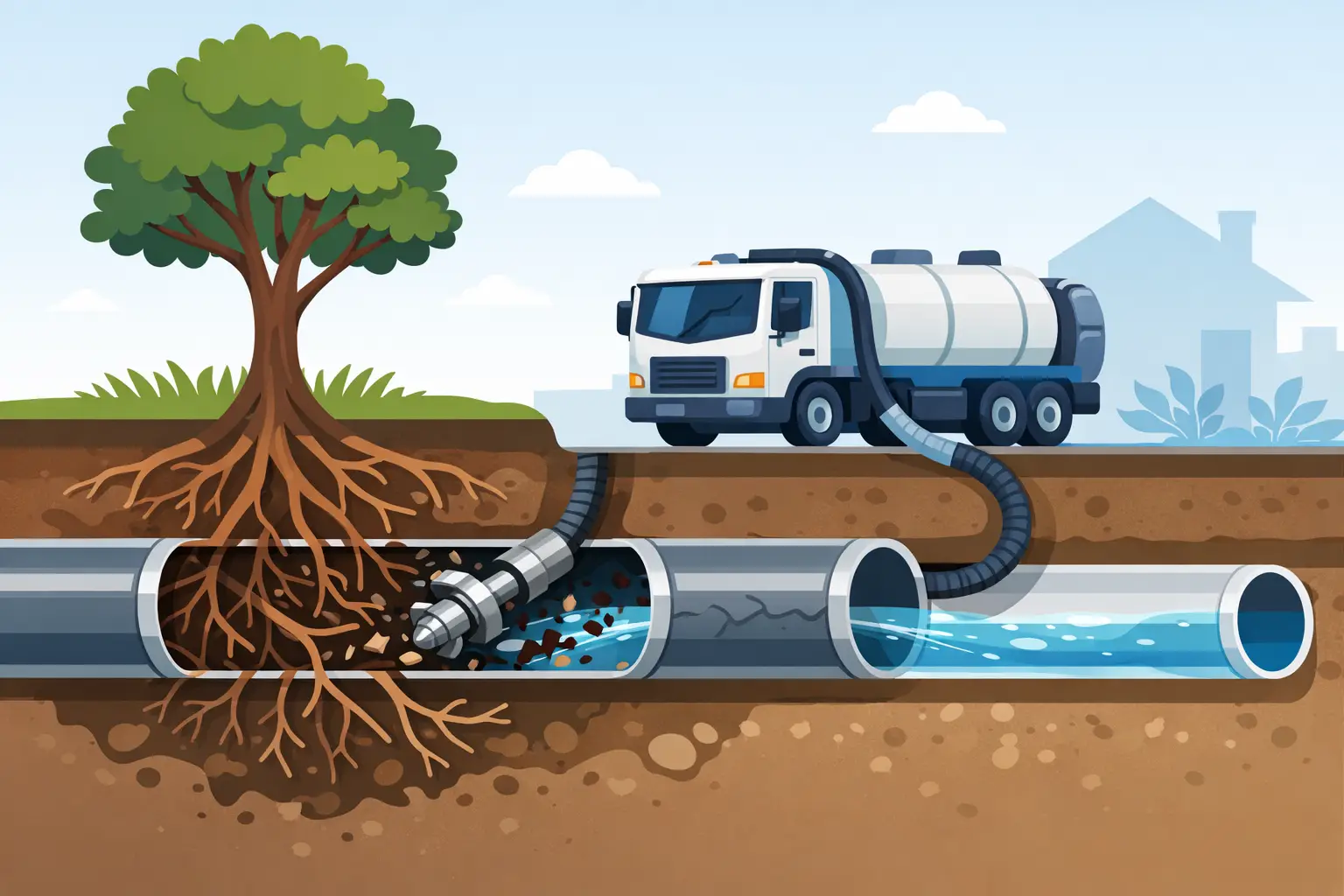
A sewer line can look fine from inside the house until the toilet gurgles, a basement drain starts filling, or wastewater appears where it should never be. Tree roots are one of the most common causes of recurring sewer trouble in older Toronto-area homes. Knowing how to clear roots from sewer pipes – and when clearing is not enough – can prevent a messy backup and a much larger repair bill.
Roots do not usually crush a healthy pipe overnight. They find their way through a loose joint, a small crack, or a deteriorating section of older clay, cast-iron, or concrete pipe. Once moisture and nutrients are available, the roots keep growing. They catch paper, grease, and debris until water flow slows or stops.
Signs roots may be blocking your sewer line
A single slow sink can be a local drain clog. When several fixtures drain slowly at once, the issue may be farther down in the main sewer line. Pay close attention if toilets bubble when the washing machine drains, tubs hold water, or a lower-level floor drain backs up first.
Recurring clogs are another strong warning sign. If a drain snake gets things moving but the same problem returns in a few months, roots may be growing back inside the pipe. Foul odors outdoors, unusually lush grass along the sewer route, and wet patches in the yard can also point to a damaged underground line.
Do not keep flushing, running laundry, or using the dishwasher when a main line blockage is suspected. Water has to go somewhere. In a home with a basement, that often means it comes back through the lowest drain.
The right way to clear roots from sewer pipes
The best method depends on the pipe material, the size of the root mass, the condition of the line, and whether the pipe has already cracked or collapsed. A professional diagnosis comes first. Guessing can turn a manageable blockage into pipe damage or a sewage backup.
Start with a sewer camera inspection
A sewer camera inspection shows what is actually inside the line and where the problem sits. A licensed drain technician feeds a specialized camera through an access point, recording the roots, buildup, cracks, bellies, separated joints, or other defects in the pipe.
This matters because roots are often the symptom of an opening in the line. If the pipe has a failed joint near a mature tree, simply cutting the roots may restore flow without solving the entry point. A camera inspection also helps determine whether a no-dig repair is possible or whether a damaged section needs replacement.
Mechanical root cutting opens the line
For many root blockages, a professional drain-cleaning machine with a root-cutting head is the first step. The rotating cutter breaks up and removes roots inside the sewer pipe so wastewater can move again. It is effective for restoring flow, especially when roots are concentrated at a joint or small section.
Mechanical cutting is not a permanent repair. It trims roots back from inside the pipe, but it does not seal cracks or separated joints. Roots can return over time, particularly in aging clay or cast-iron systems. Think of root cutting as immediate relief and a chance to assess the long-term condition of the sewer line.
Hydro jetting removes debris after cutting
Hydro jetting uses controlled, high-pressure water to scour pipe walls and flush out loosened roots, grease, scale, and sludge. It can be an excellent follow-up to root cutting because small pieces left in the line can catch debris and create another clog.
However, hydro jetting is not appropriate for every pipe. An old, brittle, heavily corroded, or already broken sewer line may not be a good candidate for high-pressure cleaning. The camera findings should guide the decision. A responsible contractor will explain the condition of the pipe before recommending jetting – no surprises, just results.
Why chemical root killers are rarely the best answer
Store-bought root control products can sound like an easy fix, but they have limits. Some formulas may slow fine-root growth in a pipe that is otherwise sound, yet they do not remove a heavy blockage or repair the gap that allowed roots in. They can also be misused, ineffective in standing water, or unsuitable for certain plumbing systems.
Never pour harsh drain chemicals into a sewer line that is fully blocked. They may sit in the pipe, create a hazardous situation for anyone opening the drain, and still fail to reach the root mass. Chemical products should never replace a camera inspection when backups are recurring or sewage is involved.
When root removal is not enough
If roots enter through a minor opening and the pipe is structurally stable, routine cleaning and monitored maintenance may be reasonable. This can be a practical option for homeowners planning future work or managing a line that still has years of service left.
But a pipe with multiple cracks, offset joints, severe corrosion, a sagging section, or collapse needs repair. Repeated snaking becomes expensive when the roots return every season, and each backup puts flooring, drywall, belongings, and indoor air quality at risk.
Trenchless pipe relining
Pipe relining can repair many damaged sewer lines without digging up the entire yard, driveway, or finished landscaping. A new liner is installed inside the existing pipe and cured in place, creating a smooth, sealed pathway that blocks root entry points.
Relining is often a strong choice when the existing pipe can still serve as a host pipe and the damage is not a complete collapse. It reduces excavation and can provide a durable long-term solution. The trade-off is that it is not right for every layout or level of damage, which is why accurate camera diagnostics matter.
Pipe bursting or targeted excavation
When the sewer line is too damaged to reline, pipe bursting may allow a contractor to replace it using small access points rather than a full open trench. A bursting head breaks apart the old pipe while pulling a new pipe into place.
In some cases, targeted excavation remains the safest and most reliable choice. A collapsed section, difficult access, severe pipe misalignment, or connection issue may require digging. The right repair is the one that fixes the problem for good while protecting the property as much as possible – not simply the option with the shortest sales pitch.
Preventing roots from returning
You cannot stop trees from seeking water, and removing a mature tree is not always necessary or wise. The practical goal is to keep roots out of the sewer line by repairing the openings they use. Once a damaged line has been relined or replaced, future root intrusion is far less likely.
For older properties, periodic camera inspections can catch early root growth before it causes a backup. Avoid flushing wipes, paper towels, feminine products, grease, or anything labeled “flushable” that does not break down like toilet paper. Those materials easily snag on small roots and turn a minor intrusion into a complete blockage.
If your property has a history of sewer backups during storms, root removal may be only part of the solution. A backwater valve can help prevent municipal sewer water from flowing back into the home, while proper drainage and waterproofing protect the basement from groundwater. These are separate problems, but they can arrive at the same time during heavy rain.
What to do if sewage is backing up now
Stop using water fixtures immediately and keep children and pets away from contaminated areas. If wastewater has entered the basement, avoid trying to clear the main drain with a rental machine or chemical cleaner. The blockage may be beyond the reach of the equipment, and sewage exposure requires careful cleanup.
Water Pro Master Corp provides 24/7 sewer and drain response across Toronto, Mississauga, and the GTA. The team can inspect the line with a camera, clear roots with the appropriate equipment, and explain whether cleaning, relining, pipe bursting, or replacement makes sense for your property. You should get a clear explanation before work begins, especially when an emergency leaves little room for guesswork.
A root-clogged sewer line does not improve by waiting. Fast diagnosis protects your home from the next backup, while a repair that seals the pipe gives those roots nowhere to grow.