
A damp basement wall after a storm is not just a cleanup problem. In Toronto, repeated freeze-thaw cycles, clay-heavy soil, aging weeping tiles, and sudden heavy rain can push water against a foundation until it finds a way in. Exterior foundation waterproofing Toronto homeowners choose is designed to stop that water at the source – outside the wall, before it reaches finished drywall, stored belongings, or the concrete itself.
This is not a one-size-fits-all repair. The right solution depends on where the water is entering, how the grading directs runoff, the condition of the drainage system, and whether the foundation has cracks or structural movement. A proper diagnosis comes first. No guesses, no unnecessary excavation, and no surprises.
When Exterior Waterproofing Is the Right Call
Exterior waterproofing is often the strongest long-term option when water is coming through foundation walls below grade. It is especially useful when dampness returns every spring, leaks appear after prolonged rain, white mineral deposits form on concrete, or cracks are visible from the outside.
Homeowners may first notice a musty basement smell, peeling paint, warped baseboards, or dark areas along the bottom of a wall. Those symptoms can also come from plumbing leaks or condensation, which is why inspection matters. If the problem follows rainfall or snowmelt, groundwater and poor exterior drainage are likely part of the story.
Exterior work makes the most sense when the foundation wall needs direct repair, the existing weeping tile has failed, or water pressure is building up in the soil. It can also be the better choice when a finished basement makes interior excavation disruptive. The trade-off is that the crew must excavate around the affected wall, so landscaping, decks, walkways, and access conditions can affect the scope and cost.
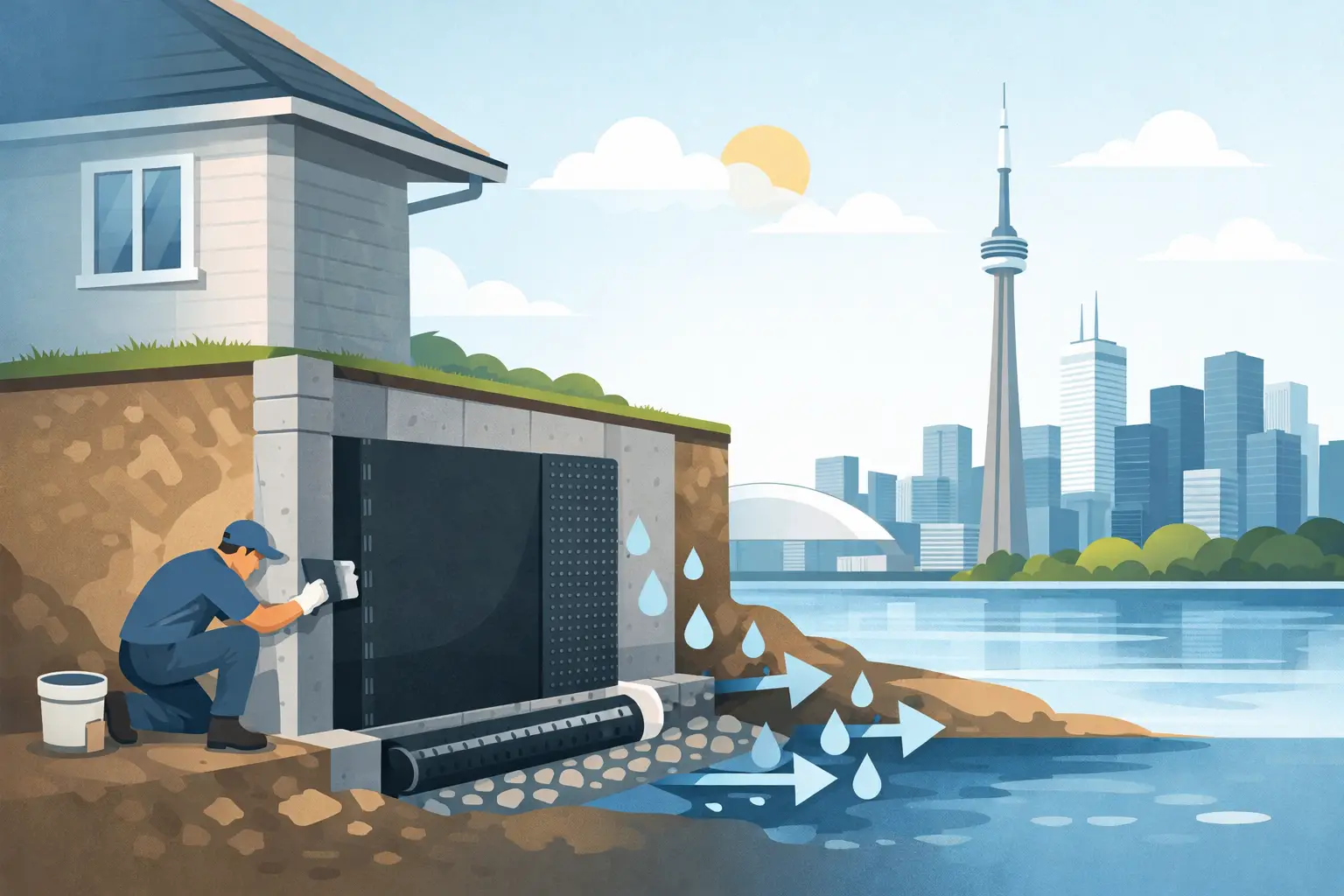
How Exterior Foundation Waterproofing Toronto Homes Need Works
The purpose of exterior waterproofing is simple: repair the wall, create a continuous water barrier, and give groundwater a reliable path away from the foundation. The work is technical, but a homeowner should be able to understand every stage before it begins.
Excavation and Foundation Inspection
The affected area is carefully excavated down to the footing. This exposes the foundation wall and reveals conditions that cannot be confirmed from inside the basement alone, such as open cracks, deteriorated parging, failed previous waterproofing, root intrusion, or blocked drainage pipe.
A professional crew protects the work area, manages excavated soil, and keeps the site as orderly as conditions allow. On tight Toronto lots, access can be a major factor. Some homes have room for equipment, while others require more careful hand excavation around fences, utilities, porches, and neighboring properties.
Crack Repair and Wall Preparation
Waterproofing membrane will only perform as well as the surface beneath it. The exposed wall is cleaned and prepared, and cracks are repaired using methods suited to the crack type and foundation material. Small shrinkage cracks and wider moving cracks do not always receive the same treatment.
If the wall has significant displacement, crumbling concrete, or signs of structural settlement, waterproofing alone is not a complete answer. Foundation repair, concrete restoration, or engineering input may be needed first. Covering up a serious defect is not a durable repair.
Membrane, Drainage Board, and Weeping Tile
Once the wall is prepared, a waterproof membrane is applied to block moisture from reaching the concrete. A drainage board may be installed over the membrane to protect it and channel water downward.
At the footing, new weeping tile or foundation drainage pipe can be installed where needed. The pipe is surrounded by clean drainage stone and protected with filter fabric to reduce the risk of sediment clogging the system. Water then moves toward a suitable outlet, such as a sump system or approved drainage connection, depending on the property and local requirements.
This combination matters. A membrane keeps water off the wall, but drainage reduces the hydrostatic pressure that forces water toward every crack and joint. One without the other can leave part of the problem behind.
Backfill and Surface Water Control
The excavation is backfilled carefully, and the final grade should slope away from the house. Downspouts should discharge well away from the foundation, not empty beside it. If roof runoff, driveway drainage, or a low section of yard keeps feeding water back toward the wall, even excellent waterproofing will face unnecessary stress.
The goal is not simply to make the basement dry after one storm. It is to control water from the roofline to the footing.
What Affects the Cost and Scope?
A trustworthy estimate should reflect the actual conditions of your property, not a flat price pulled from a menu. The length and depth of excavation are major cost factors, but they are not the only ones. Access, landscaping removal and replacement, utility locations, foundation depth, crack repairs, drainage upgrades, and the condition of existing pipe all matter.
For example, waterproofing one accessible wall on a detached home is a different project from excavating around a tight semi-detached Toronto property with a concrete walkway, mature shrubs, and limited equipment access. A lower basement may also require deeper excavation. The lowest quote can become expensive if it leaves out drainage repairs, surface restoration, or proper cleanup.
Ask what is included: crack repair, membrane type, drainage board, weeping tile, stone, filter fabric, disposal, backfill, grading, and warranty coverage. Clear answers before work begins prevent frustration later.
Exterior vs. Interior Waterproofing: It Depends
Interior waterproofing manages water after it reaches the foundation wall. It usually involves an interior drainage channel, new drain pipe, drainage membrane, and a sump pump to collect and discharge water. It can be an effective option when exterior excavation is impractical, when access is blocked, or when the main issue is water rising beneath the basement slab.
Exterior waterproofing stops groundwater before it enters the wall, which is why it is often preferred for visible exterior cracks and ongoing lateral water pressure. Still, it is not automatically the best answer for every leak. A burst pipe, clogged sewer, failed backwater valve, or overflowing eavestrough can mimic a foundation-water problem.
A camera inspection and on-site assessment can separate a drainage failure from a plumbing issue. That is especially valuable in older GTA homes, where several systems may be aging at once.
Don’t Wait for the Next Heavy Rain
Water stains, a single wet corner, or a hairline crack may feel manageable, but moisture damage tends to spread quietly. Mold can develop behind finished walls. Repeated saturation can damage insulation and flooring. In cold weather, water entering a crack can freeze, expand, and make that opening worse.
Take photos when the problem appears, note whether it follows rain, and avoid sealing interior walls with paint before the source is identified. Paint may hide a stain for a while, but it does not relieve water pressure outside the foundation.
Water Pro Master Corp helps GTA property owners identify the real cause of wet basement problems and complete exterior waterproofing with clean, careful workmanship. When water is already entering, fast action can protect far more than a basement – it can protect the home you have worked hard to maintain.