A wet basement is rarely just a surface problem. This guide to hydrostatic pressure explains the hidden force that can push groundwater through foundation walls, floor cracks, and cold joints – even when there is no obvious hole in the concrete. For homeowners across Toronto, Mississauga, and the GTA, understanding that force can make the difference between acting early and dealing with a flooded, damaged basement after the next hard rain.
What Hydrostatic Pressure Means for Your Basement
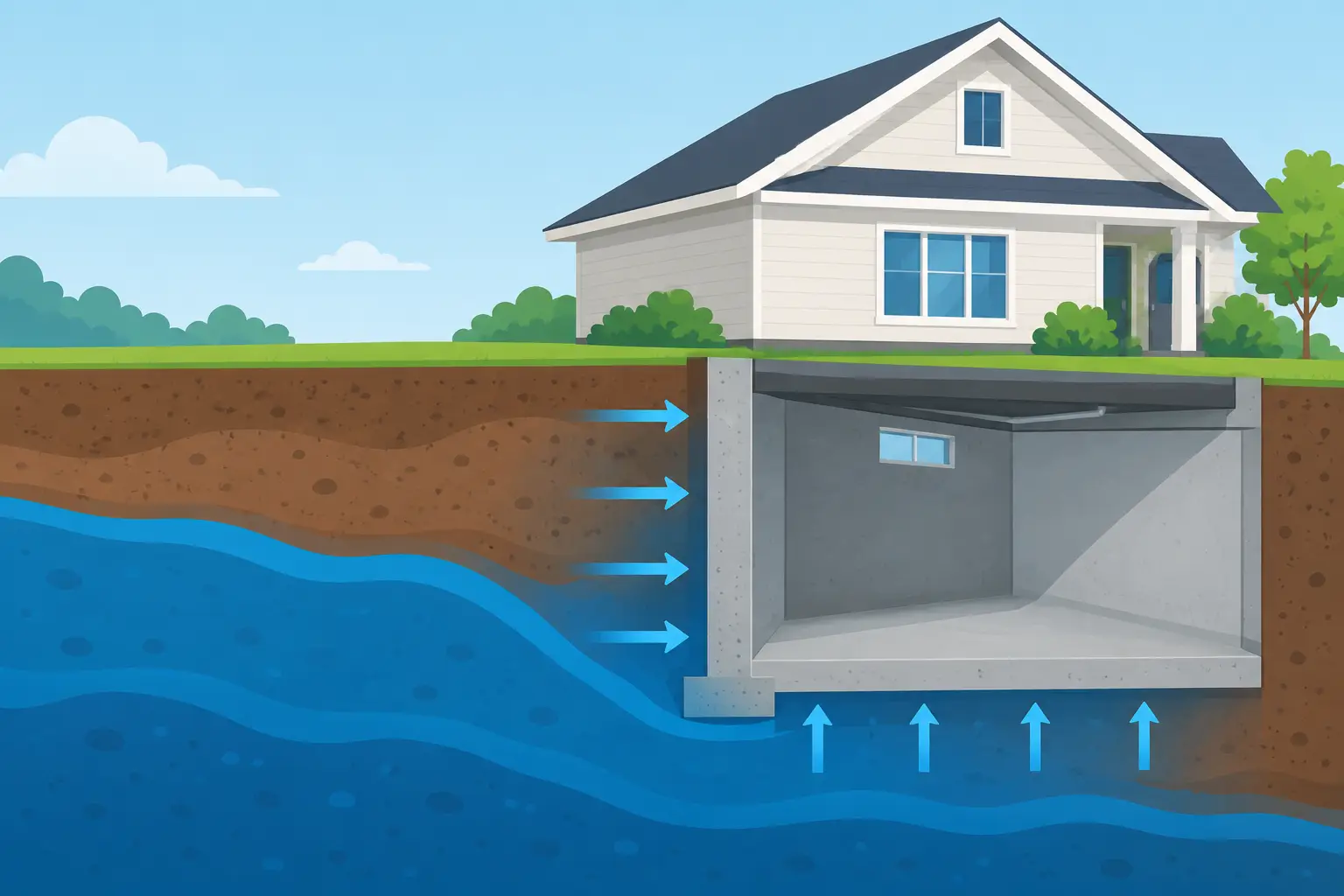
Hydrostatic pressure is the force created when water collects in the soil around and beneath your foundation. Water has weight. As the ground becomes saturated from rain, snowmelt, poor drainage, or a high water table, that weight presses sideways against basement walls and upward against the concrete floor.
Concrete is strong, but it is not waterproof by itself. It can have tiny pores, natural shrinkage cracks, gaps around utility penetrations, and joints where the floor meets the wall. When enough water pressure builds outside, moisture follows the easiest available path inside.
This is why a basement can leak after several days of rain rather than during the first shower. The surrounding soil needs time to absorb water. Once it is saturated, the pressure against the foundation rises. Older homes are especially vulnerable because their drainage systems, weeping tiles, and foundation materials may no longer perform as intended.
Why Water Pressure Builds Around Foundations
Hydrostatic pressure is often part of a larger drainage problem. The water may start at the roof, travel through downspouts, pool near the house, and soak into the soil beside the foundation. It can also come from underground sources that are less visible, including a high seasonal water table or water moving through clay-heavy soil.
Poor grading is a common issue. If the ground slopes toward the house, rainwater is directed exactly where it can cause the most trouble. Short downspouts, clogged eavestroughs, broken exterior drains, and paved surfaces that trap water can all add to the problem.
In many GTA neighborhoods, dense clay soil makes matters worse. Clay does not drain quickly. It holds water against the foundation, expands when wet, and can create sustained pressure long after a storm has passed. A home may look dry outside while water is still pressing against the basement walls below grade.
Common Signs of Hydrostatic Pressure
A major leak is not the only warning sign. Basement water problems often begin quietly, then get worse each season. Pay attention if you notice dampness after rain, a musty smell, peeling paint, white powdery residue on concrete, or staining along the bottom of walls.
White residue, often called efflorescence, appears when water moves through concrete and leaves mineral salts behind as it evaporates. It does not always mean there is active flooding, but it is evidence that moisture has traveled through the foundation.
Other signs include cracks in basement walls or floors, bubbling drywall, warped baseboards, damp carpeting, and rusty furnace or water-heater components. Water seeping where the wall meets the floor is particularly common because this joint is a natural entry point under pressure.
If you see water rising through cracks in the slab, the issue may be groundwater pressure from below rather than a wall leak. That distinction matters because the right repair depends on where water is entering and why.
Why Interior Sealers Usually Are Not Enough
A quick coat of waterproof paint can make a basement wall look better for a while, but paint does not remove the water pressure outside the foundation. When pressure remains, moisture can work behind the coating, cause it to blister, or find another route into the basement.
Crack injection can be an excellent targeted repair when water is entering through a specific foundation crack. However, it is not always a full answer for widespread seepage, a failed drainage system, or water coming up through the floor. The same is true of interior caulking. It may slow a minor leak, but it cannot correct saturated soil or a blocked weeping tile system.
There is a trade-off between a quick patch and a lasting solution. A small, isolated crack may only need professional crack repair. Repeated leaks along multiple walls, water at the cove joint, or basement flooding after storms usually calls for a broader drainage and waterproofing plan.
A Practical Guide to Hydrostatic Pressure Solutions
The goal is not simply to block water after it enters. The best solution manages water before it can build damaging pressure against your foundation. The right approach depends on the source of moisture, the property layout, the condition of existing drains, and whether the basement is finished.
Exterior Waterproofing and Weeping Tile Repair
Exterior waterproofing addresses the problem at the foundation wall. A contractor excavates around the affected area, repairs cracks, applies a waterproof membrane, and installs or replaces drainage materials such as weeping tile. The drainage system carries groundwater away before it can sit against the wall.
This is often the strongest long-term option when exterior access is practical and the wall itself needs repair. It involves excavation, so landscaping, decks, walkways, and tight property lines can affect the scope and cost. A clear on-site assessment helps prevent surprises before work begins.
Interior Drainage Systems
Interior waterproofing is commonly used when water enters at the wall-floor joint, when exterior excavation is difficult, or when groundwater is coming up beneath the slab. This approach typically includes a drainage channel installed along the inside perimeter of the basement. Water is directed to a sump pit, where a sump pump sends it safely away from the home.
Interior systems do not stop groundwater from reaching the outside of the foundation, but they relieve the pressure path and control water before it spreads across the basement. For finished basements or homes with ongoing groundwater issues, this can be a dependable solution when designed and installed correctly.
Sump Pumps and Backup Protection
A sump pump is only as useful as its ability to run when needed. The pump should be sized for the property, installed in a properly designed pit, and discharged far enough from the foundation that water does not cycle back toward the house.
Because severe storms can also cause power outages, a battery backup sump pump is worth considering for many homes. Regular testing matters too. If the float switch sticks, the discharge line freezes, or the pump fails during a storm, a preventable problem can become an emergency.
Surface Drainage Improvements
Sometimes the first repair is above ground. Extending downspouts, correcting the slope around the foundation, repairing damaged eavestroughs, and moving stored materials away from drainage areas can reduce how much water reaches the soil beside your home.
These improvements are smart prevention, but they may not be enough when a home has failed weeping tiles, deep foundation cracks, or a persistently high water table. Surface drainage and waterproofing often work best together.
Why Accurate Diagnosis Comes First
Basement moisture has several possible causes: hydrostatic pressure, plumbing leaks, condensation, sewer backup, a cracked water line, or poor exterior drainage. Treating the wrong cause wastes money and leaves the property exposed.
A professional inspection should identify where the water appears, when it happens, and what is happening outside the home at the same time. Drain camera inspections can reveal broken, blocked, or root-damaged underground lines. Visual foundation checks, moisture patterns, and sump-pump testing help determine whether the problem is localized or part of a larger drainage failure.
At Water Pro Master Corp, the focus is on explaining what is happening in plain language before recommending a repair. Homeowners deserve a clear scope, an honest estimate, and clean work that solves the source of the problem – not a temporary cover-up.
When to Call for Help
Call for a professional assessment promptly if water is entering your basement during rain, the floor feels damp, cracks are growing, or you smell persistent mildew. Move stored belongings away from wet areas, avoid using electrical equipment near standing water, and do not ignore a sewage odor or discolored water. Those signs can point to a drain or sewer issue that needs immediate attention.
Water damage does not wait for a convenient time. Acting when the first warning signs appear gives you more repair options and can protect your foundation, finished basement, and belongings from far more expensive damage later. A dry basement starts with finding out where the pressure is coming from – then giving that water a safe place to go.