

A broken sewer line under a finished basement, driveway, or mature landscaping can turn one plumbing problem into a major property concern. Pipe bursting replacement cost is not a single flat price because every underground line has a different route, depth, condition, and access challenge. The right question is not simply, “What does it cost?” It is, “What work is actually needed to replace this pipe properly without creating unnecessary damage?”
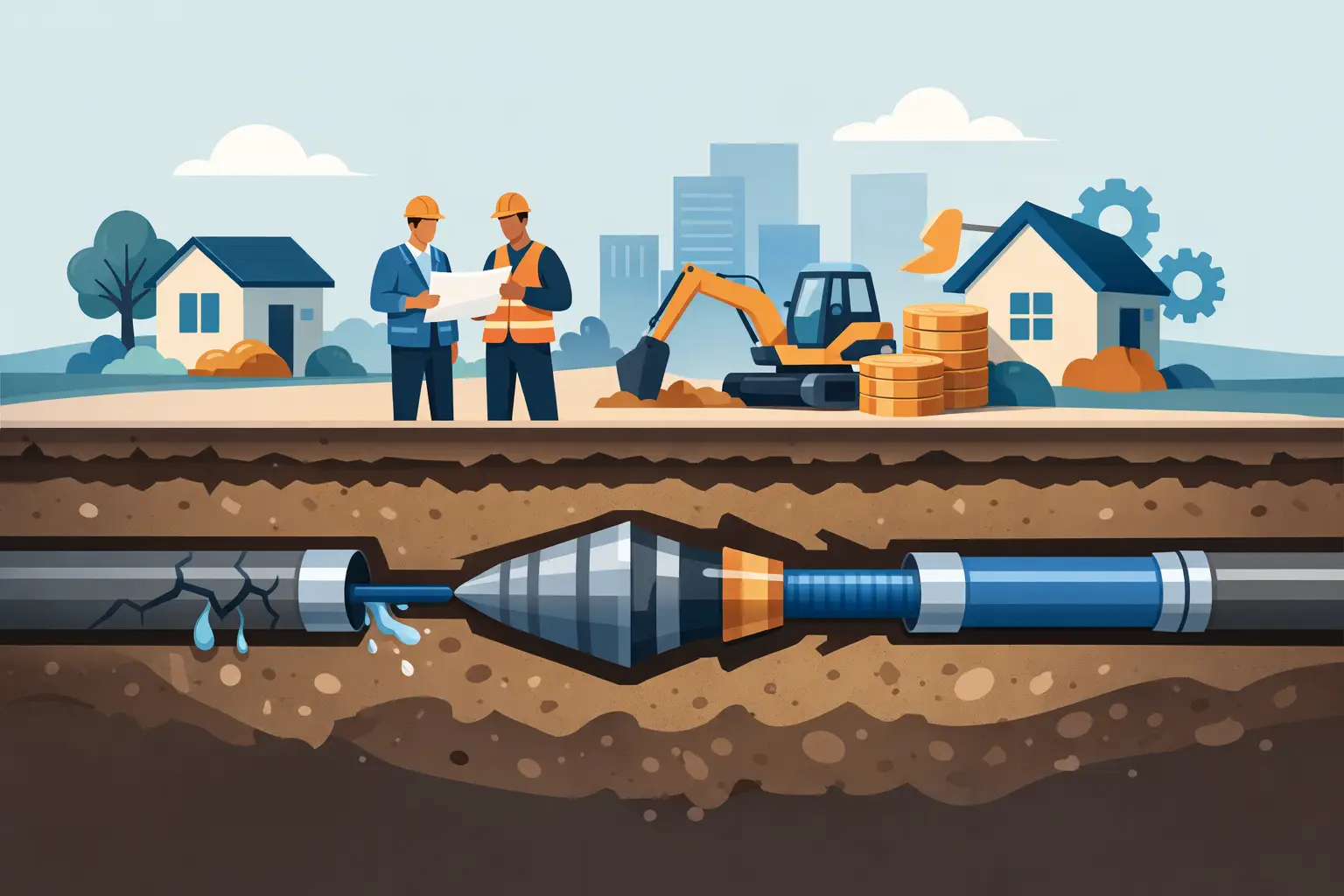
For many homeowners, pipe bursting is a practical no-dig alternative to opening a long trench across the yard or cutting through a basement floor. A licensed drain specialist uses the existing failed pipe path to pull a new pipe into place while breaking apart the old line. When the conditions are right, it can reduce restoration work, shorten the disruption, and provide a long-lasting replacement.
What Is Included in Pipe Bursting Replacement Cost?
A professional quote should account for more than the new pipe itself. The pipe is only one part of a replacement project. The cost also reflects diagnosis, equipment, labor, access pits, permits when required, testing, cleanup, and restoring the areas that must be opened to complete the work.
First comes a camera inspection. This identifies where the pipe has cracked, collapsed, separated, or filled with roots. It also confirms the pipe’s size, material, depth, and route. Without this step, a contractor is estimating around hidden conditions, which is how homeowners end up facing change orders and surprises.
The crew then creates access points, usually at the beginning and end of the damaged run. A bursting head is attached to the replacement pipe and pulled through the old line. As it moves forward, it fractures the existing pipe and draws the new pipe into the same path. The new line is connected, tested for proper flow, and documented with a final camera inspection when appropriate.
A clear estimate should explain the planned scope in plain language: how many feet of pipe are being replaced, which access areas will be opened, whether cleanup and restoration are included, and what conditions could affect the final price.
The Main Factors That Change the Price
Length and depth of the damaged line
A short, shallow replacement between accessible points generally requires less labor and material than a long sewer lateral that runs under the home and out to the municipal connection. Deeper lines take more time to expose safely and may require more extensive shoring, equipment, or excavation at the entry and exit points.
Length matters, but it is not the only issue. A relatively short section under a concrete slab can cost more than a longer run through an open side yard because access and restoration drive the labor involved.
Access to the pipe route
Pipe bursting is designed to minimize digging, not eliminate all digging. The crew still needs suitable launch and receiving pits. If those points are in a landscaped yard, the restoration may be straightforward. If they sit beneath a deck, concrete walkway, driveway, garage floor, or finished basement, the project can become more involved.
This is where trenchless replacement often shows its value. A conventional excavation may require opening the entire pipe route. Pipe bursting may limit disturbance to one or two targeted access points. For a property with expensive hardscaping, established trees, or a finished lower level, avoiding a full trench can protect a significant part of the budget.
Pipe material and the condition of the old line
Clay, cast iron, Orangeburg, and aging concrete pipes can fail in different ways. Root intrusion, offset joints, corrosion, bellies, and complete collapse all affect whether bursting is feasible. Some severely collapsed lines may not provide a workable path for the bursting equipment. In that case, targeted excavation or another repair approach may be the safer choice.
Pipe bursting can also slightly increase the outside diameter of the line, which may improve flow capacity. However, the surrounding soil, nearby utilities, and pipe route must be evaluated before upsizing. This is not a decision to make from a surface-level guess.
Connections, bends, and branch lines
A straight run with accessible connections is usually more predictable than a line with multiple sharp bends, branch connections, or unknown repairs from previous work. Sewer laterals may also require coordination at the property line or municipal connection, depending on local rules and where the failure is located.
If a damaged section includes a branch serving another fixture or unit, the repair must maintain proper connections and slope. For rental properties and multi-unit homes, planning around occupant access and drainage downtime can also affect scheduling and labor.
Permits, inspections, and local requirements
In Toronto, Mississauga, and across the Greater Toronto Area, permit and inspection requirements can vary by municipality and the location of the work. A proper quote should identify whether permits are expected and who will manage them. This work should never be treated as a quick patch when a failed sewer line could lead to repeated backups, property damage, or compliance issues later.
Emergency conditions and water damage
A planned replacement after a camera inspection is often easier to schedule than a sewer backup that has already affected a basement. If sewage is backing up, drains are unusable, or a line has failed without warning, the immediate priority is to protect the property and stop further damage. Emergency response, cleaning, temporary drainage measures, and after-hours work can add to the overall expense, but delaying action can cost far more in damaged flooring, drywall, contents, and mold remediation.
Typical Cost Expectations Without Guesswork
Most pipe bursting projects cost several thousand dollars, and more complex replacements can move well beyond that range. A precise number without inspecting the line is not an honest estimate. The total can vary widely based on footage, depth, access, restoration needs, permits, and whether the project involves a private sewer lateral, water service line, or interior drain connection.
Be cautious with unusually low quotes that do not mention camera inspection, access pits, pipe material, permits, testing, or restoration. A low starting price can exclude the very work necessary to finish the job. The goal is not to choose the cheapest number on paper. It is to understand the full scope before machinery arrives on site.
For older homes, a camera inspection is one of the best ways to control costs. It shows whether the problem is isolated or whether the whole line is nearing the end of its service life. Replacing a small section may make sense for localized damage. If the camera shows repeated cracks, root entry, and deteriorated joints along the line, a full replacement may be the more cost-effective long-term decision.
Pipe Bursting vs. Excavation vs. Relining
Pipe bursting is not automatically the best option for every failed pipe. It is usually a strong choice when the old pipe provides a usable path, the route has limited access, and avoiding extensive excavation would save significant restoration work.
Traditional excavation can be the better answer when the line has collapsed badly, needs to be rerouted, has major grade problems, or sits too close to utilities and structures for safe bursting. It creates more surface disruption, but it gives the contractor direct access to rebuild the line and correct underlying conditions.
Pipe relining is another trenchless option. Instead of replacing the pipe, relining creates a new cured liner inside the existing pipe. It can work well for cracks, root intrusion, and joint failures where the host pipe is still structurally suitable. But relining reduces the inside diameter slightly and cannot correct every collapse, separation, or severe offset. A camera inspection determines which method fits the actual failure, not which method sounds easiest.
How to Get a Quote With No Surprises
Before approving a replacement, ask for the camera findings and a written scope of work. You should know the proposed repair method, estimated pipe length, access locations, new pipe material, permit responsibility, and what restoration is included. Ask whether the price includes final testing and whether a warranty applies to the completed work.
It also helps to ask what could change the estimate. Unknown buried utilities, inaccessible connections, hidden structural obstacles, and more extensive pipe damage are real possibilities in older properties. A reputable contractor will explain those risks upfront rather than treating them as an afterthought.
Water Pro Master Corp approaches pipe replacement with camera-based diagnosis, licensed workmanship, and clear communication from the first inspection through cleanup. The aim is fast, clean work with no mess left behind and no surprises in the scope.
A failing sewer line rarely gets better on its own. If you notice recurring clogs, roots in the drain, slow fixtures throughout the home, sewage odors, or water backing up at the lowest drain, arrange an inspection before a small underground problem becomes a basement emergency.