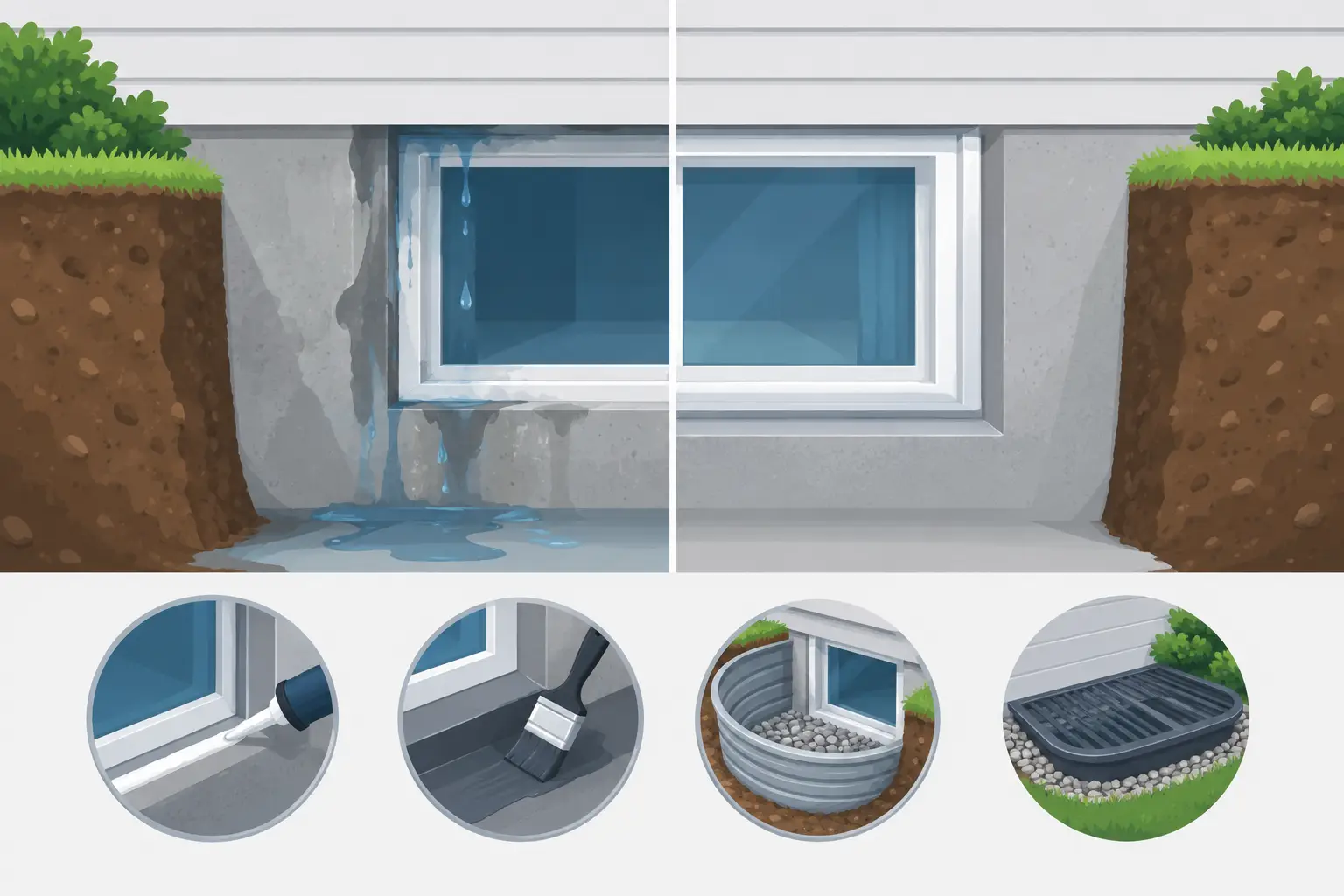



A basement window leak rarely starts as a dramatic flood. More often, it begins with a damp sill after a storm, peeling paint around the frame, or a musty smell in the corner of a finished basement. To prevent basement window leaks, you need to control where rainwater goes before it reaches the window, then make sure the window opening and foundation can handle the moisture that remains.
For homeowners across Toronto, Mississauga, and the GTA, this matters even more during spring thaw, summer downpours, and freeze-thaw cycles. Water can find a gap smaller than a pencil line. Left alone, that small leak can damage drywall, flooring, insulation, window framing, and the foundation itself.
Why Basement Windows Start Leaking
Basement windows sit below or close to grade, which puts them directly in the path of surface water and groundwater. The window is not always the real problem. A cracked pane or failed seal can leak, but many basement window leaks are caused by water building up outside the foundation.
Poor grading is a common culprit. If soil slopes toward the house, rainfall runs directly into the window well and along the foundation wall. Clogged gutters, disconnected downspouts, and short downspout extensions can dump hundreds of gallons of water beside the home during one storm.
Older homes can have another issue: deteriorated mortar, cracked concrete around the opening, rusted window wells, or aging weeping tile that no longer moves groundwater away efficiently. When the soil around the foundation becomes saturated, water pressure increases against the wall. That pressure can force water through cracks around the window frame, through porous concrete, or along the joint where the foundation wall meets the window opening.
The timing of the leak is useful evidence. Water that appears only during heavy rain often points to surface drainage or a window-well problem. Water that appears after several wet days, even when it is not raining, may indicate groundwater pressure, failed exterior waterproofing, or drainage problems below grade.
Start Outside: Keep Water Away From the Window
The most effective way to prevent basement window leaks is to stop water from collecting near the foundation. Caulking alone may hide the symptom, but it will not solve a window well that fills like a bucket every time it rains.
Correct the Grade Around the Foundation
The soil around your home should slope away from the foundation. A practical target is a drop of about 6 inches over the first 10 feet where site conditions allow. The goal is simple: rain should travel away from the house, not settle against it.
Check the area around window wells carefully. Landscaping beds, mulch, stone borders, and settled soil can gradually create a low spot that funnels water toward the window. Keep soil and mulch below the window frame and avoid piling material against siding or foundation walls.
Grading repairs are often straightforward, but they need to be done thoughtfully. Raising soil too high can cover weep holes, damage siding, or create a different moisture issue. If the property has tight side yards, patios, or neighboring homes close by, a drainage professional can assess where the water can safely be directed.
Clean Gutters and Extend Downspouts
A working gutter system protects more than the roofline. It is one of the first defenses for your basement. Clean leaves and debris from gutters, make sure downspouts are securely connected, and direct discharge well away from the foundation.
A short downspout ending beside a basement window well is a fast track to leaks. Extensions should carry water to a safe area that slopes away from the home. Do not direct water toward a neighbor’s property, a walkway that may freeze, or an area where it will simply flow back toward the foundation.
If you see water overflowing from gutters during rain, address it promptly. The problem may be a clog, improper gutter pitch, or undersized drainage capacity. What looks like a roof maintenance issue can become a basement-water issue in minutes.
Install and Maintain Window Wells
Window wells keep soil away from basement windows, but they must drain properly. A well that is too shallow, poorly installed, or packed with leaves and soil can hold water against the window frame.
Remove debris from the bottom of the well at least twice a year and after major storms. Check for rusted metal, separated joints, bent edges, or gaps between the well and foundation wall. These gaps can allow surface water and loose soil to enter behind the well.
A clear polycarbonate window-well cover can help keep out rain, snow, leaves, and animals. Covers work best when they are securely fitted and angled so water runs off. They are especially useful for windows below decks, beneath roof valleys, or in areas where melting snow collects.
A cover is not a substitute for drainage. If the well has no working drain or the drain is clogged, trapped water can still rise around the frame. A properly designed well may include gravel and a drain connection that directs water down to the perimeter drainage system. Whether that is appropriate depends on the home, the local drainage layout, and the condition of the existing weeping tile.
Repair the Window Opening, Not Just the Caulk Line
Once water is controlled outside, inspect the window itself. Look for cracked glass, warped vinyl, rotted wood, loose fasteners, failed weatherstripping, and gaps where the window frame meets the concrete opening. Water staining on the interior drywall or sill can reveal the entry point, but remember that water can travel before it becomes visible.
Small, dry gaps around a frame may be sealed with the correct exterior-grade sealant. The surface must be clean, dry, and stable for the sealant to adhere. Applying new caulk over wet, crumbling, or dirty material is a temporary patch at best.
If the concrete around the window is cracked, the repair needs more attention. Hairline cracks may be repairable, while wider, growing, or stepped cracks can indicate foundation movement. Similarly, a window frame that has shifted out of square may not be fixed by caulk alone. Replacing the window, repairing the concrete opening, or addressing the foundation crack may be the durable answer.
Avoid sealing every interior gap before diagnosing the source. Interior sealants can reduce visible moisture, but if groundwater pressure continues behind the wall, the water may find another route. The best repair follows the water path from outside to inside.
Know When Drainage or Waterproofing Is Needed
Recurring window leaks after grading, gutter, and window-well maintenance usually mean the problem is larger than the window. Saturated soil, failed weeping tile, foundation cracks, and poor exterior waterproofing can all keep pressure against below-grade walls.
Exterior waterproofing is often the most direct long-term repair when water is entering through the foundation around a window opening. It involves excavating to expose the affected wall, repairing cracks, applying a waterproof membrane, and improving drainage before backfilling. It is more involved than a surface fix, but it addresses water where it starts.
Interior waterproofing can be a practical option when exterior excavation is not feasible because of access, landscaping, additions, or cost. An interior drainage system channels water that reaches the foundation into a sump basin, where a sump pump moves it away from the home. This approach manages water effectively, though it does not stop groundwater from reaching the outside of the foundation.
The right choice depends on the leak source, soil conditions, access around the house, the age of the drainage system, and whether the basement is finished. A camera inspection of drain lines and a professional foundation assessment can replace guesswork with a clear repair plan.
Protect the Basement Before the Next Storm
Do a quick check before periods of heavy rain. Clear the window wells, confirm gutter downspouts are connected, and look for pooling water near the foundation. Inside, move storage off the floor near vulnerable windows and do not cover damp drywall or insulation before finding the source.
If water is actively entering, protect electrical safety first. Keep cords and appliances away from standing water, document the damage, and arrange a prompt inspection. Fast drying matters, but stopping the incoming water is what prevents a repeat emergency.
Water Pro Master Corp helps GTA property owners diagnose basement leaks with clear explanations, clean workmanship, and repair options that fit the actual cause. Whether the issue is a failed window well, a foundation crack, or overwhelmed drainage, the goal is no surprises – just a dry basement that stays that way.
A dry windowsill after the next hard rain is reassuring. A drainage system, window opening, and foundation that can handle the next ten years of storms is the real peace of mind.