
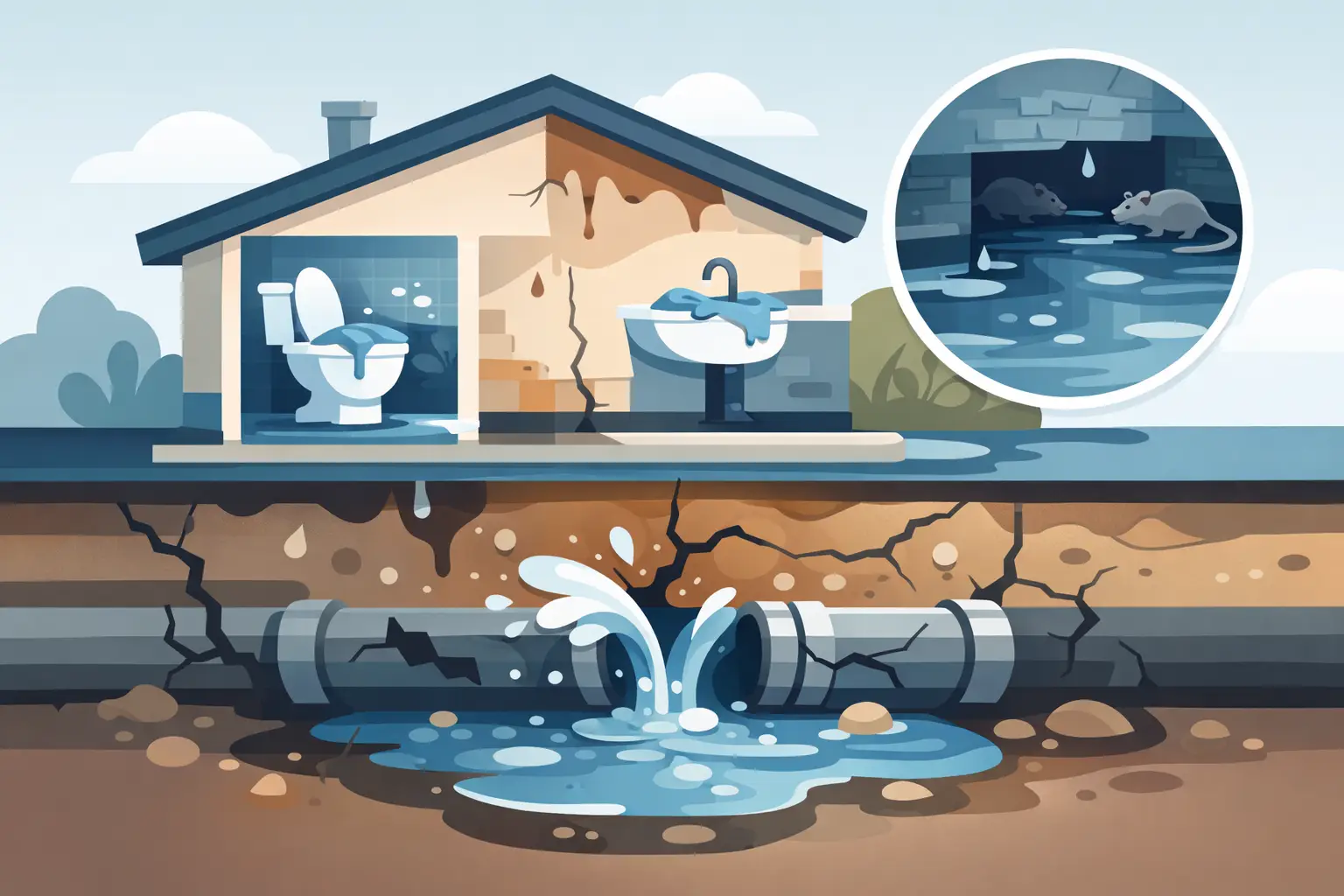

A collapsed sewer line rarely announces itself with one dramatic failure. More often, it starts with a toilet that bubbles, a basement drain that backs up after laundry, or a patch of lawn that stays unusually green. Knowing the top signs of sewer collapse can help you act before wastewater damages your home, disrupts tenants, or turns a manageable repair into a major excavation.
For homeowners across Toronto, Mississauga, and the GTA, older clay, cast-iron, and concrete sewer pipes are especially vulnerable. Tree roots, shifting soil, freeze-thaw cycles, corrosion, and years of use can weaken a line until part of it cracks, sags, or caves in. The faster the cause is confirmed with a camera inspection, the more repair options you may have.
1. Repeated Backups in More Than One Drain
One slow sink may be a local clog. But when the toilet, shower, laundry drain, or basement floor drain are all draining slowly or backing up, the problem is likely farther down the main sewer line.
A partial collapse can create a low spot or blockage where toilet paper, grease, waste, and debris collect. At first, the water may eventually clear. As the obstruction worsens, sewage can return through the lowest drain in the house, which is often a basement floor drain, shower, or toilet.
Do not keep plunging fixtures or pouring chemical drain cleaners into the system. Chemicals will not repair a damaged pipe and can make a professional repair more hazardous. If sewage is coming back into the home, stop using water fixtures where possible and arrange an emergency drain assessment right away.
2. Gurgling Sounds and Unusual Toilet Behavior
Your plumbing system should move water quietly. Gurgling from a toilet, tub, or sink means air is struggling to move through the drainage system. That can happen with a clog, but it can also signal that wastewater is meeting a restriction in the sewer line.
Watch for toilets that bubble when the washing machine drains, water that rises in the bowl before going down, or a bathtub that gurgles after you flush. These signs often appear before a complete backup, making them a useful early warning.
It depends on the condition of the line. A camera inspection may reveal roots or a buildup that can be cleared with hydro jetting. If the camera shows broken pipe sections, separated joints, or a crushed area, cleaning alone will only provide temporary relief.
3. Sewage Odors Inside or Outside the Property
A sewer system is designed to remain sealed. A persistent sewage smell in the basement, around a floor drain, near plumbing fixtures, or outside near the sewer route should never be ignored.
A collapsed or cracked pipe can allow sewer gases to escape into surrounding soil or through openings in the drainage system. Sometimes the odor is stronger after rain, when groundwater enters damaged pipe sections and pushes trapped air through the line. In other cases, it becomes noticeable only when large amounts of water are discharged from the home.
Dry floor-drain traps can also cause sewer odors, so the source should be diagnosed rather than guessed. A licensed plumbing team can inspect the drain, test the system, and use a sewer camera to determine whether the odor is related to a damaged main line.
4. A Soggy Yard, Sinkhole, or Sunken Pavement
Outdoor changes can be among the clearest signs of a sewer collapse. When wastewater leaks from a damaged underground line, it saturates the soil around it. You may notice soft ground, unexplained puddles, a wet patch during dry weather, or grass that grows faster and greener in one narrow area.
More serious failures can wash away soil, leaving a dip in the lawn, driveway, walkway, or patio. A sinkhole or rapidly spreading depression needs urgent attention. Keep people, pets, and vehicles away from the area because the ground may be unstable.
Not every wet spot is a broken sewer. Poor drainage, a leaking water line, and downspout discharge can produce similar symptoms. That is why an on-site diagnosis matters. A camera inspection, combined with locating equipment, can show whether the pipe is cracked, offset, bellied, root-filled, or collapsed.
5. A Sudden Increase in Pest Activity
Rodents and insects are drawn to moisture, waste, and access points. A break in a sewer line can create all three. If you are seeing more rats, cockroaches, flies, or other pests around the basement, garage, or yard along with drain problems or odors, a damaged sewer line should be considered.
This does not mean every pest issue is a sewer collapse. Still, it is a risk worth checking, particularly in older homes where pipe joints may have separated over time. Fixing the entry point is just as important as treating the pest problem, otherwise the activity may continue.
6. Drains That Keep Clogging After Professional Cleaning
A properly cleaned sewer line should restore normal flow when the pipe itself is structurally sound. If your drains work for a few days or weeks after snaking, then slow down again, the line may have more than a routine blockage.
Roots can grow back, but repeated clogs may also indicate a broken pipe lip, a sagging section known as a belly, or a collapse that catches debris every time wastewater passes through. This is where a video camera inspection earns its value. It replaces assumptions with a clear view of the pipe’s condition and location.
Ask to understand what the camera found. A transparent diagnosis should explain whether the issue can be cleared, repaired in one section, relined from within, or requires pipe bursting or excavation. No surprises – just the repair option that fits the actual condition of your sewer.
7. Foundation or Basement Water Problems Near the Sewer Route
Leaking wastewater can undermine soil around a foundation, add moisture near basement walls, and contribute to recurring dampness. If a wet basement develops alongside drain backups, sewer odors, or exterior settlement, the problems may be connected.
This is particularly concerning for homes with finished basements. Water damage can affect drywall, flooring, insulation, furniture, and indoor air quality long before the source is obvious. A collapsed sewer line is not the only potential cause, but it should be ruled out quickly when drainage symptoms are present.
In some cases, the solution involves more than pipe repair. Damaged grading, overwhelmed weeping tile, foundation cracks, or missing backwater protection can make a property more vulnerable during heavy rain. The right plan addresses the failed sewer line first, then any surrounding water-management issues that could lead to future trouble.
What to Do When You Suspect a Sewer Collapse
First, reduce water use. Avoid running the dishwasher, washing machine, showers, and multiple toilet flushes until the line is checked. If sewage is already backing up, keep children and pets away from the affected area and do not attempt cleanup without proper protection.
Next, arrange a sewer camera inspection. This is the fastest way to see what is happening below ground without tearing up a yard or basement floor. The inspection can identify roots, cracks, pipe offsets, standing water, corrosion, and fully collapsed sections.
Once the condition is known, repair choices depend on the pipe material, depth, access, and extent of damage. A small isolated break may be repaired with targeted excavation. Where conditions allow, trenchless pipe relining or pipe bursting can restore the line with far less disruption to landscaping, driveways, and finished areas. There is no one-size-fits-all solution, and a good contractor will explain the trade-offs before work begins.
Water Pro Master Corp provides 24/7 sewer and drain support throughout the GTA, with advanced camera diagnostics and repair options designed to minimize disruption. Whether the issue is a recurring backup or an obvious ground collapse, getting a clear diagnosis early protects your property and gives you more control over the repair.
If your drains are sending warning signals, trust what you are seeing. A quick inspection today can prevent a sewage emergency, protect your basement, and keep a small underground problem from becoming a much larger one.