


A sewer line can fail quietly for months, then announce itself at the worst possible moment: a basement drain backing up, toilets bubbling, sewage odors near the floor drain, or water appearing where it should not. Trenchless sewer repair Toronto property owners choose can often restore a damaged line without turning the front yard, driveway, or finished basement into a construction site.
That does not mean every sewer problem can be fixed with a no-dig method. The right repair depends on what is happening inside the pipe, where the damage sits, and whether the line still has enough structure to be restored. A proper camera inspection comes first. It replaces guesswork with a clear picture of the problem and gives you a fair basis for comparing repair options.
What Trenchless Sewer Repair Means
Traditional sewer replacement usually requires digging down to expose the old pipe. On some Toronto properties, that can mean cutting concrete, removing landscaping, disturbing walkways, or excavating part of a basement floor. It is sometimes necessary, especially when a pipe has collapsed badly or the grade needs correction.
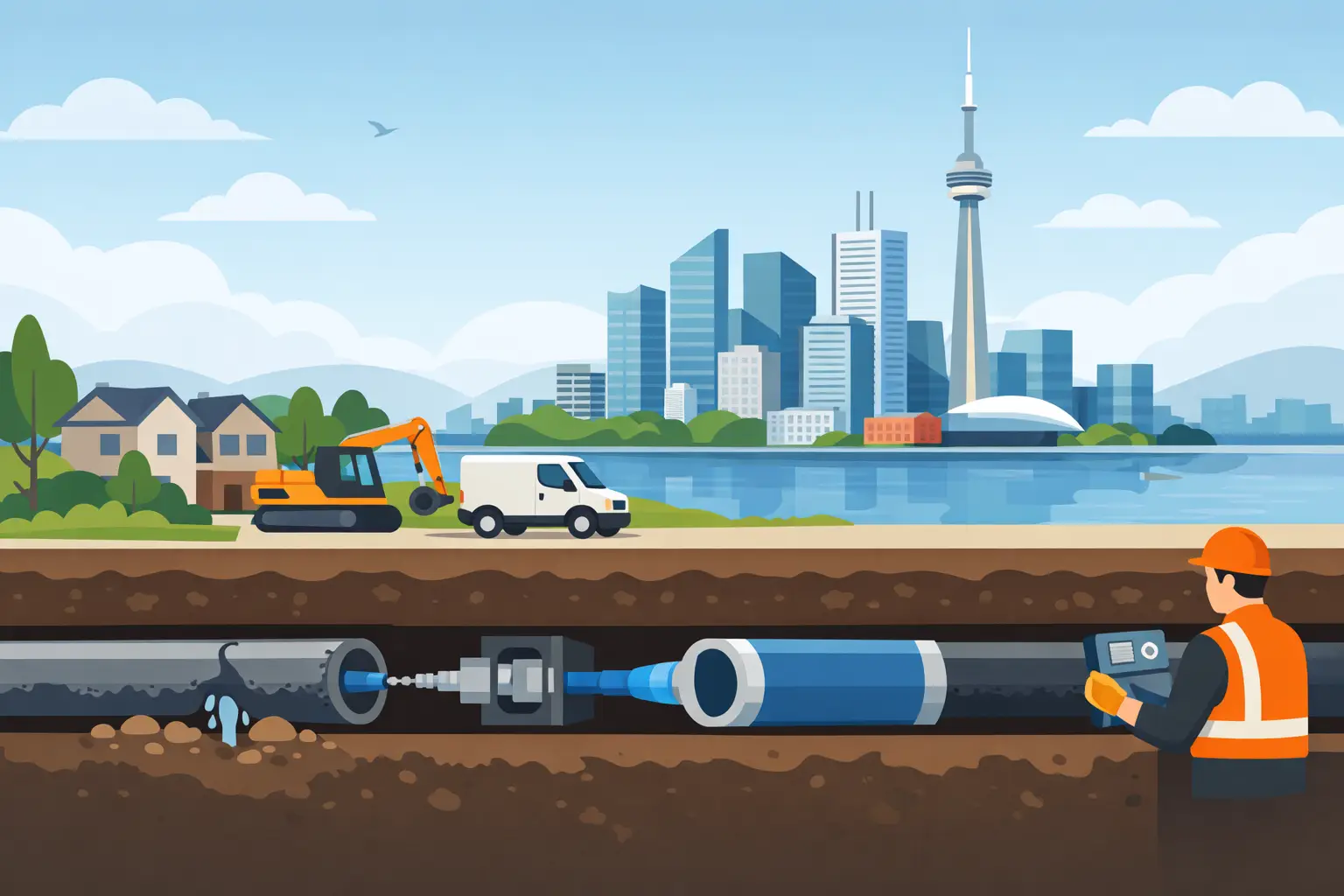
Trenchless repair uses access points and specialized equipment to repair or replace the line from inside. The two most common methods are pipe relining and pipe bursting. Both can greatly reduce excavation, but they solve different problems.
With pipe relining, a technician cleans the existing sewer line, prepares it, and installs a resin-saturated liner inside the damaged pipe. Once cured, that liner becomes a new pipe within the old one. It seals cracks, blocks many root-entry points, and creates a smooth interior surface that can improve flow.
With pipe bursting, a bursting head breaks apart the old pipe while pulling a new replacement pipe into place. This method is often considered when the existing pipe is too damaged for a liner but a new line can still follow the original route. Small entry and exit pits are usually required, yet the disruption is often far less than full open excavation.
When a No-Dig Repair May Be the Right Choice
Older Toronto homes commonly have aging clay, cast-iron, or other legacy sewer piping. Over time, joints can separate, roots can force their way into the line, corrosion can thin the pipe walls, and soil movement can create cracks or offsets. These issues do not always call for a complete dig-up.
Trenchless work may be a strong option when the pipe has cracks, leaking joints, root intrusion, minor offsets, or deteriorated sections while still holding a usable path from one end to the other. It is especially appealing when the line runs beneath a landscaped yard, mature trees, a garage, a patio, or a finished basement where restoration costs would add up quickly.
The goal is not to sell a no-dig repair at all costs. The goal is to stop the backup risk and restore dependable drainage with the least unnecessary disruption. If the camera shows a belly in the pipe that is holding water, a severe collapse, major misalignment, or poor slope, excavation may be the more durable answer. A trustworthy contractor should explain that plainly before work begins.
Camera Inspection Determines the Repair Plan
A sewer camera inspection is the decision-making step. A high-resolution camera travels through the line and records the condition of the pipe in real time. The technician can identify where roots are entering, whether there are cracks or holes, how far the damage extends, and whether water is standing in a low section.
This inspection also helps prevent a common and costly mistake: repeatedly snaking a line that needs structural repair. Drain snaking can open a path through roots or debris and get fixtures draining again. Hydro jetting can thoroughly clean buildup from many lines. But neither method rebuilds a broken pipe. If the issue keeps returning, the line needs a closer look.
Ask to see the camera findings and ask direct questions. Is the pipe structurally sound enough for relining? Is there a collapse? Are roots the main issue, or is the pipe shifting? Does the repair address the full damaged section? Clear answers matter because sewer work is not something homeowners should have to decipher after the fact.
Pipe Relining vs. Pipe Bursting
Pipe relining is generally best suited to a line that is damaged but still largely intact and passable after cleaning. It creates a continuous, joint-free interior that can help prevent future root intrusion. Because the liner slightly reduces the inside diameter of the original pipe, the contractor must confirm that the remaining diameter will still support the property’s drainage needs. In many residential applications, this is not a problem, but it should be evaluated rather than assumed.
Pipe bursting is better suited to some pipes with more extensive deterioration, including lines that cannot reliably hold a liner. It replaces the old pipe instead of coating its interior. The trade-off is that it can require more access and may not be appropriate around certain underground utilities or obstacles. Soil conditions, pipe route, and the condition of nearby connections all affect feasibility.
Neither option is automatically cheaper than digging. The true cost depends on access, pipe length, depth, material, permits, cleaning requirements, and how much concrete, landscaping, or interior finishing would need to be restored after an excavation. A trenchless estimate can make more sense when it avoids major restoration work and limits the time your property is disrupted.
Signs Your Sewer Line Needs Attention Now
One slow drain does not always mean a main sewer problem. Multiple fixtures draining slowly at once is more concerning, especially when toilets gurgle after a shower runs or water rises in a basement floor drain. Sewage backup, recurring clogs in the same areas, foul odors, unexplained wet spots, and tree roots found during drain cleaning are also warning signs.
Do not keep flushing, running water, or using chemical drain cleaners if sewage is backing up. Chemical products can damage certain pipes, create hazards for technicians, and do nothing for a collapsed or root-damaged sewer line. Limit water use, protect people and pets from contaminated water, and arrange an emergency assessment.
For rental properties and homes with finished basements, fast action is especially important. A sewer backup can damage flooring, drywall, furniture, stored belongings, and electrical systems. The longer contaminated water remains inside, the more difficult and expensive cleanup can become.
Why Toronto Properties Need a Property-Specific Plan
Toronto and the GTA have a broad mix of older neighborhoods, dense urban lots, newer subdivisions, mature trees, and homes with finished lower levels. A repair plan that works well in one setting may not be practical in another. A narrow side yard, shared driveway, deep sewer connection, or pipe running under a porch all change how the work should be approached.
Municipal sewer connections, private-side piping, backwater protection, and drainage conditions may also need to be considered together. If a home has experienced heavy-rain backups, the source may involve more than a damaged lateral pipe. A camera inspection can reveal the sewer line condition, while a broader drainage assessment can help determine whether a backwater valve, sump pump, waterproofing work, or other prevention measures are worth considering.
That whole-property view matters. Fixing a pipe is essential when it is failing, but preventing the next water emergency is what protects the basement, the structure, and your peace of mind.
What to Expect During the Repair
A professional trenchless project should begin with diagnosis, not a rushed quote. After the camera inspection, the contractor should explain the findings, recommend the appropriate repair method, identify any access points needed, and provide a transparent estimate. You should know what is included, what restoration is expected, and what warranty applies before work starts.
On repair day, the crew typically protects work areas, clears and prepares the line, completes the chosen repair, and verifies the result with a final camera inspection. The site should be left clean, with no surprises hidden behind vague language or unfinished details. If excavation is required for part of the job, the contractor should explain why and keep that work as targeted as possible.
Water Pro Master Corp approaches sewer problems with licensed plumbing expertise, diagnostic equipment, and practical options for Toronto homeowners. The focus is simple: find the cause, explain the repair clearly, and complete the work with respect for your property.
If your drains are warning you, do not wait for the next storm or the next backup to force the decision. A camera inspection now can tell you whether trenchless repair is a realistic path and help you protect the parts of your home that are hardest to replace.