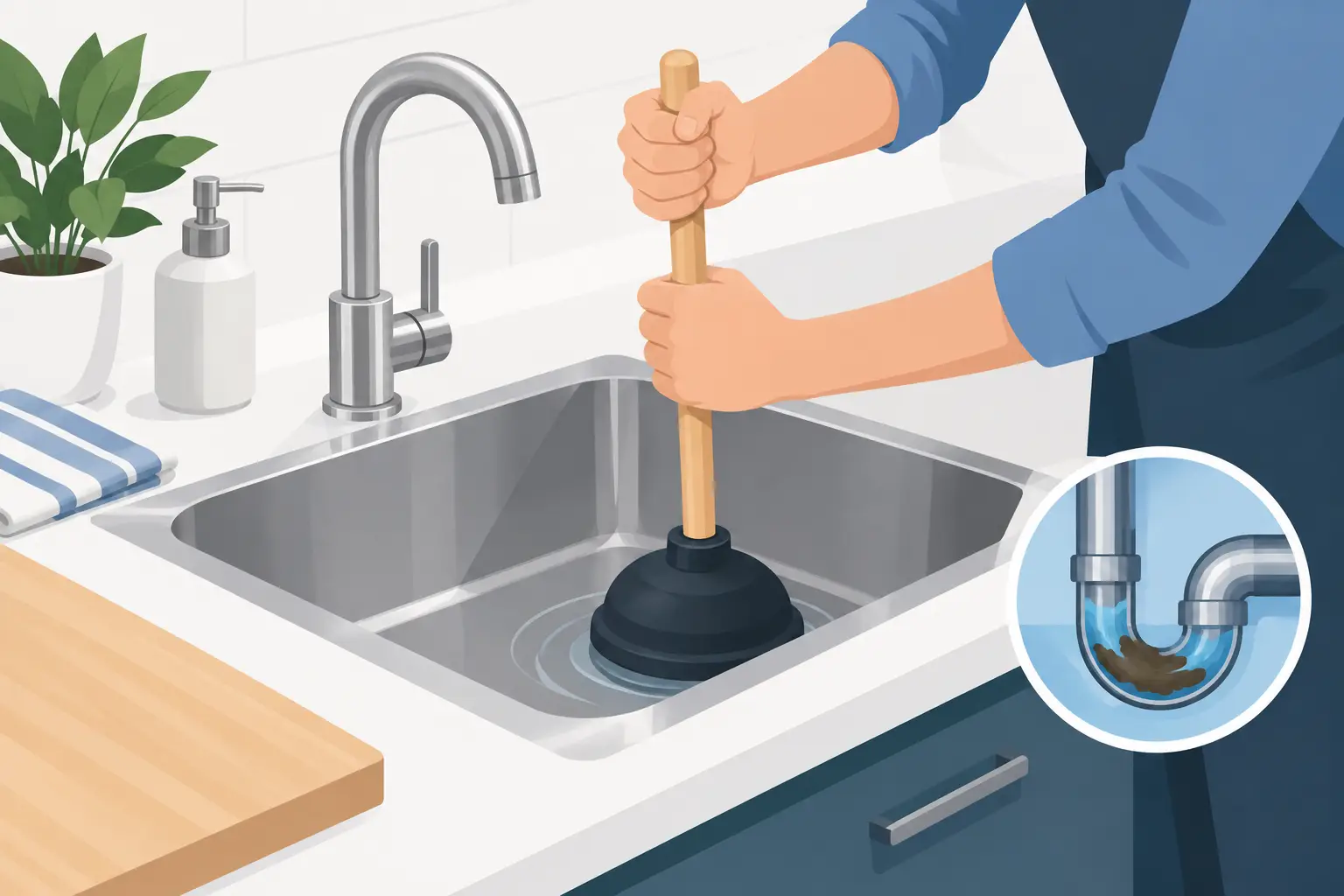



A kitchen sink that suddenly fills with gray water, food bits, and a sour smell is more than an inconvenience. It can stop dinner prep, put a dishwasher out of service, and signal a blockage farther down the line. When unclogging kitchen sink drain problems, the goal is not just to get water moving today. It is to clear the blockage without damaging the trap, pushing grease deeper into the pipe, or creating a messy backup under the cabinet.
For homeowners across Toronto, Mississauga, and the GTA, a slow or blocked kitchen sink is often caused by everyday buildup. Older homes can also have worn drain lines, low spots in piping, or tree-root intrusion outside the house. Start with safe, simple checks. If the clog does not release quickly, stop forcing it and arrange a professional drain inspection before a small blockage becomes a leak or sewer backup.
Start With the Signs You Can See
Before reaching for a tool, look at how the drain behaves. A sink that drains slowly after washing greasy pans may have a soft buildup near the trap. A sink that backs up when the dishwasher drains may have a restriction in the shared branch line. If both bowls of a double sink fill at once, the clog is usually beyond the point where the two drains join.
Pay attention to other fixtures too. Gurgling at the kitchen sink when a nearby bathroom fixture runs, water coming up through the sink after flushing a toilet, or drains slowing throughout the home can point to a larger drain or sewer issue. That is not a job for repeated plunging. Stop using water where possible, especially the dishwasher and washing machine, and have the line diagnosed.
Never continue running the faucet when water is rising. A few extra minutes of testing can overflow the sink, soak the cabinet base, and damage flooring below.
Safe First Steps for Unclogging a Kitchen Sink Drain
Remove standing water with a cup or small container so you can work without spills. Then pull out the sink strainer and remove anything caught at the opening. Food debris, produce stickers, broken glass, and small utensils are common surprises. Wear gloves, particularly if you have already added a drain product.
If you have a garbage disposal, switch off the power at the breaker before checking it. Do not put your hand inside. Use a flashlight to inspect the chamber, then remove visible debris with tongs. If the disposal hums but does not turn, use only the manufacturer-approved reset and wrench method. A jammed disposal can mimic a clogged drain, but forcing it can burn out the motor or cause an injury.
For a single-bowl sink without a disposal issue, a sink plunger is often the best first tool. Add enough water to cover the rubber cup and seal the overflow opening if your sink has one. Use firm, controlled plunges for 15 to 20 seconds, then test with a small amount of water. On a double-bowl sink, tightly block the second drain with a stopper or wet cloth while plunging the clogged side. Without that seal, pressure simply escapes through the other bowl.
A plunger works best on a fresh, soft blockage. It may not help with a solid object, a heavy grease mass, or a clog several feet down the pipe. If the sink drains a little but remains slow, do not keep plunging indefinitely. Repeated pressure can loosen old slip-joint connections under the cabinet.
Why Boiling Water and Chemicals Can Backfire
Hot tap water can help rinse light soap residue, but boiling water is not always safe. It can soften or stress certain plastic drain components, damage seals, and create a burn hazard when a sink is already full. More importantly, hot water may melt grease just enough to move it farther along, where it cools and hardens into a larger blockage.
Chemical drain cleaners are an even bigger risk. Strong acidic or caustic products can damage aging metal pipes, weaken rubber seals, and leave hazardous liquid sitting in the trap. They also make later hands-on repairs dangerous for you or a technician. Never mix products, and never add a second cleaner after the first one fails. If chemicals are already in the drain, tell the plumber before any work begins.
Baking soda and vinegar are less hazardous, but they are not a reliable solution for a serious kitchen blockage. The fizz can help with minor odor buildup, yet it does not cut through packed grease, fibrous food waste, or a blockage in the main branch line.
Check the P-Trap Only When It Makes Sense
The curved pipe directly beneath the sink, called the P-trap, catches debris and holds water that blocks sewer gas. It is also one of the most accessible places for a kitchen clog. If you are comfortable with basic home maintenance, place a bucket and towels underneath, loosen the slip nuts by hand, and carefully remove the trap.
Clean out the trap, inspect the washers, and reassemble the parts without overtightening. Run a small amount of water and check closely for drips. If the trap is clear but the wall pipe is blocked, the problem is farther into the drain line. This is where many DIY attempts go wrong.
A hand-crank drain snake can damage thin pipe walls, snag inside fittings, or scratch the porcelain sink if used aggressively. It is especially risky after chemical cleaners have been poured down the drain. For recurring clogs, older galvanized lines, or a blockage past the trap, professional snaking and camera inspection are a safer choice than forcing a cable into an unknown pipe condition.
When a Kitchen Sink Clog Needs a Plumber
Call for service promptly if the sink keeps backing up after plunging and trap cleaning, if water leaks from under the cabinet, or if wastewater appears in another fixture. A professional should also inspect a drain that clogs repeatedly every few weeks. Clearing the opening may provide temporary relief, but repeated backups usually mean grease accumulation, pipe scale, an offset connection, root growth, or damage deeper in the line.
A proper drain service starts with identifying the location and cause of the blockage. Depending on the pipe and problem, a licensed plumber may use a drain snake to remove the obstruction, a camera to inspect the line, or hydro jetting to clear heavy grease and buildup from suitable pipes. Hydro jetting is powerful and effective, but it is not automatically right for every system. Aging, cracked, or compromised pipes should be evaluated before high-pressure cleaning.
Water Pro Master Corp provides same-day and 24/7 drain service throughout the GTA when a kitchen drain will not clear or a backup threatens the home. Clear diagnosis matters. It helps avoid unnecessary work while making sure the real problem is addressed, whether it is a simple branch-line blockage or a damaged sewer connection that needs repair.
Keep the Drain Clear After the Repair
Kitchen drains handle more grease and food waste than almost any other fixture in the house. Prevention is mostly about what never enters the pipe. Let cooking grease cool in a container and dispose of it in the trash instead of rinsing it away. Scrape plates before washing them, use a sink strainer, and avoid treating the garbage disposal like a food-processing system.
Coffee grounds, eggshells, fibrous vegetables, rice, pasta, flour, and large amounts of potato peelings can create stubborn clogs. Even a disposal does not make these materials harmless. Run cold water while using the disposal and for a short time afterward, but remember that water alone cannot prevent grease from coating a cold pipe farther down the line.
If your kitchen sink has become a regular problem, do not accept weekly plunging as normal maintenance. A clean, properly flowing drain protects your cabinets, floors, and the rooms below. Getting the line checked early is usually far less disruptive than dealing with a full sink backup at the worst possible time.